


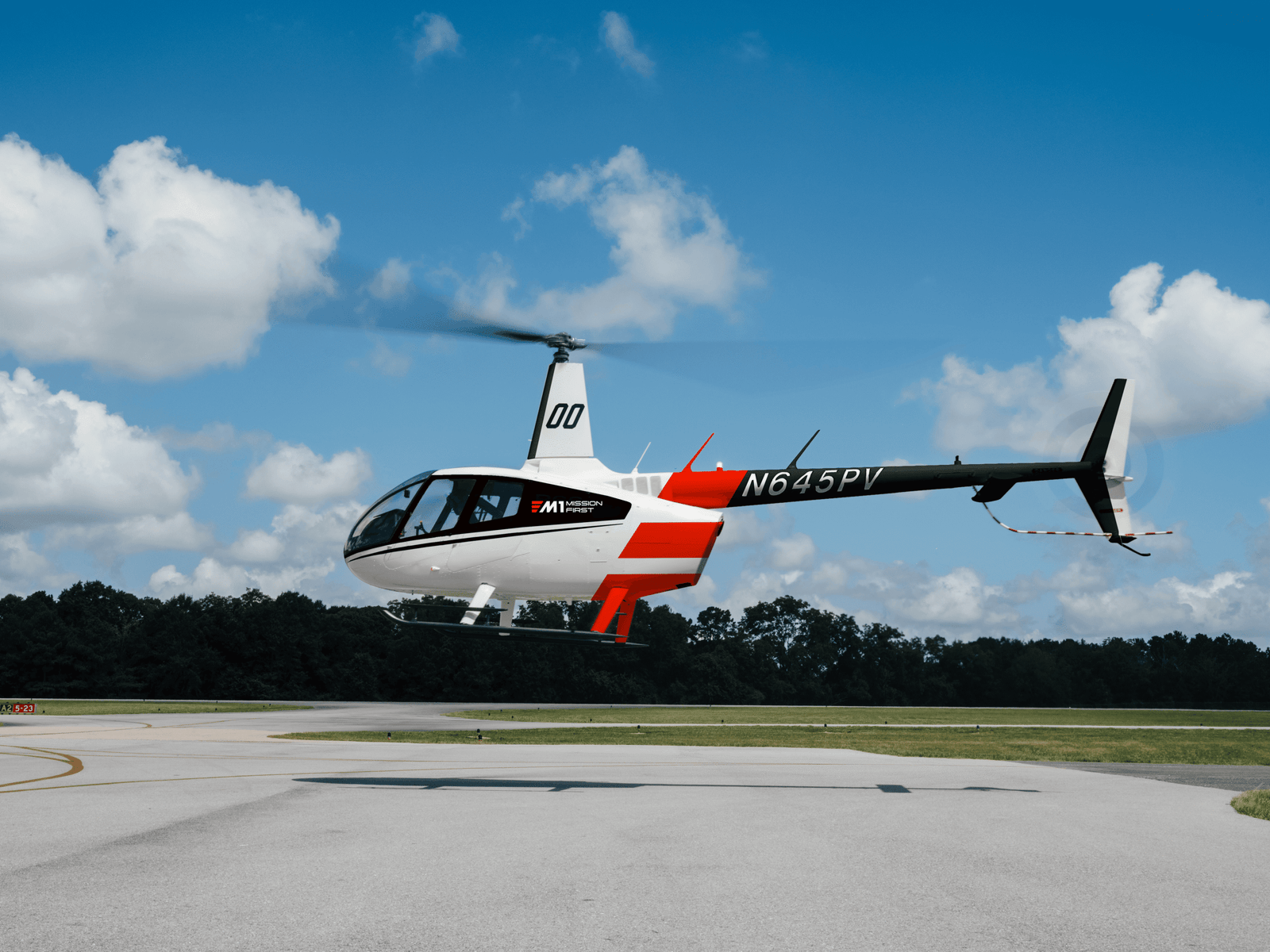
The U.S. Army is moving toward a new model for training helicopter pilots, selecting M1 Services to run its next-generation flight school at Fort Rucker, Alabama.
The Army announced last week that M1 had been selected for Flight School Next, a program aimed at modernizing Initial Entry Rotary-Wing (IERW) training. The contractor-owned, contractor-operated program is expected to train between 800 and 1,500 Army aviators each year.
Under the new model, M1 will provide the aircraft, instructors, maintenance and other training services, consolidating functions that are currently spread across multiple contracts. The Army says the approach is intended to increase training capacity while reducing the cost of producing new aviators.
Flight School Next grew out of an Army effort to rethink how pilots learn the fundamentals of rotary-wing flight. A 2025 proof-of-concept placed Army students in commercially operated helicopters, allowing them to focus on basic flying skills before transitioning to more complex military aircraft.
That approach will continue under the new program. Students will develop foundational skills in a simpler training helicopter before moving on to aircraft including the AH-64 Apache, UH-60 Black Hawk and CH-47 Chinook.
M1’s proposal centers on the Robinson R66, a single-engine turbine helicopter. The company also plans to incorporate simulation and other training technologies into the program.
The Army has said its existing flight-training model has changed little since the 1960s. Flight School Next is intended to put greater emphasis on hands-on flying and basic aircraft skills while giving instructors additional tools to track student performance.
The selection follows a lengthy competition. M1 advanced through multiple phases of the Army’s evaluation process before being selected for the program.
The Army expects Flight School Next to serve as the foundation for its future initial-entry rotary-wing training, potentially changing how thousands of Army pilots receive their first flight instruction.
