


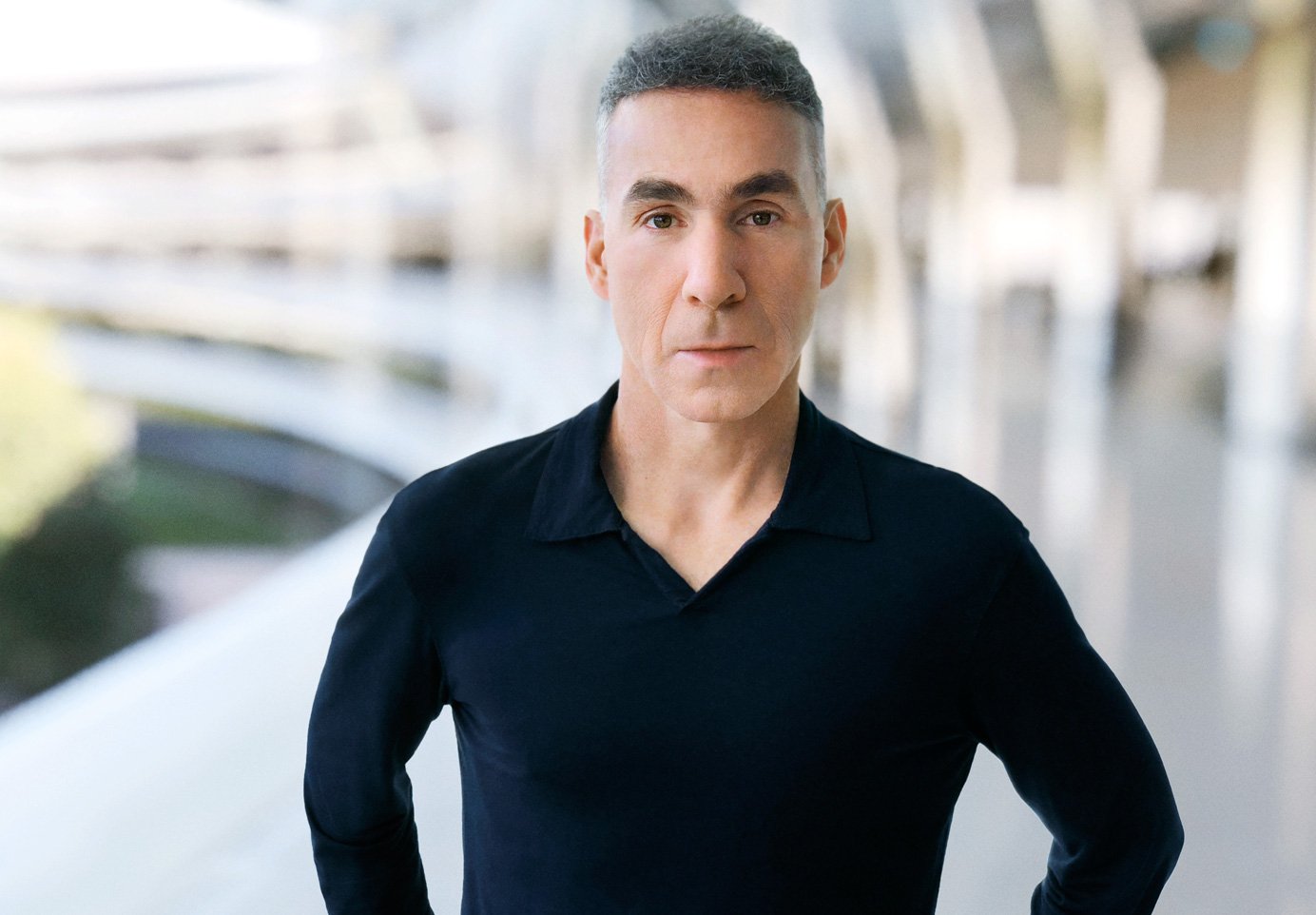
Supplier of professional SLA and SLS 3D printing systems Formlabs has appointed Dan Riccio, Apple‘s former Senior Vice President of Hardware Engineering, as a strategic advisor and investor. The announcement came with a wider reshuffle of the board, including a new chairman, a new president and the departure of co-founder Natan Linder after fifteen years.
Formlabs Taps Dan Riccio
At Apple, Riccio ran the Product Design and Hardware Engineering organizations for decades, overseeing hardware development across the iPhone, iPad and Mac lines.
“Dan spent a career building some of the most beloved hardware products in the world, at an enormous scale, and he did it by obsessing over details most executives don’t care about,” said Maxim Lobovsky, co-founder and CEO of Formlabs. “As we scale Formlabs into the next generation of manufacturing hardware, learning from Dan is going to make our team stronger and our products better. We’re thrilled to have him as an advisor and as an investor in what we’re building.”
At Formlabs he will advise leadership on product development, design rigor and operational scaling as the company pushes further into industrial and professional additive manufacturing. “Formlabs has quietly built one of the most complete hardware, software, and materials platforms I’ve seen outside of a handful of the world’s best consumer companies,” he said. “The attention to detail in how these systems are engineered, and the ambition to make industrial-grade manufacturing accessible, is exactly the kind of problem I want to spend my time on.”
Besides his advisory role, Riccio is investing personally in Formlabs, joining board member Rob Willett, the former CEO of Cognex, who is increasing his own stake.
Formlabs Restructures Leadership as Founding Era Board Chapter Closes
Riccio’s appointment came alongside a broader board restructuring. Lobovsky moves up to Chairman, succeeding co-founder Natan Linder, who steps down after fifteen years and stays on as an advisor. Chief Product Officer Dávid Lakatos is named President and joins the board, while Nadia Shouraboura, a director since 2022, becomes Lead Director.
Lakatos is the substantive promotion. He arrived within the company’s first couple of years and has run the product for over a decade, meaning every generation of Formlabs hardware, materials and software carries his decisions. Lobovsky treats the distinction between him and the founders as academic: “Dávid joined just a couple of years into the history of the company, and I think of him as a co-founder as well. He has been instrumental in building almost every aspect of the company across almost every product and development of our long-term strategy.”
Linder’s exit closes the founding chapter of the board. Lobovsky credited him with backing the venture before it was obvious: “Natan joined me in founding this company, betting on the idea and betting on me before almost anyone else.”
Shouraboura’s new role is the one aimed outward. She ran worldwide supply chain and fulfillment at Amazon and sat on its executive leadership team, and Formlabs is putting that operations background in the Lead Director seat as it widens its manufacturing footprint and pushes the industrial platform into more markets.

Formlabs Gains a Chinese Strategic Investor as IPO Talk Builds
The board changes arrived alongside another development: Chinese additive manufacturing investment fund Concord AM Capital announced on LinkedIn that it has become a strategic investor in Formlabs. The post, published by the fund’s investment director Shen Wang, framed the investment as a partnership aimed at supporting Formlabs’ expansion across China and the broader APAC region, working alongside Hanfeng Wu, Head of China Operations at Formlabs, on that effort.
The fit is not a surprising one. Formlabs has operated a Shenzhen office since 2018, and Chinese capital is already present in its shareholder base through Shenzhen Capital Group, which invested as part of the Formlabs’ $30 million Series C round that same year.
A governance pattern pointing at a listing
This is the second consecutive board change at Formlabs to swap founding-era representation for operator experience drawn from publicly traded industrials, and the trajectory is hard to miss. Willett joined in February 2026, replacing Carl Bass, the former Autodesk chief executive who had been a director since 2017.
Willett previously led Cognex, listed since 1989, and 3D Printing Industry read that appointment at the time as a company quietly assembling public-company governance. Formlabs did not respond to a request for comment on any listing plans. Shouraboura’s elevation to Lead Director fits the same pattern: an independent senior seat filled by an executive with large-cap operating experience.
The reshuffle also lands two months after the company’s most aggressive push into industrial territory, which is what the incoming expertise is meant to support. Formlabs launched the Fuse X1 on June 9, a large-format SLS system priced from $84,999 and scheduled to ship in Q4 2026, with a 330 × 330 × 565 mm build volume and support for packing densities above 30%, well beyond the 10–15% typically recommended for Multi Jet Fusion systems. The company claims production-quality parts in under 24 hours at up to half the cost per part and three times the throughput of comparable industrial powder bed fusion machines, while keeping the unit installable in roughly an hour on single-phase power without specialized HVAC.
Boards as a bet on the next phase
Formlabs is doing something specific with its board: trading founder tenure for people who have scaled hardware and operations at large public companies, and doing it while the business is growing.
The contrast with the rest of the sector is stark, because most additive board overhauls of the past two years have been damage control. Velo3D replaced CEO Brad Kreger with Arrayed Additive’s Arun Jeldi in December 2024 and saw six incumbent directors resign at the same time, after the NYSE flagged the company for a market capitalization and stockholders’ equity that had fallen below $50 million. That restructuring followed a strategic review and a change of ownership, not a growth plan.
3D Systems offers the middle case. 3D Systems opened a CEO search this month as Jeffrey Graves prepares to retire from both the chief executive role and the board, after a six-quarter restructuring program delivering more than $60 million in annualized savings and a Q2 2026 return to near-breakeven adjusted EBITDA. The handover was deliberately structured to avoid a vacuum, no interim, no immediate effective date, Graves staying until a successor is named and consulting for six months afterward, a board protecting execution while it hires for the next chapter.
Three companies, three sets of reasons. Boards like this are usually assembled for something specific. Formlabs has not said what.
3D Printing Industry is inviting speakers for its 2026 Additive Manufacturing Applications (AMA) series, covering Energy, Healthcare, Automotive and Mobility, Aerospace, Space and Defense, and Software. Each online event focuses on real production deployments, qualification, and supply chain integration. Practitioners interested in contributing can complete the call for speakers form here.
To stay up to date with the latest 3D printing news, don’t forget to subscribe to the 3D Printing Industry newsletter or follow us on LinkedIn.
Explore the full Future of 3D Printing and Executive Survey series from 3D Printing Industry, featuring perspectives from CEOs, engineers, and industry leaders on the industrialization of additive manufacturing, 3D printing industry trends 2026, qualification, supply chains, and additive manufacturing industry analysis.
Featured image shows Dan Riccio, Apple’s former Senior Vice President of Hardware Engineering. Photo via Apple.
