


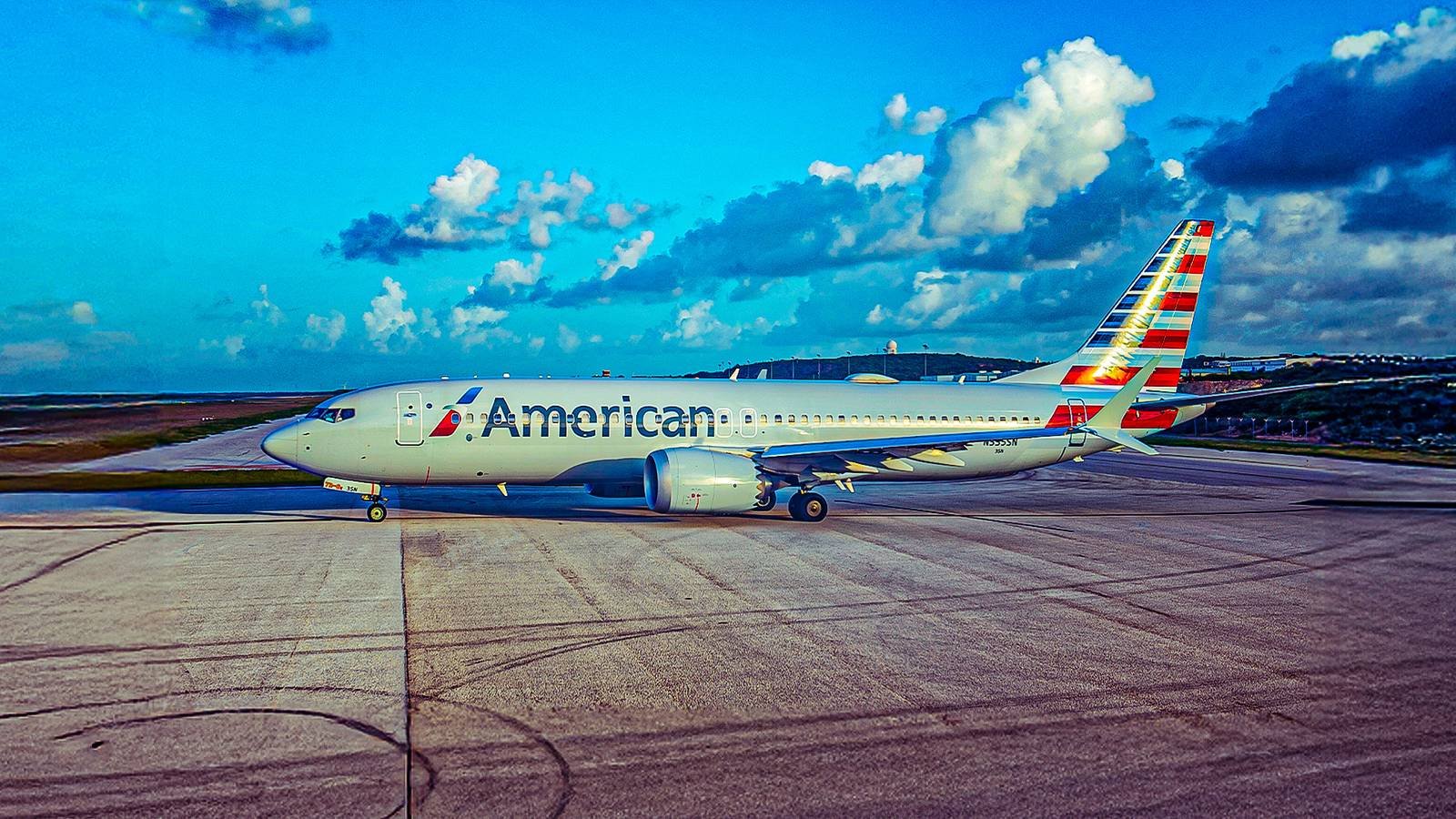
Chicago O’Hare International Airport (ORD) has seen its fifth tire-related incident in just two weeks after an  American Airlines Boeing 737 blew two tires while taxiing for departure on Wednesday afternoon. The aircraft, which was operating flight AA3280 to Charlotte Douglas International Airport (CLT), became disabled on a taxiway when the double blowout occurred.
The airline then had to disembark passengers by airstairs and bus them back to the terminal. This follows four other tire incidents since August 13, including a rejected  United Airlines takeoff, two separate United and American failures hours apart on August 17, and another American 737 that burst a tire taxiing in from Phoenix on August 21.
American 737 Suffers Latest Tire Blowout In Chicago

The Federal Aviation Administration has said it will investigate the latest incident, which occurred as the narrowbody was taxiing for departure at around 1:35 PM local time on Wednesday, August 26. According to air traffic control audio, the tire blowout was spotted first by another aircraft, with the crew of a following flight radioing it in to ATC.
Both of the tires that burst were on the 737’s right main landing gear, forcing the plane to halt and deplane on the taxiway with no reported injuries. Passengers were bused back to the terminal and boarded a replacement aircraft, which arrived in Charlotte at around four hours’ delay. An American  Boeing 737-800 can seat up to 172 passengers and includes a domestic first and economy cabin. An American Airlines spokesperson confirmed the incident:
“Shortly after pushing back from the gate at Chicago O’Hare International Airport (ORD), American Airlines flight 3280 experienced a tire issue on the taxiway.”
Five Tire Incidents In Just Two Weeks At O’Hare

Wednesday’s blowout is the latest in a cluster of five incidents, three of which have involved American aircraft. The first happened on August 13, when a United Boeing 737-900 operating flight UA455 to  Phoenix Sky Harbor International Airport (PHX) suffered a tire failure during takeoff, leaving chunks of rubber on the runway.
Date | Flight | Airline | Aircraft | Route |
|---|---|---|---|---|
Aug 13, 2026 | UA455 | United Airlines | Boeing 737-900 | Chicago (ORD) – Phoenix (PHX) |
Aug 17, 2026 | AA386 | American Airlines | Boeing 737-800 | LaGuardia (LGA) – Chicago (ORD) |
Aug 17, 2026 | UA739 | United Airlines | Airbus A320-200 | Omaha (OMA) – Chicago (ORD) |
Aug 21, 2026 | AA3199 | American Airlines | Boeing 737-800 | Phoenix (PHX) – Chicago (ORD) |
Aug 26, 2026 | AA3280 | American Airlines | Boeing 737 | Chicago (ORD) – Charlotte (CLT) |
Just four days later, two tire incidents occurred within hours of each other after an American 737 from  LaGuardia Airport (LGA) blew two tires on landing, shortly followed by a United Airbus A320-200 suffering tire damage while exiting the runway. The fourth incident happened on August 21, when an American 737 arriving from Phoenix burst a tire while taxiing to the gate.
At this stage, there is no apparent link among the five tire failures, with the Chicago Department of Aviation confirming that each incident took place in a different part of the airfield, and across separate runways and taxiways. The incidents also involved multiple aircraft types, namely two Boeing 737 variants and an Airbus A320, pointing away from a type-specific defect.
What Causes A Blown Tire & How Serious Is It?

Blown tires are one of the more routine failures in commercial aviation, but represent a more pressing concern if several happen in quick succession. Common causes include underinflation, worn casings, heavy braking maneuvers, or hot runway temperatures. Another possible cause is foreign object debris (FOD), which is a more serious threat.
The severity of an incident depends more on when a tire fails than on the failure itself. For example, a blowout on a taxiway usually results in a stranded aircraft and a delay, whereas during a high-speed takeoff it can genuinely threaten an aircraft and its occupants.
The CDA said it is working with the FAA and both airlines to investigate each failure, with the department’s commissioner describing the cluster of incidents as “rare.” Debris sweeps were conducted at the airport following the double failures on August 17, but nothing was found. Investigators are also looking at runway surface conditions and landing gear maintenance intervals at both American and United.
