


SkyeBrowse CEO Bobby Ouyang says growing drone programs face a new challenge: making sophisticated capabilities simple enough to use across an organization.
For many organizations, launching a drone program is no longer the hardest part. The bigger challenge may come after the program proves its value.
A police department might begin with a few trained drone pilots. A construction company may rely on one employee who understands mapping software. That approach can work well at first.
Then demand grows.
More departments want access. More sites need to be documented. More people need to capture data, and many more need to use the results. Technology that worked well for a handful of experts can become a bottleneck when an organization tries to scale it.
That raises an important question: Can your drone program survive success?
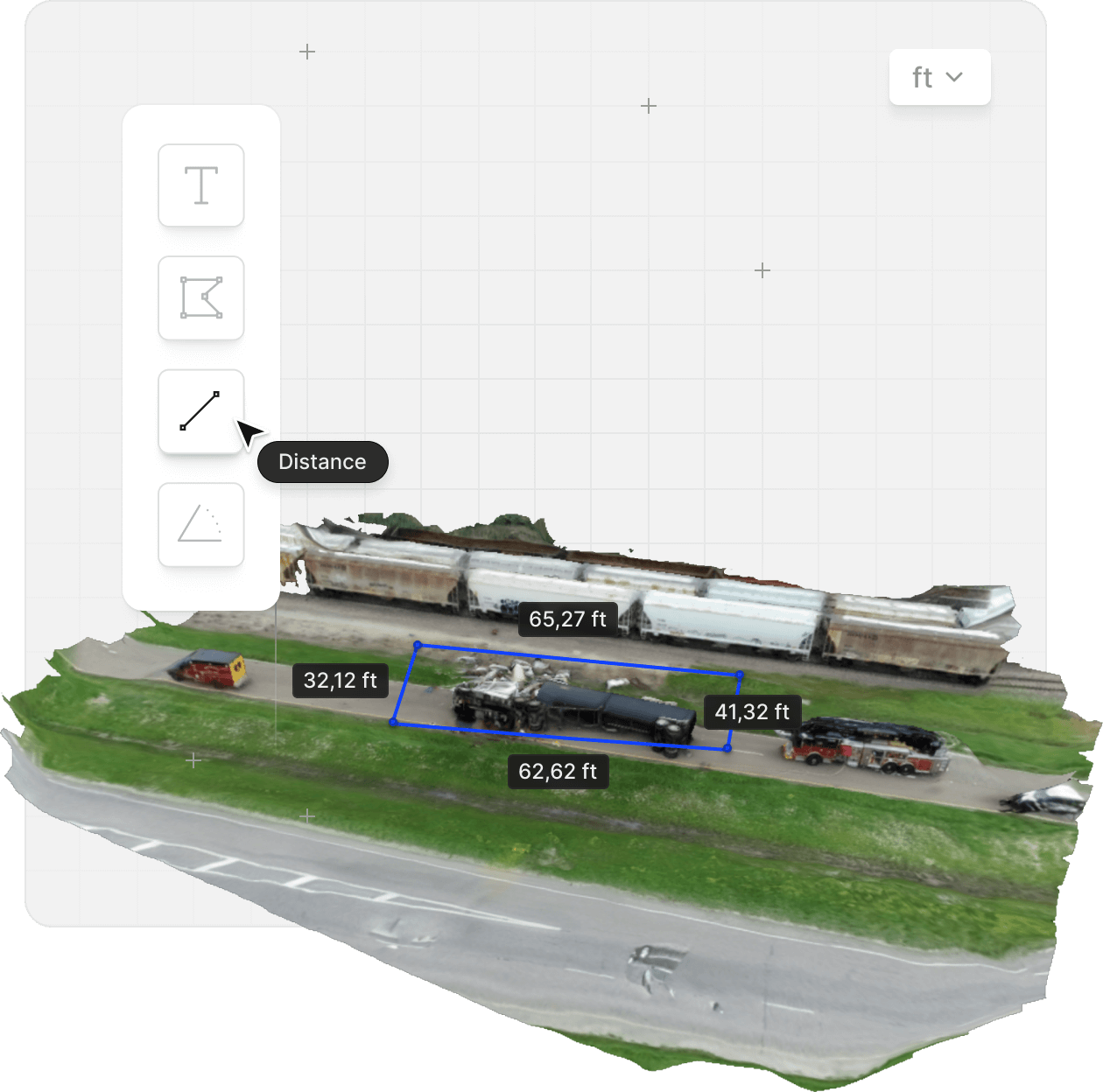
In an exclusive interview with DRONELIFE, SkyeBrowse CEO Bobby Ouyang said he sees this challenge across public safety and other industries. SkyeBrowse provides a drone 3D modeling software and reality capture platform designed to simplify the process of turning drone and other video into 3D models. According to Ouyang, organizations moving to the platform often aren’t struggling with inadequate equipment or personnel. Instead, they are trying to move an advanced capability beyond a small group of experts.
“They usually have capable people and good equipment. What they lack is a result anyone can produce,” Ouyang said. “Capture planning, processing, troubleshooting, and then converting the output into something a colleague can open all take effort, so the work waits on whoever knows the software.”
When Expertise Becomes the Bottleneck
Ouyang says that dependence on specialists can become a hidden barrier to growth.
“That is true whether it is a crash scene, a construction site, or a facility inspection,” he said. “I have talked to construction and insurance teams with one drone guy, a laptop full of projects, and everyone else emailing him for screenshots. When he takes vacation, the program takes vacation.”
The problem isn’t necessarily the technology itself.
“A laser scanner or a photogrammetry pipeline can be extremely accurate and still be a bad fit, because the organization bought a capability and only ever got a specialist,” Ouyang said.
A small group of experienced users can learn complicated settings and workarounds. At 100 users, an organization may have multiple locations, different equipment and widely varying levels of experience.
“Some people use it daily. Some use it once a month and have forgotten everything in between,” Ouyang said. “Every confusing step becomes a support ticket or an inconsistent result.”
This creates a paradox for increasingly sophisticated drone programs: as the technology becomes more capable, the user experience may need to become simpler.
“As the technology gets more capable, more of the complexity should move into the software and away from the user,” Ouyang said. “Early adopters enjoyed the complexity. They experimented, troubleshot, and championed the tool internally. The next thousand users are patrol officers, site superintendents, adjusters, and facilities managers who have a real job and they spend about ten minutes for 3D mapping.”
For SkyeBrowse, that philosophy means pushing more of the technical work behind the interface. Its workflow uses video capture and cloud processing to create 3D models.
“Our goal every release is that the user does less,” Ouyang said. “A two-orbit automated flight, a video upload, and a model a few minutes later. Sophisticated on the inside, simple on the outside. Simple is the goal.”
Look Beyond the Feature List
The issue also suggests a different way to evaluate drone technology.
Organizations commonly compare features, accuracy and price. Ouyang argues that they should also consider the human and operational burden required to put those capabilities to work.
“A feature you cannot staff is a feature you do not have, and the license is only one part of the cost,” he said. “There is onboarding, refresher training, troubleshooting, administration, and all the time people spend waiting on results.”
Ouyang recommends asking how long a new user needs to produce a usable result independently and whether an occasional user can still complete the workflow a month after training. Buyers should also examine how much manual work takes place between capture and a usable result.
Another question may be even more revealing: Can the process continue if the organization’s most experienced person leaves?
“Then test the complete workflow with your own people, including whoever receives the information, at the worst time of day you will actually run it,” Ouyang said. “Enterprise buyers already ask these questions about every other piece of software. Drone software should get the same treatment.”
Capture Is Only the Beginning
Ease of capture alone does not make a program scalable.
“Capture is maybe a third of it,” Ouyang said. “The person flying is just the first person in the workflow.”
A project manager may need to compare conditions across multiple visits. An adjuster may need to assess damage. An investigator or prosecutor may need to understand a scene they never visited. Those users have little reason to become mapping experts simply to access the information.
“If any of those people need software installed, a license, or a training session to look at the model, it dies on the operator’s laptop,” Ouyang said.
SkyeBrowse allows models to be viewed through a browser link. Its Public Safety and Enterprise offering includes unlimited users, reflecting the idea that captured data becomes more useful when it can move beyond the original operator.
“The return on a capture grows every time another team can use it without asking the operator,” Ouyang said.
When Success Creates More Demand
Middletown Police Department provides an example.
According to figures provided by SkyeBrowse, the department documented crash scenes in 2023 using a laser scanner and five officers. Each scene took about two and a half hours. Across 65 crashes, that represented more than 812 officer hours.

After adopting SkyeBrowse, the department reported that one officer could clear the same type of scene in about seven and a half minutes. That officer does not need to be the department’s drone expert.
That distinction becomes important as success drives more demand.
“One team gets a great result, leadership sees it, and suddenly everyone wants in,” Ouyang said. “Construction wants progress documentation. Facilities wants building walkthroughs. Risk management wants a record of site conditions. In an agency, every crash and every callout ‘needs the 3D.’”
If all those requests depend on the same small group of experts, he said, “demand turns into a backlog, and the program gets a reputation for being slow.”
Designing for Success
Organizations can prepare for that problem before expansion begins.
Ouyang recommends training more users than initially seem necessary and establishing standard capture procedures. Organizations should also consider whether workflows depend on a single aircraft or device and establish data governance before their first important mission.
He also recommends involving the people who will eventually use the information.
“If a facilities manager needs specific equipment documented or a project manager needs the same view every visit, that should shape the capture,” Ouyang said. “Then measure the time from capture to actual use. That number tells you where expansion will create work before you roll it out to more teams.”
That may become increasingly important as Drone as First Responder programs and other routine drone operations drive higher flight volumes.
“The deciding factor is how much human effort each additional site, user, or mission requires,” Ouyang said. “As DFR and routine drone operations grow, flights per organization go up by orders of magnitude, and nobody is going to hire specialists at that rate.”
The principle applies beyond public safety. Construction, insurance and utilities face the same basic challenge as reality capture expands.
“Technology that becomes a bottleneck has a person, a workstation, or a manual step somewhere in that chain, and that bottleneck scales up quickly,” Ouyang said.
A successful drone program creates demand for more missions, more users and wider access to data. The real measure of scalability, then, isn’t simply what the technology can do. It is how much additional expertise and human effort each new mission requires.
The programs that survive their own success will be the ones designed to scale from the beginning.
Read more:

Miriam McNabb is the Editor-in-Chief of DRONELIFE and CEO of JobForDrones, a professional drone services marketplace, and a fascinated observer of the emerging drone industry and the regulatory environment for drones. Miriam has penned over 3,000 articles focused on the commercial drone space and is an international speaker and recognized figure in the industry. Miriam has a degree from the University of Chicago and over 20 years of experience in high tech sales and marketing for new technologies.
For drone industry consulting or writing, Email Miriam.
TWITTER:@spaldingbarker
Subscribe to DroneLife here.
