


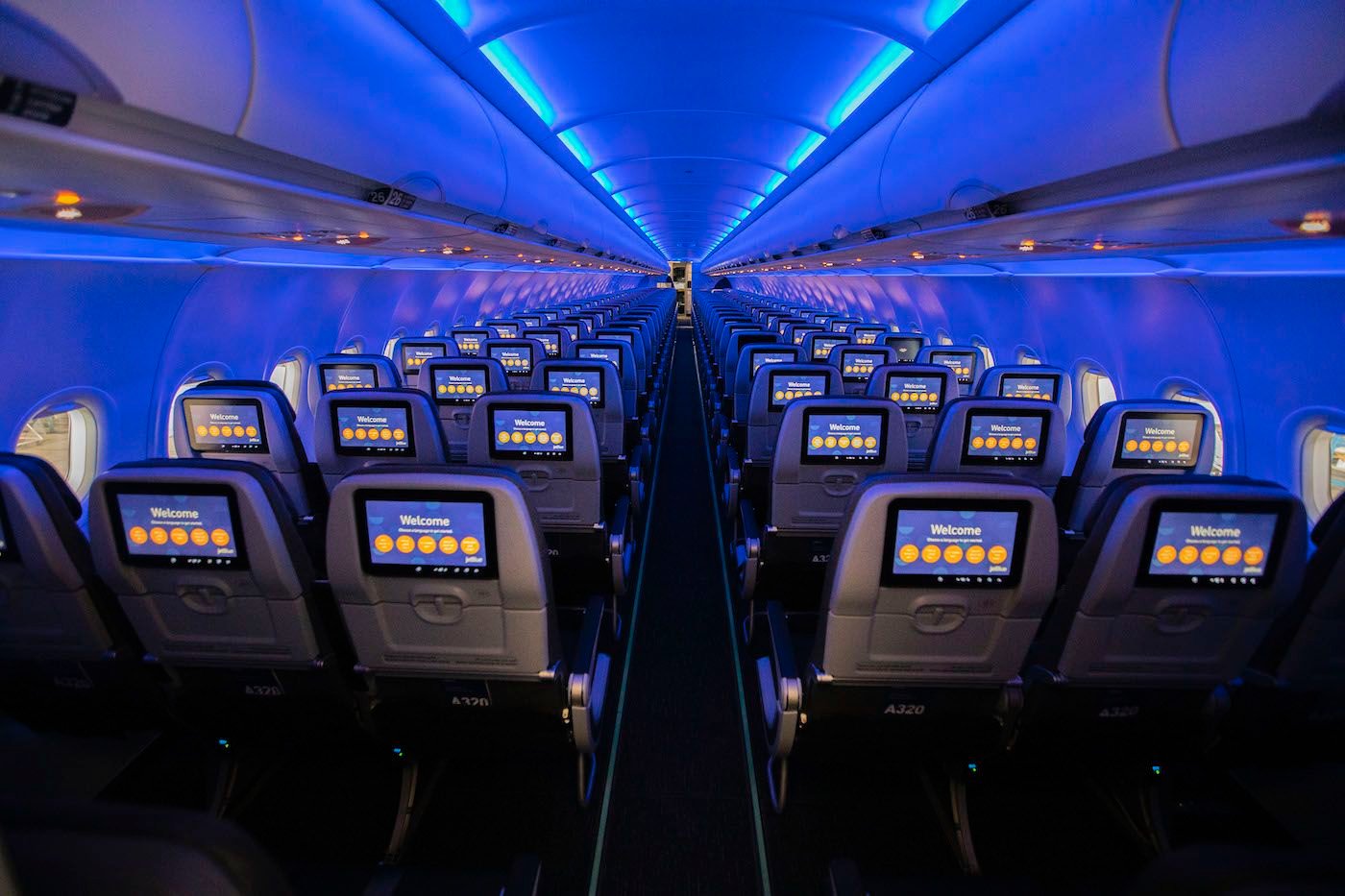
The most valuable digital real estate in aviation may already sit directly in front of the passenger. For three, six, or even twelve uninterrupted hours, a seatback in-flight entertainment (IFE) display can command attention that few airport billboards, social feeds, or search engines can replicate within the same journey context.
Until recently, most airlines evaluated that asset primarily through entertainment, passenger satisfaction, and competitive differentiation.
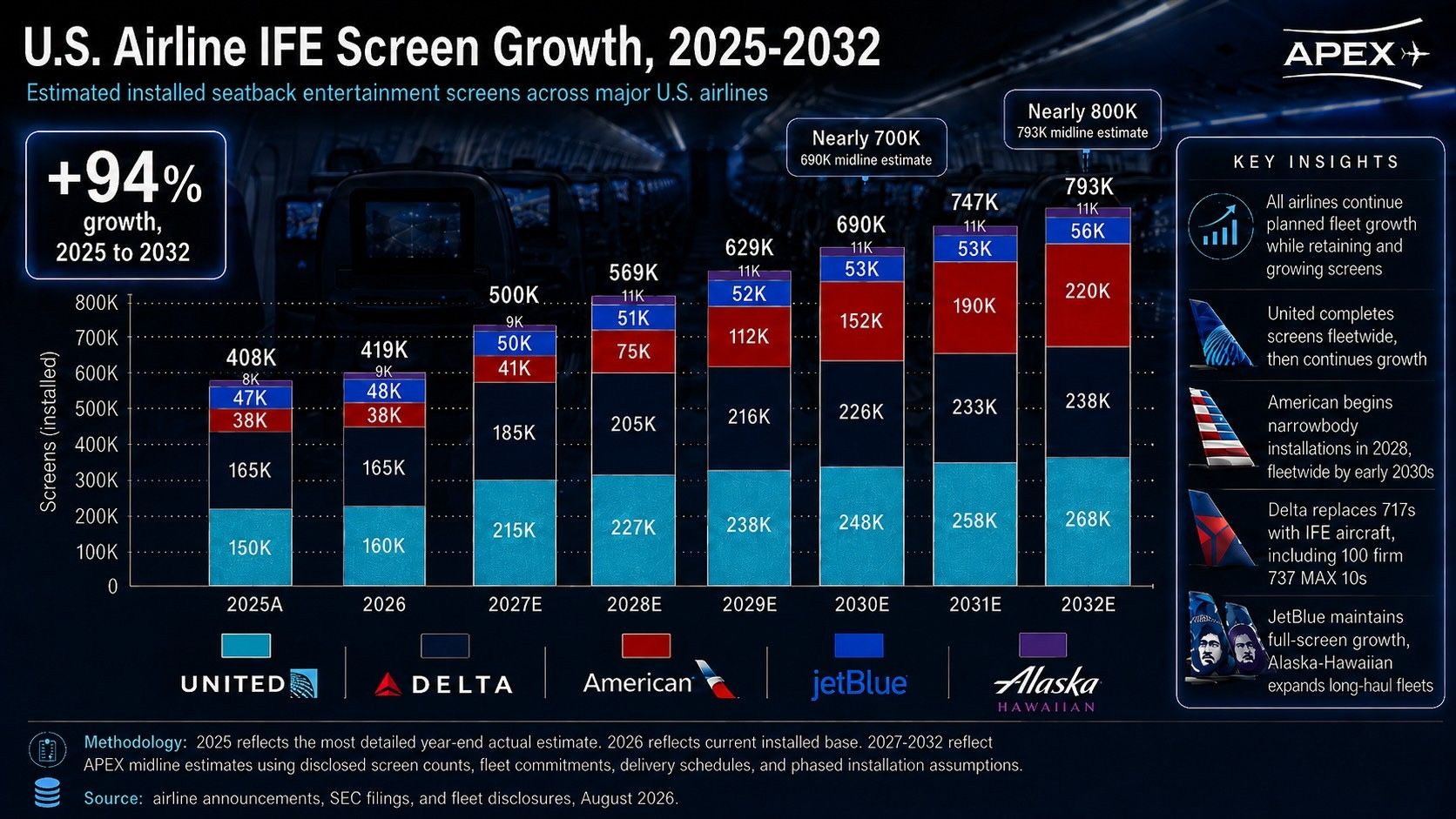
Research carried out by APEX suggests that this calculation could change far faster than conventional wisdom anticipates. Across five major US airline groups, our analysis projects that the installed base of seatback screens will rise from roughly 408,000 in 2025, to nearly 793,000 by 2032 – an increase of 94%.
At first glance, those numbers chronicle the emphatic resurgence of embedded in-flight entertainment, yet the more consequential story concerns what happens when nearly 800,000 screens become connected, intelligent, and commercially productive.
The screen becomes a platform
Connectivity creates the channel, identity supplies context, commerce enables the transaction, and artificial intelligence (AI) creates relevance. Once those capabilities converge, a seatback display can progress from being passive entertainment hardware into becoming an interactive passenger platform capable of recognising context, measuring engagement, and presenting something useful at precisely the appropriate moment.
Suddenly, the airline gains more than another cabin amenity. The airline gains a proprietary digital relationship spanning some of the longest uninterrupted periods of the passenger journey.
United Airlines is demonstrating the commercial proposition most visibly through Kinective Media, which reaches more than 108 million unique flyers, offers advertisers more than 120 targetable signals, and cites approximately 3.5 hours of attention per traveller across United-owned media channels.
Delta Air Lines is validating the media-network trajectory through moves toward personalised engagement, commerce, and dedicated advertising capabilities, while American Airlines is transforming the hardware question by restoring seatback displays across its narrowbody fleet.
Together, those decisions create a catalyst that international airlines will study not only for passenger preference, but for recurring commercial value.
From attention to a permission dividend
Passenger trust must anchor that economic model. Greater personalisation can produce stronger engagement and more valuable commercial outcomes, while excessive targeting can extinguish confidence with remarkable speed. Sophisticated AI may therefore sometimes create its greatest value by deciding not to display an advertisement at all.
Permission, transparency and restraint can generate what I would call a ‘permission dividend’. Passengers who perceive genuine value from personalisation gain greater reason to remain engaged, while airlines gain greater latitude to deliver relevant commerce without degrading the journey. Done correctly, that relationship can compound trust, engagement, commercial relevance, and reinvestment in the passenger experience.
Co-branded credit cards fundamentally altered airline economics by creating immense value beyond the transportation transaction itself. Checked baggage subsequently established another prodigious category of ancillary revenue.
Now, aviation’s connected commerce media could plausibly develop into one of aviation’s most consequential new opportunities since those breakthroughs. Advertising alone will not rival mature credit-card portfolios, yet upgrades, retail, loyalty activation, sponsored content, partner services, and permission-based offers create multiple revenue pathways from the same installed asset.
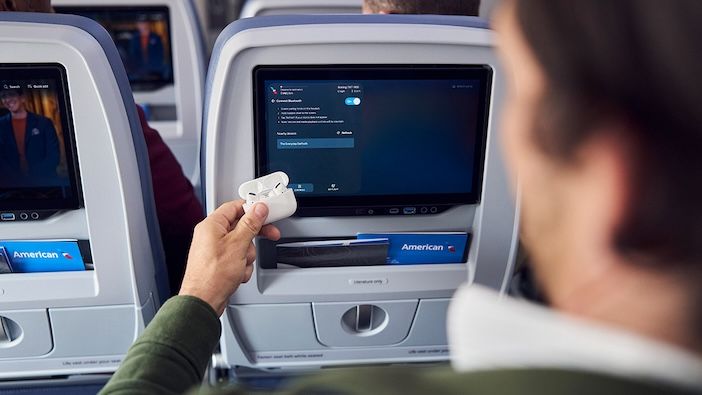
A new equation for aircraft interiors
The economics of aircraft interiors consequently now face a profound recalibration. Cabin planners have traditionally evaluated embedded IFE screens through capital expense, weight, power, seat integration, maintenance, reliability, content cost, and passenger satisfaction.
The moment a connected screen generates measurable recurring revenue alongside definitive NPS ROI where customers pay more, its economics change from being a cabin expenditure toward being a productive asset.
Investment committees can then frame the decision differently. Instead of asking only, ‘What will these screens cost?’, executives can ask, ‘What passenger and economic value can these connected assets generate throughout their useful lives?’ That distinction could influence line-fit selections, retrofit programmes, seat architecture, connectivity strategy, and future cabin design.
Improved economics can subsequently create a virtuous cycle. Stronger monetisation supports better screens, faster connectivity, and richer digital experiences, while those investments stimulate greater engagement and increasingly valuable interactions. Successful execution can advance inflight entertainment from being a perceived cost centre, to being a competitive differentiator, and now a sustainable revenue platform.
From 1.8 million screens toward five million
The nearly 800,000 IFE screens in the USA market are only the start of the story. Today, APEX estimates that approximately 1.8 million active seatback screens operate worldwide, including roughly 1.4 million outside the five major US airline groups in our current analysis.
APEX’s modelling indicates that, by the end of the 2030s, the worldwide installed base of seatback IFE displays will surpass five million. Reaching that threshold requires neither universal narrowbody adoption nor wholesale abandonment of personal-device entertainment among low-cost carriers.
Continued near-ubiquity across widebodies, accelerating single-aisle penetration, global fleet expansion, and selective retrofits can plausibly propel the industry toward that scale.
Five million screens would create something that aviation has never possessed at comparable magnitude: a global, airline-owned network of connected passenger touchpoints. Asia supplies extraordinary scale through fleet growth, Europe presents perhaps the largest conversion opportunity, and the Middle Eastern carriers can amplify the trend through premium-service expectations and differentiated onboard investment. International adoption could accelerate not from imitation alone, but from a fundamentally improved economic proposition.
Demonstrable recurring commercial returns materially change the comparison between embedded IFE and ‘bring your own device’. A proprietary screen capable of generating permission-based revenue competes on a markedly different basis from hardware justified exclusively through passenger satisfaction. That shift could help finance the passenger-experience improvements that make the platform progressively more compelling.
Aviation’s new golden era: higher revenue, greater returns, and AI ROI
That economic test reaches far beyond inflight entertainment. The theme of APEX FTE Expo in Singapore this November, ‘Aviation’s New Golden Era: Higher Revenue, Greater Returns & AI ROI’, challenges industry leaders to move beyond describing what artificial intelligence can accomplish, and identify the specific return each application actually delivers. Revenue provides one measure, while productivity, reliability, loyalty, engagement, and a discernibly better passenger experience can provide equally persuasive returns.
Connected inflight entertainment offers an unusually tangible illustration of all three elements. Intelligent commerce can create higher revenue, stronger asset economics can produce greater returns, and AI can help convert passenger data into relevance without sacrificing permission or trust. When those elements reinforce one another, technology stops functioning as an impressive demonstration and starts producing measurable value.
By the end of the 2030s, more than five million screens could connect airlines directly with passengers throughout the most attentive periods of their journeys. Such an opportunity reaches far beyond entertainment. Airlines will use those connected screens to fully encompass service, loyalty, commerce, and intelligently personalised engagement.
Aviation’s challenge now sounds deceptively simple: make every pixel earn its place, every interaction earn passenger trust, and every investment demonstrate a golden new aviation era of ROI.
About the author
 Dr Joe Leader is global CEO of APEX (the Airline Passenger Experience Association), IFSA (the International Flight Services Association), and FTE (Future Travel Experience).
