


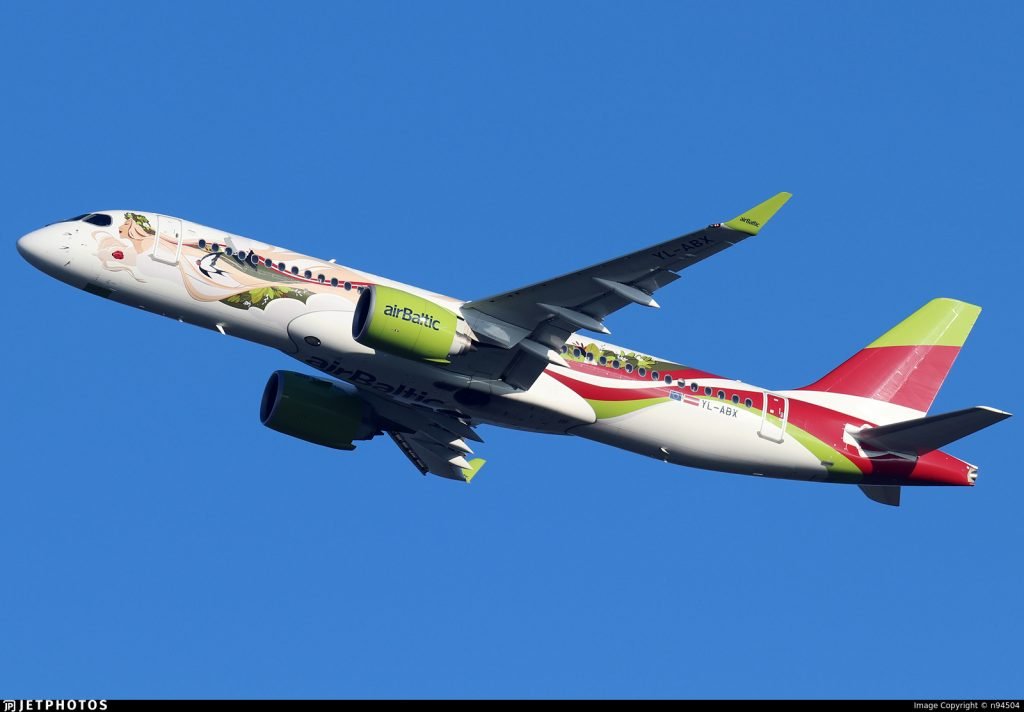
Following a recent announcement that it would shrink its fleet size by roughly a third, Latvian flag carrier airBaltic opened the week on yet another minor chord by applying for bankruptcy protection under Chapter 11 in the United States. The airline, where German aviation powerhouse Lufthansa (LH/DLH) holds a minority stake, is seeking to restructure its finances while continuing to operate its scheduled flights.
For passengers, the move most likely won’t have too much of an effect. Flights are expected to operate as scheduled while airBaltic (BT/BTI) moves through the process. For airBaltic itself, however, things are considerably more complicated. Chapter 11 gives the airline breathing room to restructure its finances while continuing to fly, but changes will need to be made to convince stakeholders to renegotiate contracts and give airBaltic a new lease on life.
Why is airBaltic in Chapter 11?
So, how did Latvia’s national airline end up in a U.S. bankruptcy court?
The short version is that airBaltic has been squeezed from several directions at once. Rising fuel prices have surely played a crucial part, with airBaltic having sold its remaining fuel hedges earlier this year, leaving it exposed to the spot market as prices surged. The airline’s court filings say it sold the hedges in March to avoid breaching liquidity requirements, leaving its fuel needs for much of the rest of 2026 exposed to market prices. Those prices subsequently skyrocketed after the war between the U.S. and Iran broke out earlier this year.
The Latvian carrier, which historically benefited greatly from shuttling travelers between the Baltics, Russia and Western Europe through its efficient base in the capital Riga (EVRA/RIX), also saw several profitable routes disappear after Russia’s invasion of Ukraine.
Let’s not forget Covid. Like virtually all airlines aimed at hauling human beings (cargo airlines in general fared better), airBaltic took a monstrous hit while humanity added the word “quarantine” to their Scrabble collection. As a side note, the airline management didn’t sit idle during the pandemic. Rather, it accelerated the shift to an all Airbus A220-300 fleet that it also acted as launch operator of. While the aging fleet of Boeing 737-300 and 500’s was mostly decimated at the time, this decision saw the airline wave goodbye faster than most expected to the sizeable number of Bombardier Dash 8 Q400 that served the bread-and-butter routes linking the Baltic capitals together.
Last, but certainly not least, Pratt & Whitney’s geared turbofan engine problems acutely affected airBaltic’s operations. The airline’s shift to an all-A220 fleet left it exposed to grounded aircraft and long maintenance windows due to supply chain disruptions. In 2024, engine shortages kept an average of eight aircraft out of service, peaking at 13 in the fourth quarter, and forced the airline to lease aircraft and crews from other operators during the peak summer season when it would normally be operating many wet-lease flights on behalf of other carriers. In 2025, AirBaltic canceled more than 4,000 flights during the summer season and suspended or reduced frequencies on 40 routes.

Chapter 11 becomes the next step
All in all, it’s been a challenging couple of years, to say the least.
Earlier this year, airBaltic attempted to raise additional financing outside of Chapter 11. The airline also received a €30 million loan from the Latvian government to remain afloat. But further state support is constrained by European Union state-aid rules.
Eventually, the airline’s board concluded that a court-supervised restructuring offered the clearest route forward.
Why file in the United States?
This is probably the part that sounds strangest to outsiders. Why would Latvia’s national airline, headquartered in Riga and operating an overwhelmingly European network, file for bankruptcy protection in New York?
Chapter 11 is designed to allow a company to continue operating while restructuring its debts under court supervision. The green-tailed airline says its financial obligations are international in nature, making a single court-supervised process useful for dealing with creditors, aircraft lessors and other stakeholders across multiple jurisdictions.
Current CEO Erno Hildén also is no stranger to the process. He joined neighboring flag carrier Scandinavian Airlines (SK/SAS) as Chief Financial Officer (CFO) in April 2022, just a few months before the airline applied for Chapter 11 in July. His experience of navigating these troublesome seas may come in handy.
To be able to keep operations running throughout the process, the airline has secured a commitment for €350 million in financing from a who’s who of international credit institutions. This lifeline, however, comes at a significant cost, with the interest rate reportedly hovering around 12%. Ouch.
On September 16, a U.S. bankruptcy judge approved airBaltic’s initial requests, allowing the airline to access the first slice of a cool €140 million.

The A220 fleet is about to get smaller
For users of Flightradar24 (and, well, travelers), one notable effect will be the aforementioned change to the airBaltic fleet. From a recent fleet size of just north of 50 A220-300s, a reduction was already announced weeks ago, seeing numbers shrink to 36 aircraft by the end of 2026. Most will be returned to lessors, as the airline owns only 15 of those aircraft outright.
The scale of the change becomes clearer when you look at where airBaltic was heading only a few years ago. The airline had ambitions to build a fleet of around 100 aircraft as it developed bases in neighboring capitals Tallinn and Vilnius and expanded its network across Europe.
Today, the plan is considerably more modest.
Completion of the Chapter 11 process is set to appear around June 2027. The next few months will determine whether the airline emerges from Chapter 11 as a leaner version of the airBaltic we know today—or whether further changes are required.
The post AirBaltic Has Filed For Chapter 11. Here’s What Happens Now appeared first on Flightradar24 Blog.
