


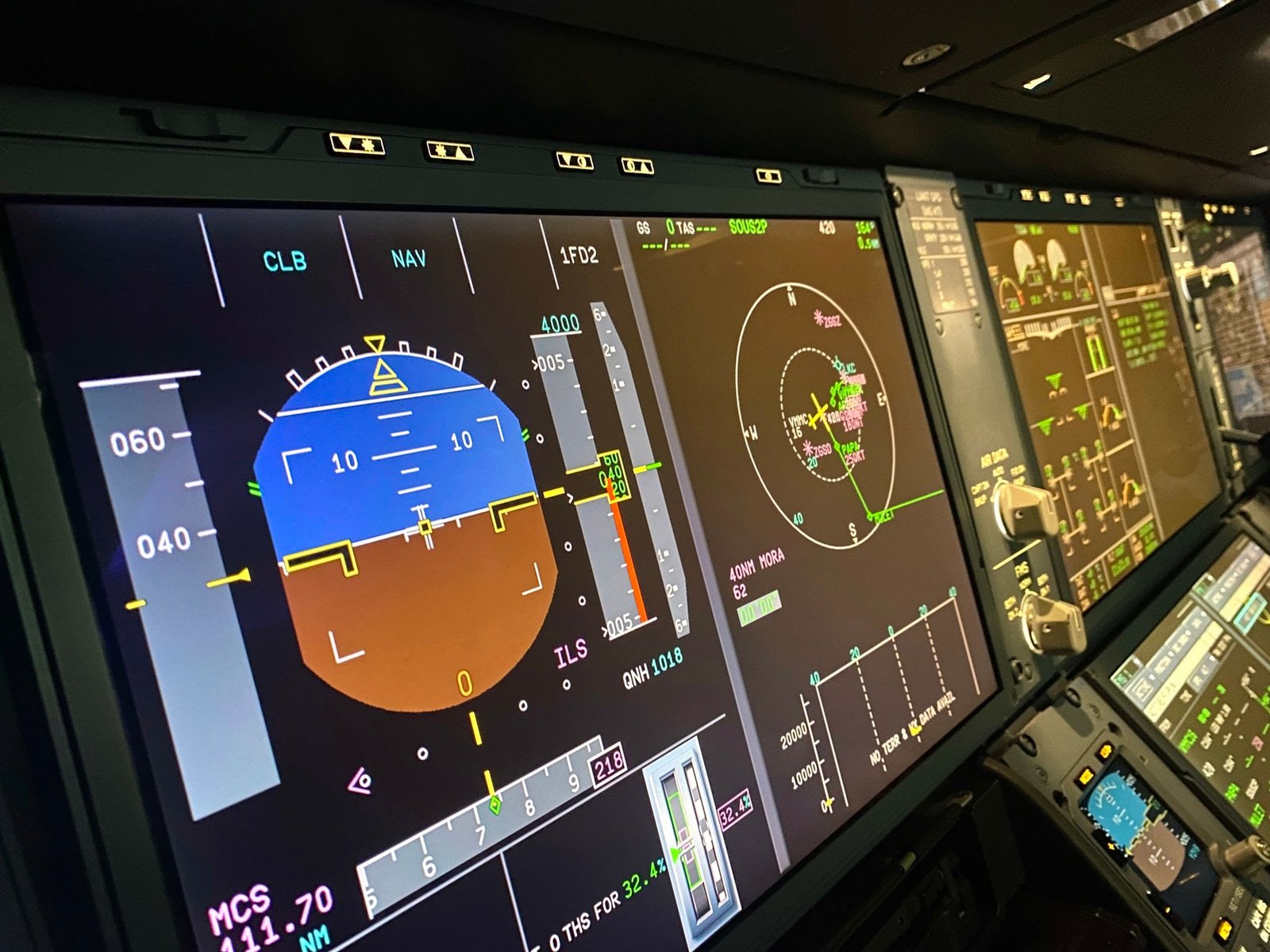
STOCKHOLM — Aviation authorities and airlines are on high alert following multiple reports of severe GPS interference over Swedish airspace within the last 24 hours. The disruptions have affected several long-haul and regional commercial flights, forcing flight crews to rely on back-up navigation systems and seek ground assistance.
On Thursday, September 17, 2026, a KLM flight en route from Amsterdam to Helsinki experienced sudden navigation anomalies while cruising over southern Sweden. The flight crew contacted maintenance control mid-flight to request assistance with a full system reset to resolve avionics errors triggered by persistent satellite signal loss.
Hours later, early Friday morning, an Air Canada flight traveling from New Delhi to Toronto reported similar GPS jamming while passing through Swedish airspace. Both aircraft were able to maintain safe operations and continue their routes.
GPS jamming occurs when ground-based radio transmitters broadcast high-powered noise on the exact frequency bands used by Global Positioning System (GPS) satellites. Because satellite signals travel thousands of miles to reach an aircraft, they are inherently faint; a relatively low-power jammer on the ground can easily overpower these incoming signals, effectively blinding the plane’s GPS receivers.
While jamming does not physically damage the aircraft or cause it to lose altitude, it disables modern automated navigation functions, triggers nuisance cockpit alarms, and forces pilots to switch to traditional ground-based radio beacons (VOR/DME) or onboard inertial navigation systems. Aviation regulatory bodies continue to monitor the growing frequency of electronic interference along busy European flight corridors.
