


Investigator cites 13 similar incidents.
Canadian investigators have traced the 2023 inflight failure of a De Havilland Canada Dash 8-400’s Pratt & Whitney Canada (P&WC) PW150A to a fractured low-pressure compressor (LPC) rotor blade.
The Transportation Safety Board of Canada (TSB) links the blade fracture to mechanical resonance that can be exacerbated by factors including temperature and an environmental control system setting, according to an accident report released on 22 September.
The report cites 13 similar events since 2012 involving PW150A LPC failures.
The 2023 event involved a WestJet Encore Dash 8-400 (registration C-GVEN) operating a flight from Kamloops to Calgary. After ascending to 25,000ft, the aircraft’s right-side PW150A surged with a “bang”. The aircraft yawed right and the engine’s turbine temperature hit 1,100°C (2,012°F) – exceeding its 850°C redline.
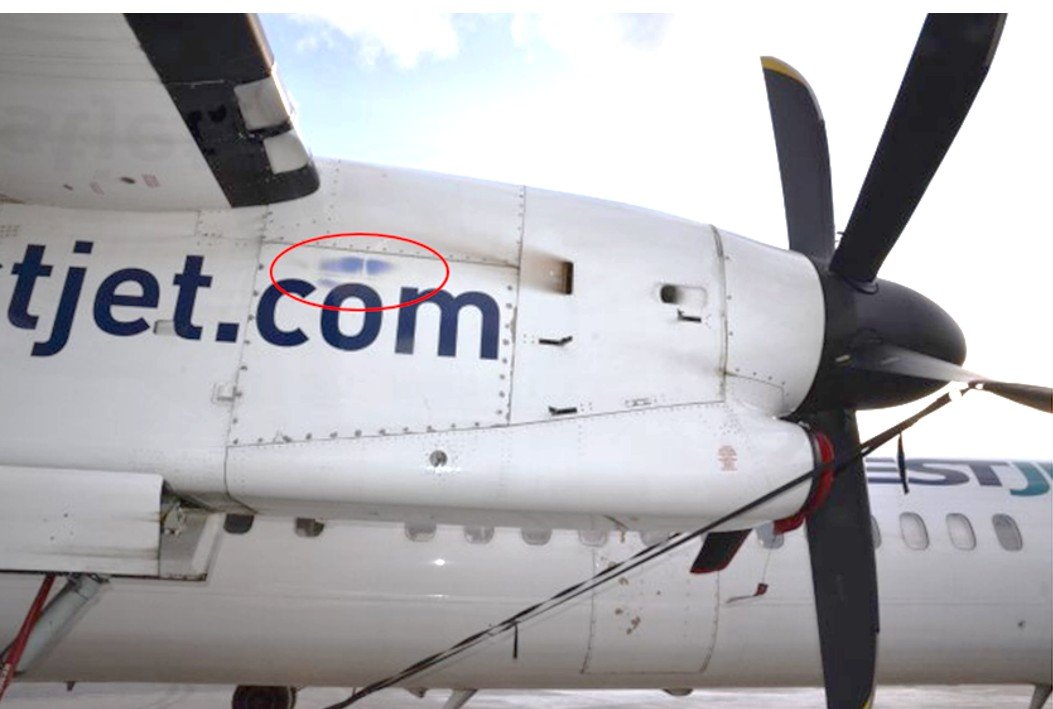
In response, the engine’s full-authority digital engine control (FADEC) system increased “fuel flow to attempt a power recovery”. But the added fuel came out an “exhaust duct, resulting in a fire” that damaged cowlings and door and fairing components.
The pilots shut down the engine, declared an emergency and diverted to Kelowna with no injuries to passengers or crew.
The TSB says a rotor blade in the engine’s second-stage LPC fractured and failed.
“The rotor blade fractured as a result of a high-cycle fatigue crack, which had initiated from a subsurface location and progressed due to mechanical resonance at 26,000rpm,” the report says.
The PW150A’s LPC rotor has a 20,000-cycle life limit but the blade failed after only 909 cycles.
Working with P&WC, the TSB identified factors it says possibly contributed.
Those include the rotor being subject for significant time to the mechanical resonance, which specifically occurs at 26,000rpm.
“When the… rotor is exposed to 26,000rpm for a period of approximately 30 minutes, the effect on the engine could be damaging,” the TSB says.
Such resonance can be more common at temperatures colder than -25°C and after an engine’s second-stage LPC rotor has been replaced – the latter resulting from a new rotor’s blades having less “tip clearance” than the prior blades.
The failed WestJet Encore PW150A’s second-stage LPC rotor had been replaced with a new rotor in March 2022 by StandardAero in Singapore, the TSB says.
It also cites an environmental control setting as a contributing factor, saying operating at the “minimum” bleed-air setting increases the engine’s operating speed, making mechanical resonance more likely.
“WestJet Encore had been utilising the ‘BLEED MIN’ valve setting to enhance fuel savings during climb and cruise phases of flight,” the report says.
The airline does not respond to a request for comment but the report says it has since revised its procedures.
P&WC does not immediately respond to a request for comment.
But it addressed the LPC failure risk in 2023 by issuing guidance calling on operators to inspect rotor blades.
Then in June 2025 P&WC issued a service bulletin calling on airlines to install new FADEC software. That update modifies the system’s “fuel flow limit” to prevent fire.
Canadian aviation regulator Transport Canada also issued an airworthiness directive addressing the concern.
The post TSB links Dash 8 engine fire to blade failure caused by mechanical resonance first appeared on FlightGlobal.
