


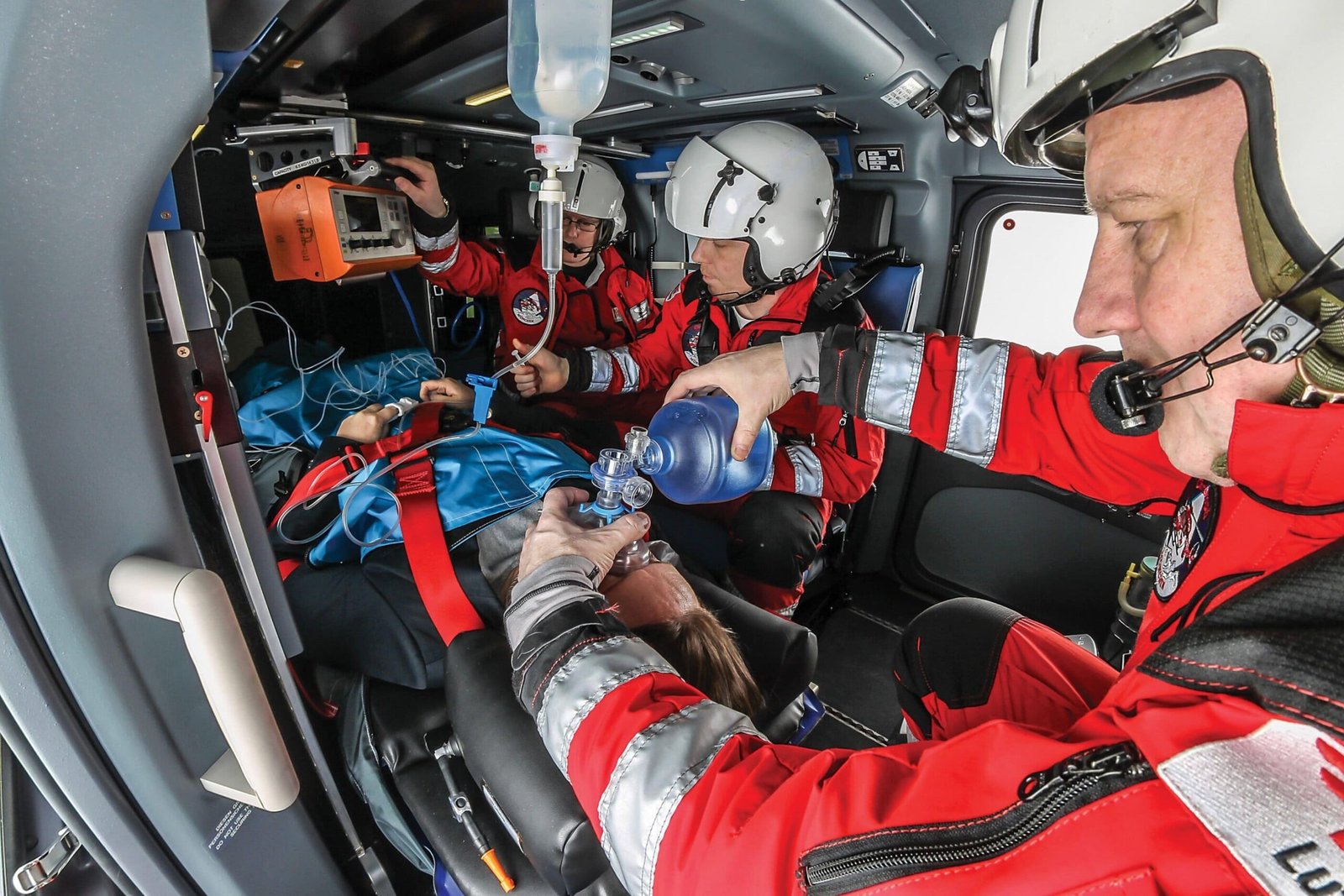
Look to the skies over Europe’s major hospitals, and you’re likely to see Airbus H145 helicopters touching down and taking off, delivering patients to life-saving care.
This nimble, twin-engine aircraft is a go-to platform for a growing number of air ambulance operators, and many rely on the H145 HEMS AC70 medical interior from Bucher Leichtbau to fulfill their critical missions.
“This product was a response to real feedback from real operators,” said Rolf Kraus, commercial director, MIC.
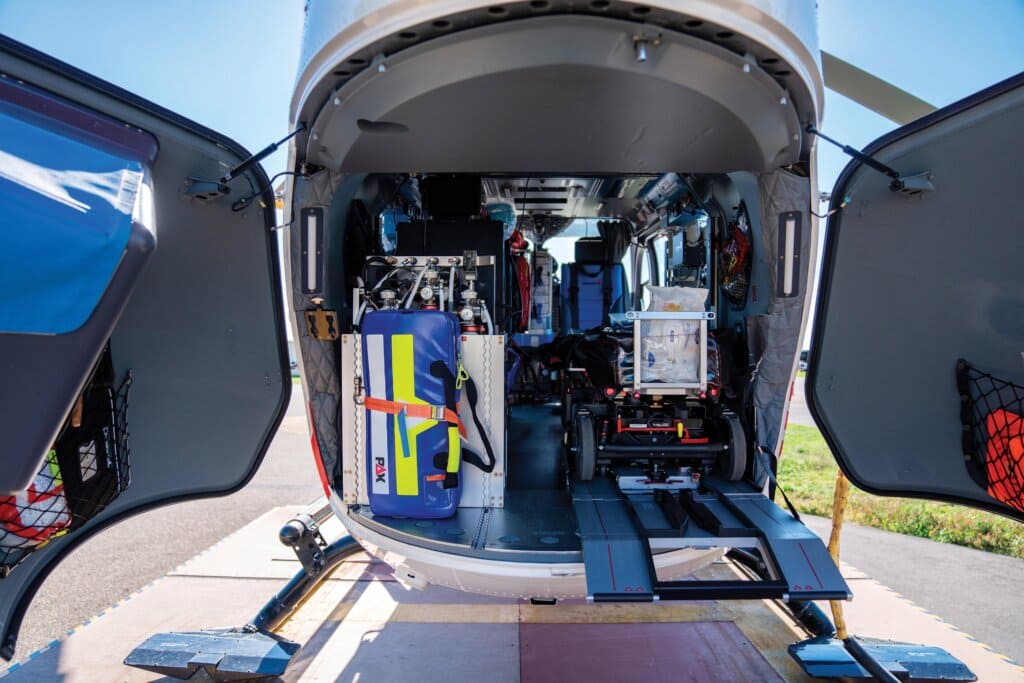
“We spent time with the people who fly and work in these helicopters every day, and we built the AC70 around what they told us was missing. The goal was straightforward: An interior that works for the crew and the patient, not one they have to work around.”
Flexibility and modularity are at the heart of this lightweight, customizable mobile medical platform, drawing on Bucher Leichtbau’s more than 70 years of aviation experience and expertise.
“Helicopter emergency medical services (HEMS) operators don’t run identical missions, and their equipment shouldn’t force them into a one-size-fits-all setup,” said Kraus.
“Every AC70 is a personalized final delivery, configured together with the operator to match their specific setup, including medical equipment integration. That level of individual attention, delivered within a certified framework, is something very few suppliers can offer.”
Bucher Group traces its history back to 1953, when Heinrich Bucher created the company in Fällanden, Switzerland.
Its founding principles were to fly with minimal weight and maximum reliability; and those achievements are now hallmarks of a deeply-trusted firm with premier HEMS customers across Europe and North America.
“In helicopter applications, weight, functionality and flexibility are always the top priorities, and the AC70 addresses all three,” said Kraus.
“We engineered it to be as light as possible without cutting corners on strength or durability.”
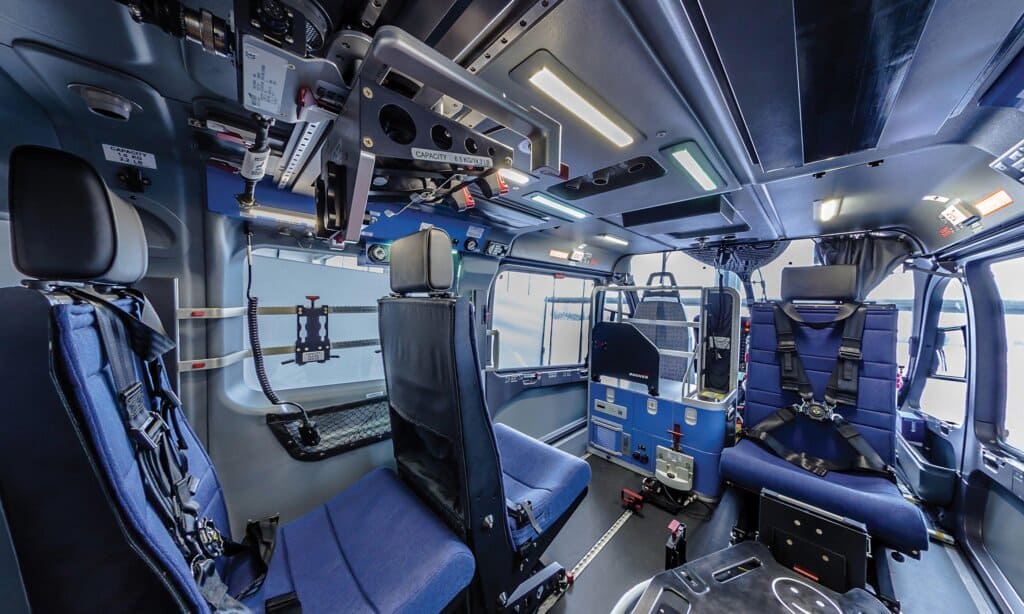
Key features of the AC70 include:
- Ergonomic design and workflow improvement;
- All equipment is certified under one supplemental type certificate;
- Full medical certification with the CE label for the highest safety standards;
- A functional and hygiene-conscious concept for perfect working conditions;
- Rear, center, and side LED lights with night vision mode;
- Quick-release fittings for easy equipment removal; and
- Well-placed service panels offering power outlets, intercom, and oxygen pressure displays.
The AC70 is said to be the first modular stretcher system with European Union Aviation Safety Agency (EASA) approval for use under all flight conditions. Its customers include major operators like Germany’s DRF Luftrettung and ADAC, and many others.
“The interior of a rescue helicopter has a direct impact on patient outcomes and crew performance,” said Kraus.
“The AC70 was designed with that in mind, and every feature in it exists for a reason. For operators equipping or re-equipping the H145, we believe it is the most thoroughly developed and operator-tested solution on the market.”
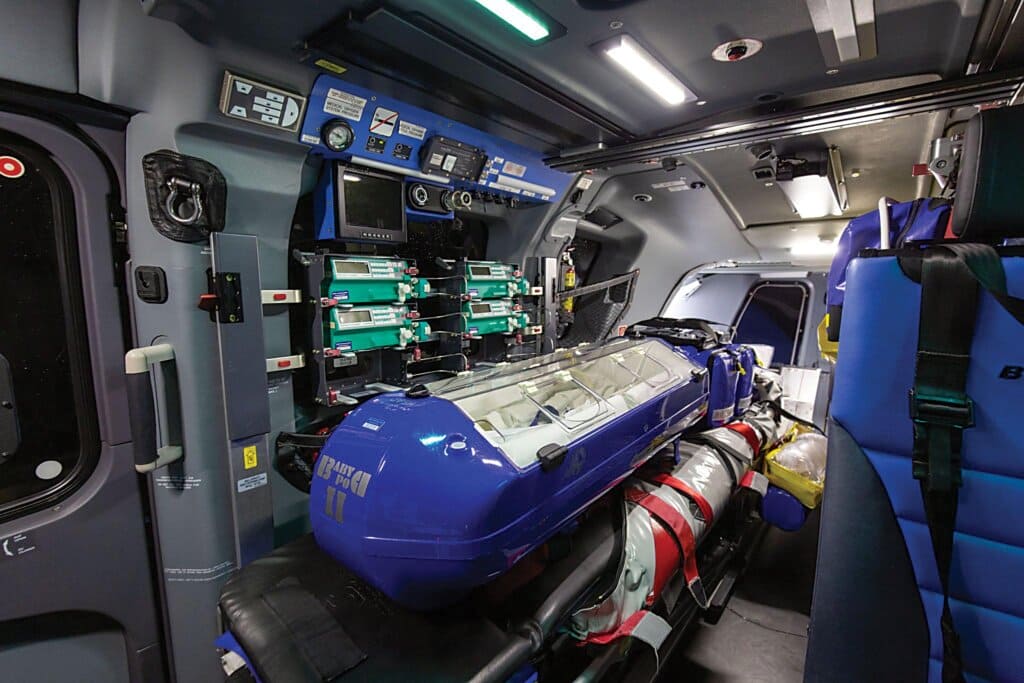
It’s best to experience the AC70 in-person. Bucher Leichtbau encourages interested operators to get in touch to arrange a visit or demonstration.
“The thinking behind the design becomes much clearer when you see it in action,” said Kraus.
“The loading process, the workspace, the lighting, the way everything fits together under pressure. Our crews put a lot of care into getting those details right, and we are proud of what they have built.”
This sponsored article was created by Insight magazine, the sponsored content division of MHM Publishing, on behalf of Bucher Leichtbau.
