


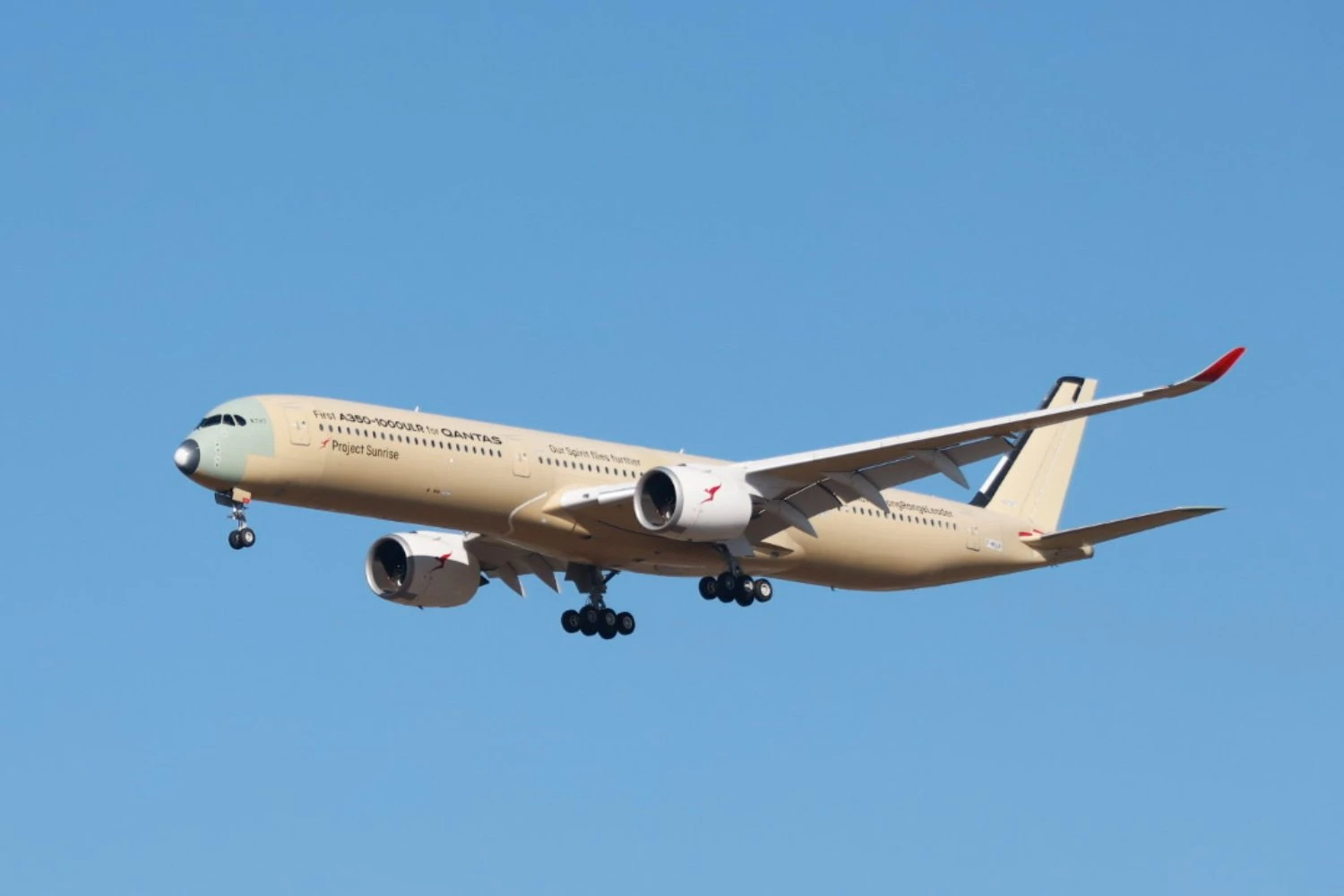
A 24-hour Airbus A350-1000ULR test flight completed in July has officially become a world record, surpassing a Boeing 777-200LR mark that had stood for 21 years.
The Qantas-bound aircraft covered 12,503 nautical miles (23,155 km) between Melbourne and Toulouse on July 27-28, according to data independently validated by the Fédération Aéronautique Internationale (FAI) and Flightradar24. Guinness World Records has now recognized the mission as the longest flight by distance performed by a commercial aircraft.
The previous record belonged to a Boeing 777-200LR, which flew 11,664 nm (21,601 km) from Hong Kong to London in November 2005. The A350 therefore extended the record by 839 nm (1,554 km), or about 7.2%.
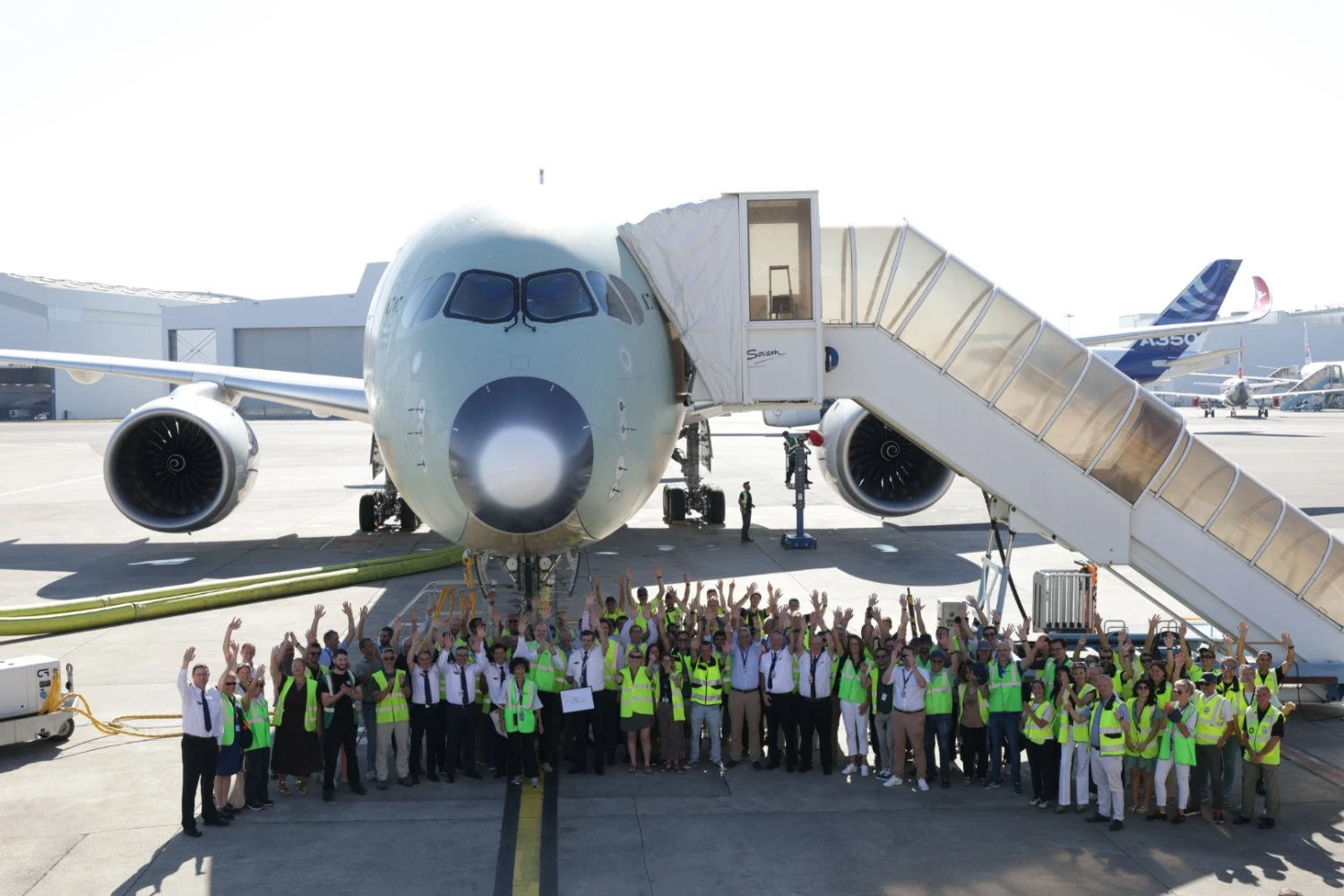
The achievement should not be confused with the world’s longest scheduled passenger flight. The Airbus mission was a development flight with only 13 people aboard, including Airbus test pilots and engineers, Qantas pilots and an FAI representative.
Route designed for endurance
Melbourne and Toulouse are separated by considerably less than 12,503 nm. Rather than taking a direct route to France, the A350-1000ULR flew northeast across the Pacific, passed near Los Angeles, crossed North America and the Atlantic, flew over London and then continued south to Toulouse.
Follow Air Data News: WhatsApp | Instagram | LinkedIn | Twitter | Facebook
The unusual routing was deliberate. Airbus needed the aircraft to remain operating for around 23 hours to reproduce and exceed the conditions expected on Qantas’ future Project Sunrise services.
The aircraft departed Melbourne at 17:27 local time on July 27 and arrived in Toulouse at 09:51 local time the following day. Flight time was 24 hours and 24 minutes.
Flightradar24 tracked approximately 12,460 nm during the flight. The official record of 12,503 nm comes from aircraft data subsequently validated for the record attempt.
The same aircraft had flown from Toulouse to Melbourne shortly before the record mission, completing a flight of about 19 hours as part of the A350-1000ULR test campaign.
Beyond a publicity record
The record was effectively a by-product of a more important certification exercise. Airbus designed the mission to validate the aircraft’s fuel management and other systems during an operation longer than the flights Qantas intends to perform commercially.
The A350-1000ULR was developed specifically for Project Sunrise and differs from the standard A350-1000 primarily through additional fuel capacity. A rear center tank holds about 20,900 liters (5,520 US gallons) of additional fuel and contributes to approximately 1,000 nm of extra range.
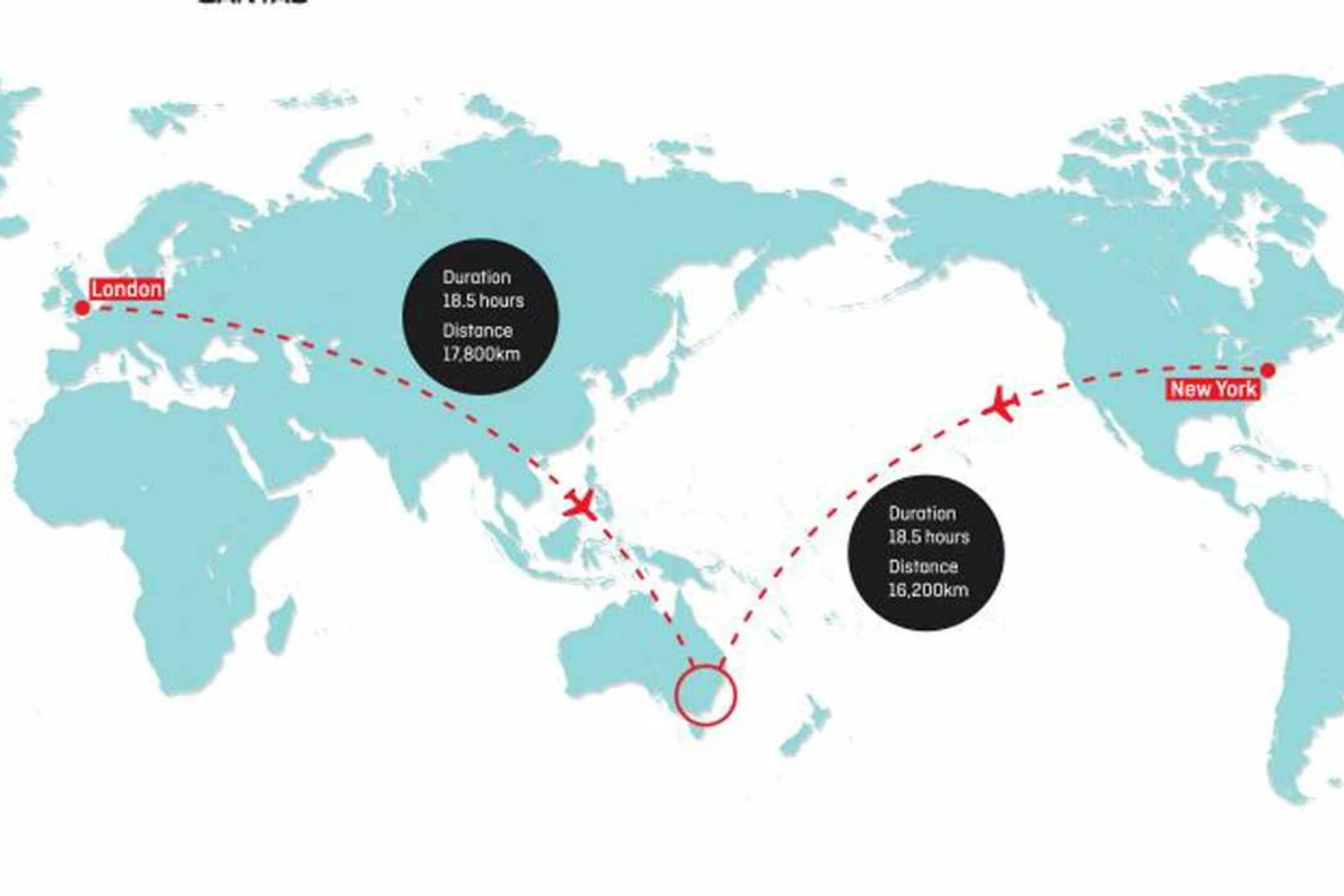
Qantas ordered 12 A350-1000ULRs to open nonstop services connecting Australia’s east coast with destinations that currently require an intermediate stop.
The first commercial route is scheduled to be Sydney-London in October 2027. Sydney-New York is expected to follow around mid-2028.
The program has not remained on its original timetable. The first A350-1000ULR had previously been expected to reach Qantas in October 2026, but delivery is now scheduled for April 2027.
Qantas will configure the aircraft with only 238 seats, including six in First Class, 52 in Business, 40 in Premium Economy and 140 in Economy. The unusually low density is intended both to improve passenger comfort on flights approaching 22 hours and to give the airline a large proportion of high-yield premium seats.
Commercial bet on ultra-long-haul flying
Project Sunrise is more than a technical exercise for Qantas. The airline expects the program to generate around A$400 million (approximately US$280 million) in additional annual EBIT once it reaches scale.
Six of the 12 A350-1000ULRs are expected to support new ultra-long-haul point-to-point routes, with the remainder providing network diversification and replacing some missions currently operated by the Boeing 787-9.
The aircraft that established the record is MSN 707, the first A350-1000ULR built and the heavily instrumented development aircraft used for the certification campaign. It will eventually be converted to Qantas’ commercial configuration.
Another A350-1000ULR is expected to become the first delivered to the airline in April 2027, meaning the aircraft that has now flown farther than any previous commercial airliner will not be the first Project Sunrise jet to enter passenger service.
