


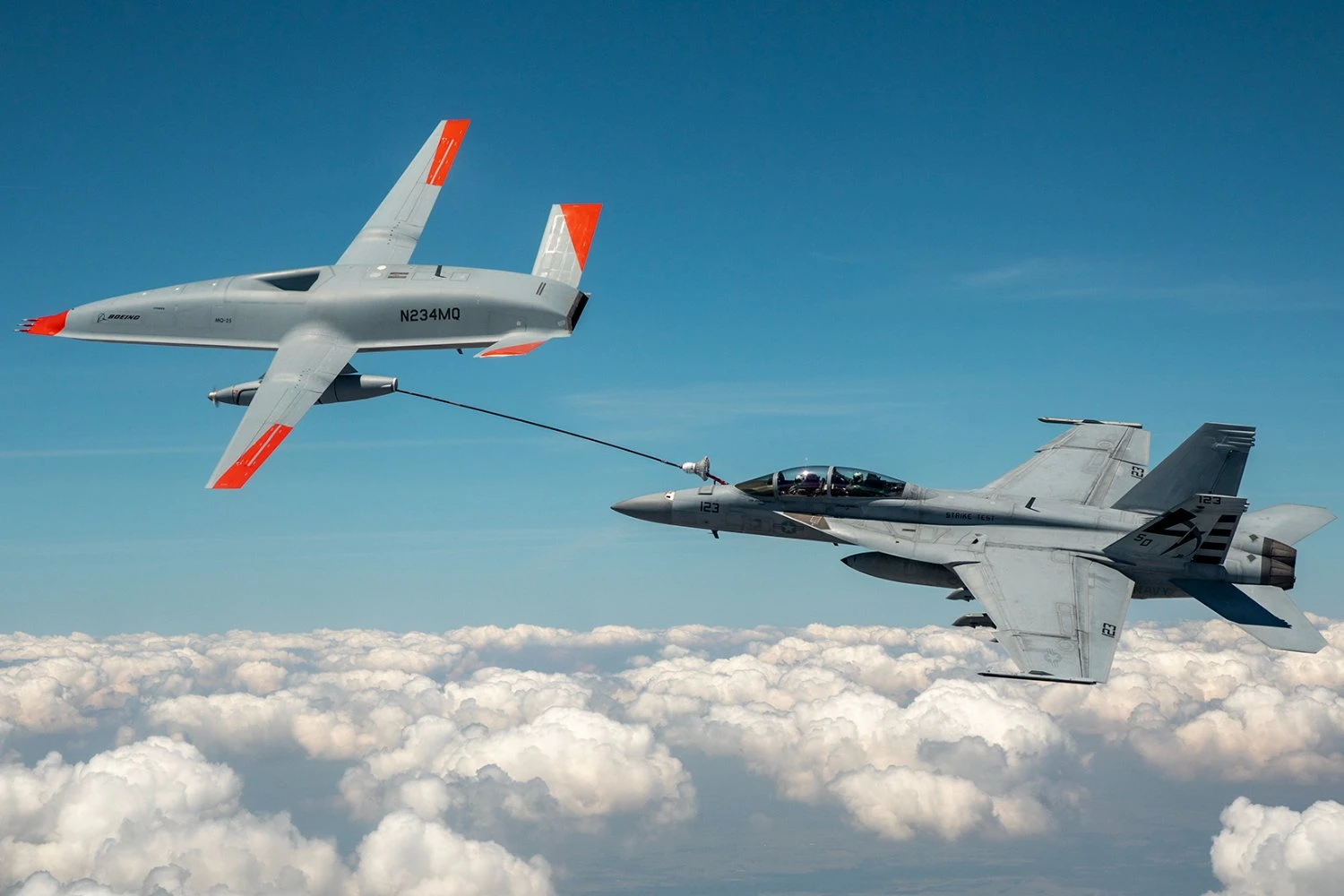
The U.S. Navy has remotely controlled a Boeing MQ-25A Stingray unmanned aerial refueling aircraft from an aircraft carrier located more than 2,100 miles (3,380 km) away.
The test was conducted aboard the USS Ronald Reagan (CVN-76) while the Nimitz-class aircraft carrier was underway in the Pacific Ocean. The MQ-25A remained at Boeing’s facility at MidAmerica Airport in Mascoutah, Illinois.
Operators aboard the carrier used its Unmanned Air Warfare Center (UAWC) to establish a beyond-line-of-sight connection with the aircraft through a proliferated low Earth orbit (pLEO) satellite network.
According to the Navy, it was the first time an aircraft carrier underway at sea established a control connection between a carrier-based UAWC and an MQ-25A.
Follow Air Data News: WhatsApp | Instagram | LinkedIn | Twitter | Facebook
The connection was established using the MD-5C Ground Control Station installed aboard the Ronald Reagan. The system allows Air Vehicle Pilots to command and control the unmanned aircraft without requiring a direct radio link.
The demonstration did not involve the MQ-25A flying 2,100 miles from the carrier. Instead, it tested the ability of personnel aboard a moving aircraft carrier to remotely connect to and control an aircraft located thousands of miles away.
The Navy said the test is part of a series of exercises intended to validate the procedures, networks and interfaces required for MQ-25 operations from aircraft carriers.

The Ronald Reagan received its Unmanned Air Warfare Center during a 17-month maintenance period completed this year. The control system is also designed to support other unmanned aircraft expected to join future carrier air wings.
First MQ-25A flew in April
The MQ-25A used in the program completed its first flight on April 25 from the same Boeing facility in Mascoutah. The aircraft flew for approximately two hours while Navy and Boeing Air Vehicle Pilots controlled it through an MD-5 ground control station.
The Stingray is being developed as the U.S. Navy’s first operational carrier-based unmanned aircraft. Its primary mission will be aerial refueling, taking over part of a role currently performed by F/A-18E/F Super Hornets.
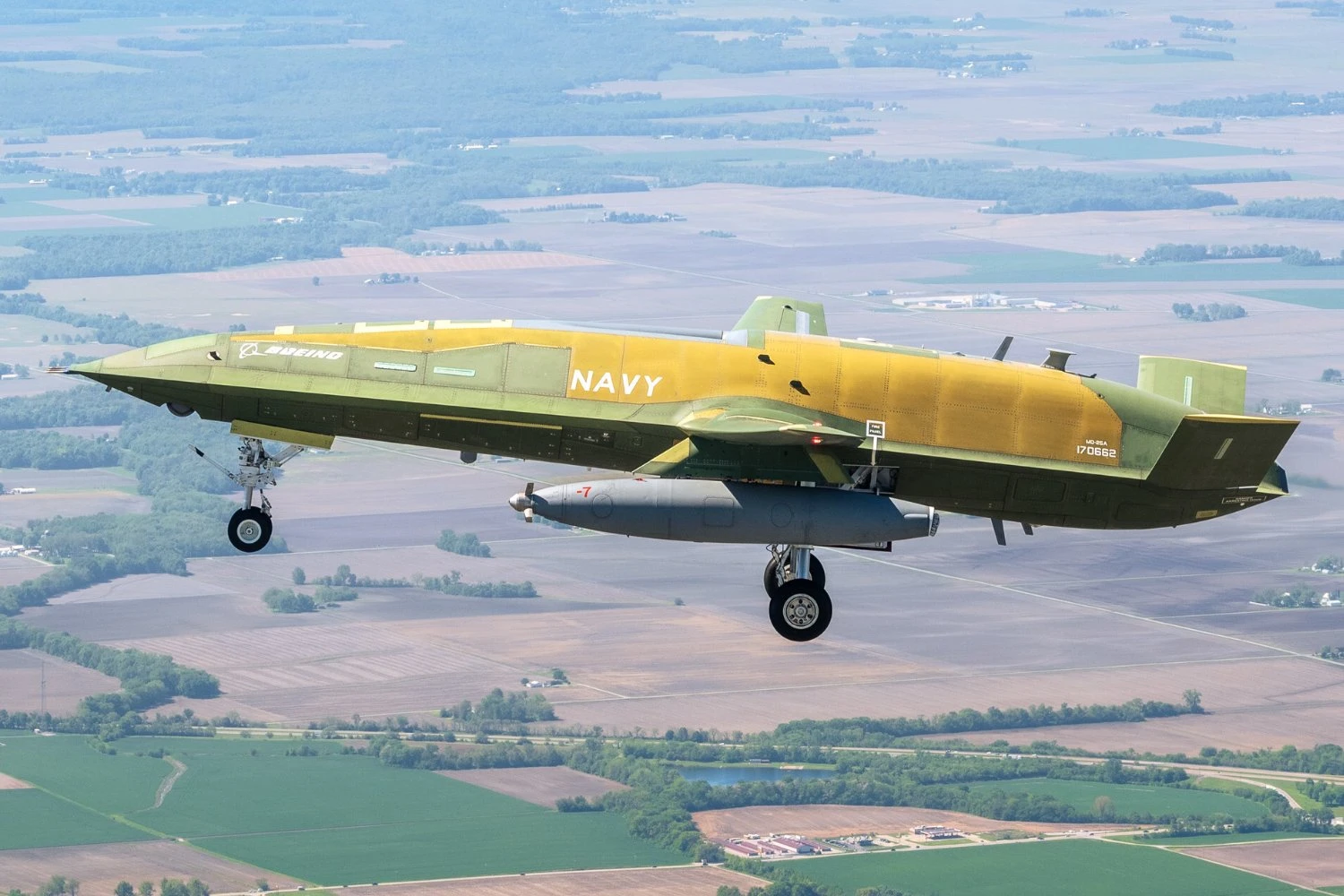
Moving the tanker mission to the MQ-25A is intended to free more Super Hornets for combat missions while increasing the range and endurance of carrier air wings.
The Navy plans to make all Nimitz- and Ford-class aircraft carriers capable of operating the MQ-25. The same mission-control architecture is intended to eventually control other carrier-based unmanned aircraft.
