


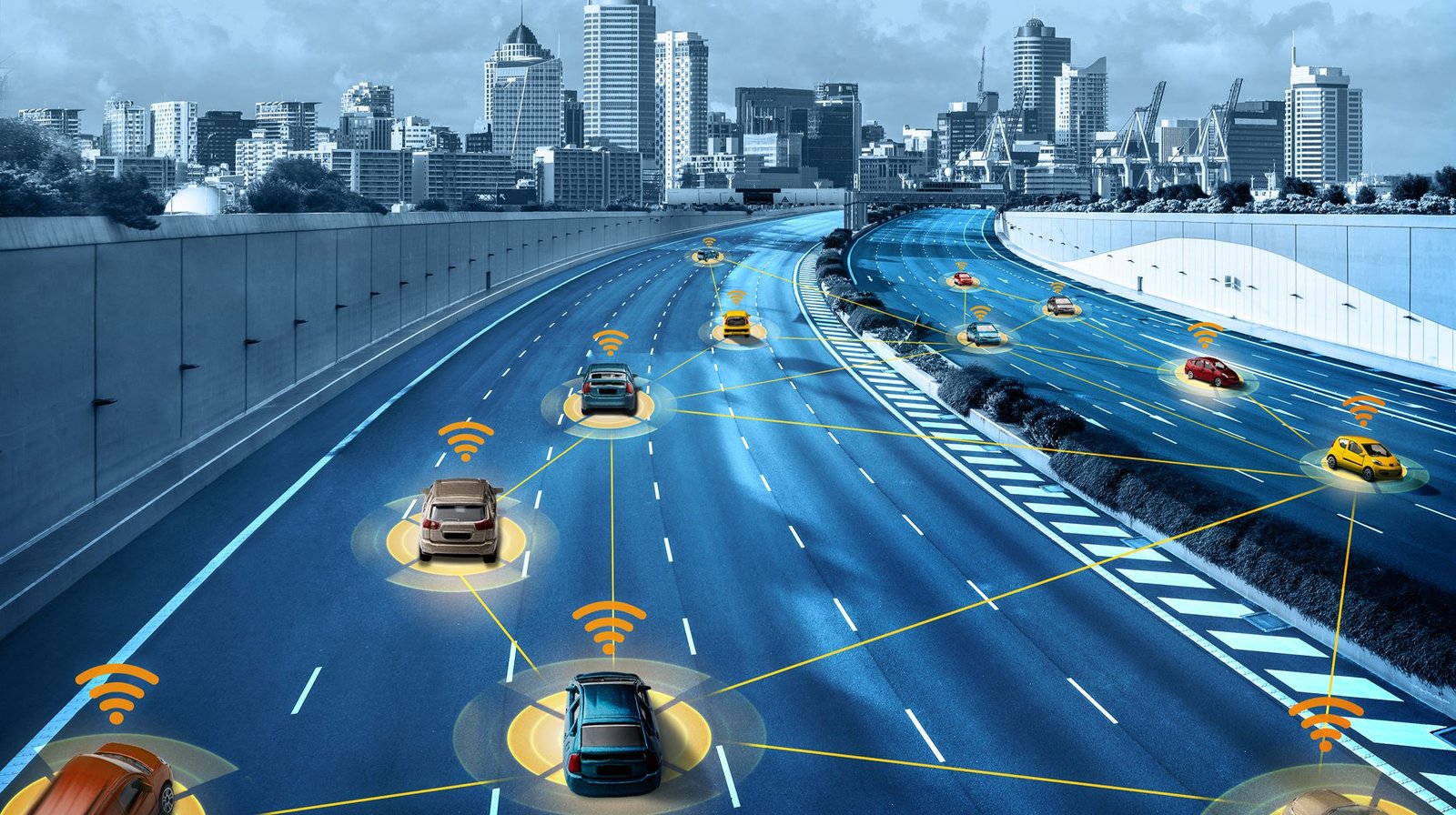
The Volkswagen Group and Cariad have announced that they are building a shared AV data flywheel, with Porsche leading the initial implementation and ecosystem integration together with Nvidia, Microsoft, and Voxel51.
With a fleet generating data equivalent to 11,000 average drivers per day, the Volkswagen Group is leading the development of a physical AI stack that connects fleet data to simulation, training and evaluation. The announcement was made at the Nvidia GTC Berlin event earlier this week.
Who does what
Volkswagen is building the physical AI stack. It brings its connected fleet, real-world driving data, vehicle platform and system requirements to build a faster development loop for advanced driving systems.
Voxel51 will provide the data layer for the flywheel. Its multimodal data platform turns raw fleet data into high-quality training and simulation inputs, then connects model failures back to the scenarios and data needed for the next iteration.
Nvidia will manage data retrieval, generation and simulation technologies, including Nvidia Cosmos Data Factory for preparing, augmenting and evaluating training data; Nvidia Omniverse NuRec libraries for reconstructing real-world drives; and open models and tools for testing driving systems in simulation.
Azure will provide the infrastructure. It supplies the cloud and compute needed to run these workflows securely at fleet scale on infrastructure Volkswagen already uses.
The collaboration brings together specialized systems across the AV workflow to create a reference architecture for auto makers building the next generation of advanced driving systems.
The data layer turns raw driving logs into better physical AI models
Advanced driving systems increasingly depend on models that can perceive, reason about and act in the physical world, using data collected from real vehicles operating in complex, changing environments. In physical AI, that makes real-world data one of an auto maker’s most valuable assets.
Voxel51 powers the following workflows in Volkswagen Group’s AV data flywheel: multimodal search and retrieval, automated labeling, scenario-based curation, dataset balancing, training data selection and model validation.
“The key to really industry-leading performance is to harness the data that your company has access to. You need to own the development and iteration loop, even if you don’t build every layer of the stack yourself,” said Voxel51 CEO Brian Moore.
Testing driving-software releases on reconstructed drives
Porsche and the Volkswagen Group are using the data flywheel to validate driving-software releases virtually. The process recreates camera inputs from real drives and compares simulated outputs with real-world measurements, aiming to make testing repeatable, accelerate feedback and reduce reliance on physical test drives.
Voxel51 checks raw driving data before reconstruction using around 80 tests covering sensor integrity, timing, calibration, trajectories, actors and coordinate frames. The audit reads MCAP files directly, helping identify errors before they affect downstream simulations.
The results determine whether a recording is suitable for reconstruction and simulation, where errors in calibration, synchronization, projection or metadata can compromize scene accuracy.
“Simulation is transforming how autonomous vehicles are developed, turning real-world driving experience into a continuous cycle of learning and improvement,” said Rishi Dhall, vice president of automotive at Nvidia.
“With Voxel51’s data platform and Nvidia Omniverse NuRec and Cosmos, Volkswagen Group can turn fleet data into high-fidelity simulation scenarios to accelerate the development and validation of next-generation driving systems.”
Voxel51 enables engineers to launch and track Nvidia Omniverse NuRec reconstructions and data generated by Nvidia Cosmos. Each synthetic output is automatically quality-checked and linked to its source clip, generation recipe and model. Completed reconstructions return with the original camera view, rendered output and reconstructed 3D scene ready for simulation.
Quality is assessed across multiple dimensions, including image quality by camera and object class, with separate checks for vehicles and pedestrians. Engineers review each run and can approve it for simulation, return it for retraining or reject it.
The collaboration aims to reduce physical test drives by up to 90% and shorten AI regression testing cycles by up to 85%.
Related news, Xpeng expands collaboration with Google to offer Google Play
