


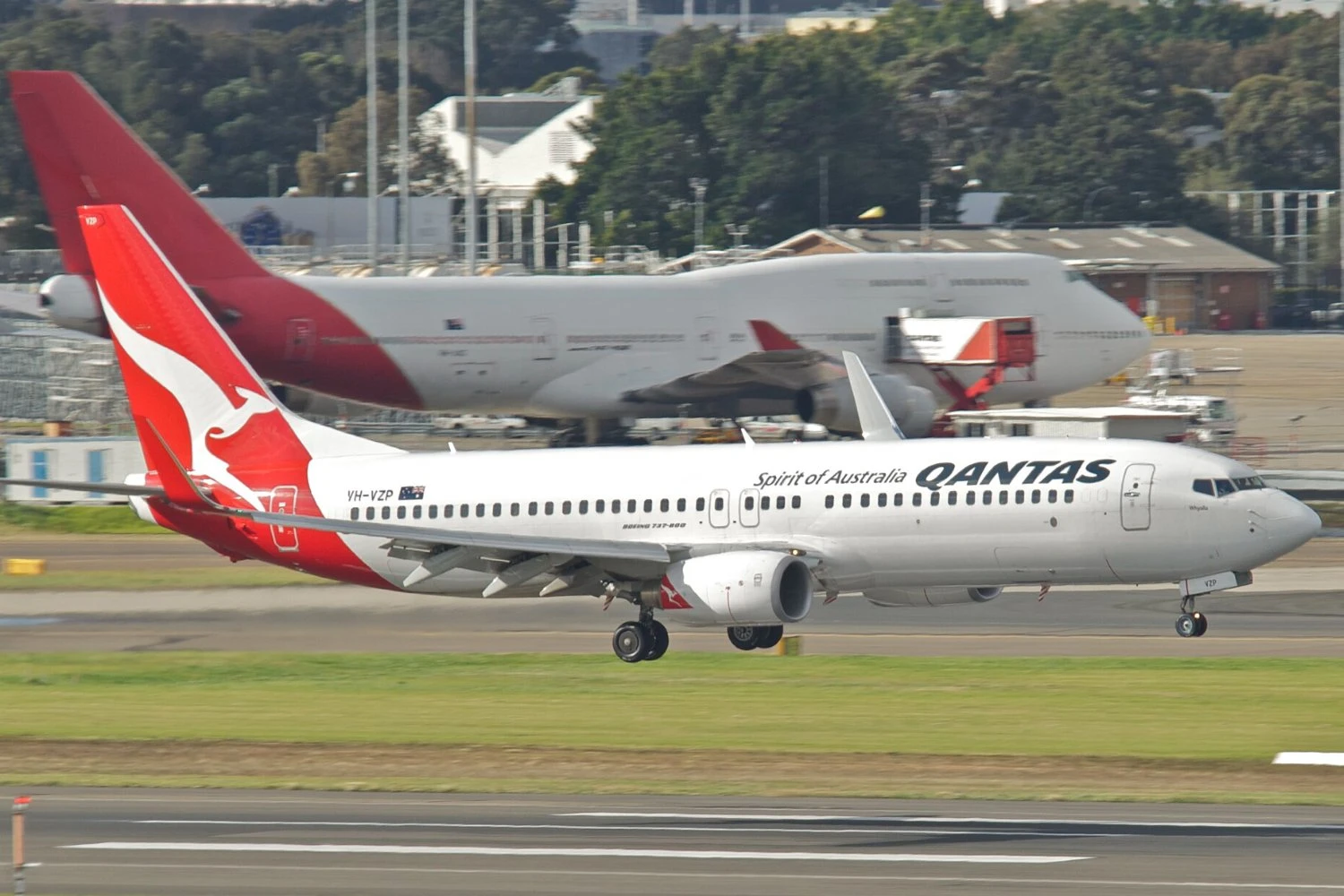
Qantas has sold 44 Boeing 737-800s and their 88 CFM56-7B engines to British aviation asset specialist AerFin, but many of the aircraft will remain in service with the Australian carrier for years before changing hands.
The unusual agreement stretches over seven years. The first aircraft will be transferred before the end of 2026, while the remainder will leave Qantas progressively as the airline renews the narrowbody fleet that operates its busiest domestic routes.
Follow Air Data News: WhatsApp | Instagram | LinkedIn | Twitter | Facebook
Financial terms were not disclosed and neither company identified the individual aircraft included in the transaction.
“This agreement allows us to plan for the retirement of the majority of our 737 fleet while also providing flexibility to adjust the timing as new aircraft arrive,” Qantas Domestic CEO Markus Svensson said.
Most of Qantas’ 737 fleet
The 44 aircraft represent most of the 737s Qantas intends to retire during the coming years.
Planespotters currently lists 76 737-800s in the Qantas fleet. The type has been the backbone of the airline’s mainline domestic operation, particularly on high-density routes between Sydney, Melbourne and Brisbane and on longer east-west services to Perth.
The aircraft also operate selected international flights to New Zealand, Pacific islands and Southeast Asia.
This role is distinct from much of the flying performed by other Qantas Group operations. QantasLink uses smaller aircraft including A220s, E190s and turboprops across regional markets, while Jetstar operates its own A320-family fleet as the group’s low-cost carrier.
Qantas therefore needs a large narrowbody to succeed the 737 on its busiest mainline routes. Somewhat unusually, it chose the longest-range member of the A320neo family for the job.

A321XLR takes over
Qantas selected the Airbus A321XLR as its 737 replacement under Project Winton in 2022. Seven are now in service and another 41 are on order.
The first aircraft have gone directly into the 737’s core territory. Qantas introduced the A321XLR on Sydney-Melbourne and Sydney-Perth and has since expanded its use across Sydney, Melbourne, Brisbane and Perth.
Although its 4,700-nm (8,700-km) range is far beyond what is required on most Australian domestic flights, the aircraft also gives Qantas more capacity. Its current domestic configuration has 197 seats, compared with 174 on the airline’s 737-800s.
The additional range is being exploited elsewhere. Qantas began international A321XLR operations between Brisbane and Manila in October, replacing larger A330s while increasing frequency.
The airline has also divided its future XLR fleet between different missions. Sixteen of the 20 aircraft ordered in 2025 will receive lie-flat Business Class seats and seat-back entertainment for longer transcontinental services to Perth and short- and medium-haul international routes.
That leaves the type performing two jobs: replacing the 737 on the dense domestic network while giving Qantas a narrowbody capable of reaching markets that were previously beyond the practical range of its Boeing fleet.

737s still have years ahead
The AerFin agreement does not set a common retirement date for the 44 aircraft. Instead, Qantas can determine when individual 737s leave according to new aircraft deliveries and its capacity requirements.
That flexibility matters because the transition will extend well into the next decade. Qantas has even announced cabin upgrades for more than 40 737-800s, with the first refurbished aircraft due to enter service in 2028.
AerFin is also not an airline acquiring the aircraft to operate them as a fleet. The company buys, sells, leases and dismantles aircraft and engines and supplies used serviceable material to airlines and maintenance providers.
The company said the Qantas transaction, the largest acquisition in its history, will support its aircraft, engine and aftermarket business. This leaves the eventual fate of individual 737s open: some could find new operators after leaving Australia, while others may ultimately become sources of engines and components.
AerFin itself changed ownership only two days before announcing the Qantas deal. Ireland-based ORIX Aviation completed its acquisition of the British company on November 2.
