


There are two things no one tells you when you enter the world of aviation. First, you don’t know what you don’t know. Second, there will be moments when the frustration is so overwhelming that you’ll wonder whether it’s worth continuing.
Nearly every pilot encounters obstacles along the way—scheduling challenges, finding the right instructor, changing instructors, maintenance issues, studying for the knowledge test and the pressure of check rides. Learning to fly can feel like a seemingly endless and futile task.
If you're not already a subscriber, what are you waiting for? Subscribe today to get the issue as soon as it is released in either Print or Digital formats.
Subscribe Now
Now imagine if you had someone who has already navigated through it and is willing to provide guidance and perspective? These people are out there—they are known as mentors.
You may find your aviation journey becomes a lot smoother if you find a mentor or two to work with. In fact, aviation could not exist without mentors. If anecdotal evidence is any indication, most pilots have had several mentors help them during their professional journey.
Young Eagle Connection
Finding an aviation mentor often begins well before a person is old enough to possess a pilot certificate, noted Mathieu Labs, president and Young Eagles coordinator of Experimental Aircraft Association (EAA) Chapter 1710. He credits his grandfather for getting him started in the world of aviation.
- READ MORE: Watch Out for Airplane Solo Endorsement Traps
- READ MORE: How Pilots Set Personal Minimums
“He introduced me to aviation at the age of 1,” Labs said. “He took me on countless flights across Wisconsin in his Cessna 150.”
A few years later, another mentor, Michelle Kunes, would introduce Labs to the EAA’s Young Eagles program. Labs did a flight in 1993 at the age of 8 and later became a ground volunteer at AirVenture. In 2008, Labs, who had earned his private pilot certificate, became a volunteer pilot for Young Eagles.
As often happens in aviation, one day the mentee evolved into a mentor. Labs still hears from the fledglings he has worked with.
“I got a message on March 26 that one of my EAA Young Eagles mentees officially earned his pilot license at Saint Louis University [in Missouri],” Labs said. “From his first flight with me in 2019, to an adventure flight in 2022 where we landed at 17 airports in a single day, to countless memories at AirVenture Oshkosh, it’s been an incredible journey to watch. Seven years later, he’s now a licensed pilot. Proud doesn’t quite capture it.”
Finding a Career Mentor
If you are leaning toward a particular aviation career, such as air traffic control (ATC) or corporate pilot, it can be helpful to find someone who has been through the process fairly recently, such as within the past 10 years.
Corporate pilot Tyler Koonce said his first mentor was a friend from high school who became a professional pilot.
“He guided me through how to get started in the industry and gave key insights on what to look for and what to stay away from,” Koonce said.
Koonce later found mentorship from an online presence, Carl Valeri, an airline pilot and podcaster.
“His podcasts gave me deep information when I was seeking to help choose a flight school and set an actionable flying career path,” Koonce said. “Fortunately for me, he was the flight team coach at Polk State College [in Florida], and our relationship there built into him becoming a trusted mentor of mine.”
Koonce offered advice to those approached to be a mentor, pointing out it’s important to focus on providing a support network and not just sharing experiences.
“I seek to find out what they want to do and to be a connector to those in similar areas, in addition to sharing experiences and advice when appropriate,” he said. “Like any leadership position, it is most important to care about the person and their development. What I’ve found often in aviation is we need someone who understands a complex industry to help make the big decisions, such as how to get started, then also help navigate the unique hiring and interview processes at the professional level.”
Koonce added another aspect people looking for a mentor should keep in mind.
“Don’t be afraid to ask someone you really look up to if they would be open to helping you out in that way,” he said. “Every successful person has mentors of their own. Those who appreciate that pay it forward to others and happily accept that responsibility.”
Organizations That Mentor
One of the benefits of belonging to an aviation organization that promotes aviation education is it often provides internal programs to enable members to find a vocationally appropriate mentor.
Women in Aviation International (WAI), founded in 1990, is one of these. WAI offers Mentor Connect, an online program that uses artificial intelligence to help members to find mentors.
“The platform protects member data, limits access to members only, uses AI to suggest matches that work for both sides, and lets members connect
meaningfully across the globe,” said Molly Martin, WAI’s director of member engagement. “It is worth mentioning about 20 percent of our members are male, and many of them are active in Mentor Connect. Mentorship is consistently cited as one of the key reasons people join and renew their membership in WAI, so providing a high quality mentorship program is a high priority for the WAI organization.”
All WAI members 18 and older are welcome to use Mentor Connect.
“To participate, members access the Mentor Connect platform using their WAI credentials, choose whether to be a mentor or find one, then fill out a short questionnaire—areas of strength if you’re mentoring, goals if you’re looking for a mentor,” Martin said.
From there, mentors wait to be selected by mentees who reach out. Mentees receive a list of suggested matches based on what they shared and can either pick from those or browse other options.
Together the mentor-mentee pair will establish goals, set up meetings, and meet virtually on the platform.
“The Mentor Connect platform also provides users with an extensive learning library to help them be the best mentor or mentee they can be, ask good questions, improve communications, essentially, help them get the most from their mentorship experience,” said Martin.
Teachers as Mentors
Outside of family, you likely spent more time with teachers than anyone else while growing up. It’s no surprise that many people look back on one or two teachers as mentors who shaped their lives.
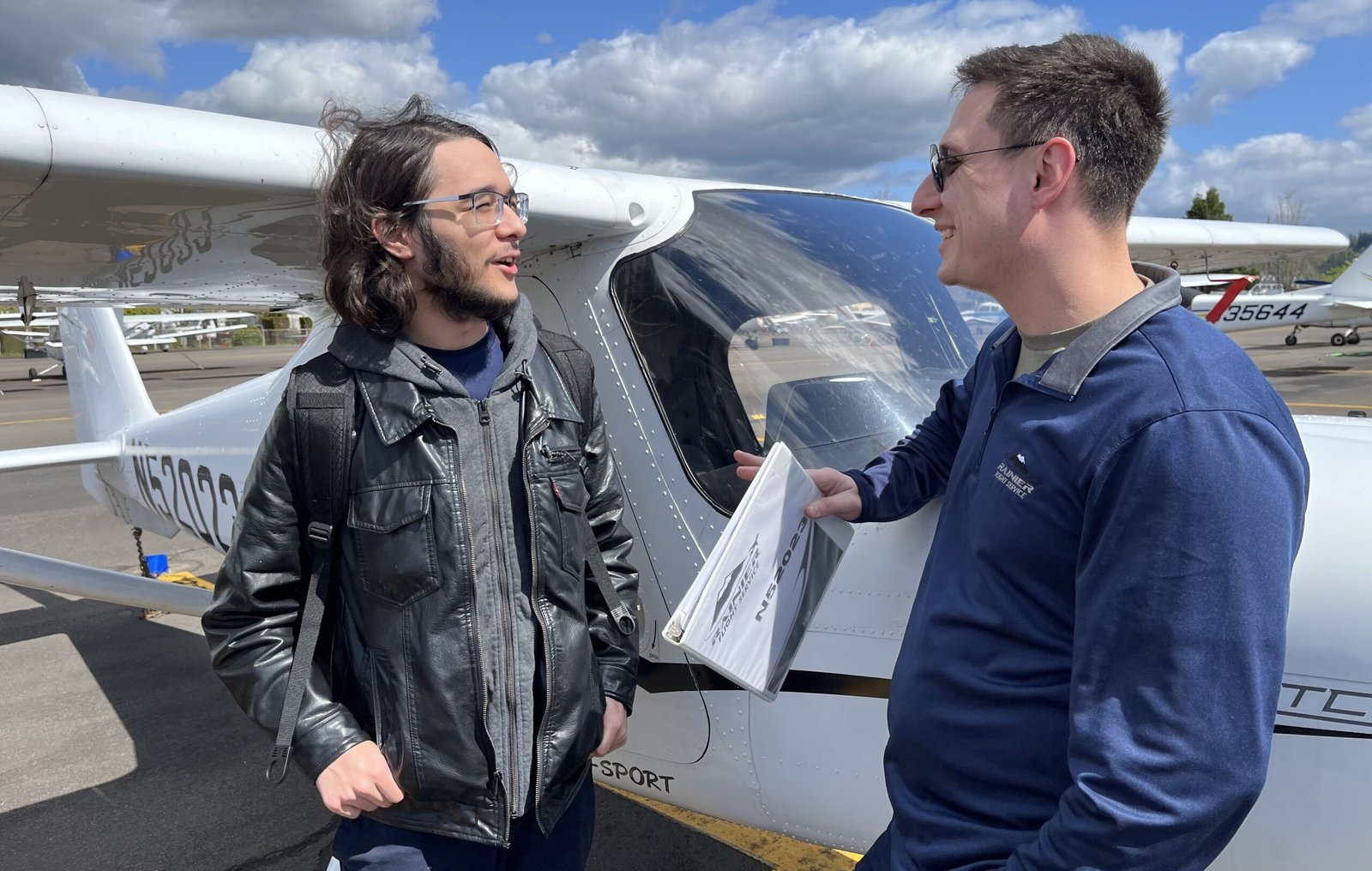
Aviation is no different. In fact, it’s common for a flight instructor to become much more than someone who teaches you to fly.
“I think all good instructors need to be mentors,” said Thomas Sando, a Gold Seal Flight Instructor and the National Aviation Hall of Fame’s 2025 A. Scott Crossfield Aerospace Educator of the Year award who teaches aviation at a high school in Williston, North Dakota.
“Mentorship isn’t something that can be taught. It is something that is learned through experience and life. Today’s instructors struggle with it because most are younger than 23 and have no life experiences outside of school. A mentor is someone who is ‘other centered.’ I learned that from spending time with John and Martha King at Sun ’n Fun this spring.”
As most flight instructors are time builders or experience builders carefully logging hours for their next job, you can be hard pressed to find an instructor to whom you matter and are not just an hour in their logbook.
“[A mentor] is someone who thinks you matter and who values what you have to say but don’t always agree with everything you say,” Sando said. “A good mentor is someone students can relate to and who supports your journey. I find myself regularly checking in with former high school students to see how they are doing. It means the world to them to have someone who cares about their success.”
One of the most rewarding parts of being a flight instructor is serving as a mentor. Few things are more gratifying than catching up with former students—especially those who have become instructors themselves—and hearing them pass along the same words of wisdom you shared.
This column first appeared in the September Issue 974 of the FLYING print edition.
