


At Euronaval 2026, General Atomics revealed its Ranger and GA-Ray long-range UUVs, built for multi-year missions and launching sub-drones and payloads.
General Atomics Ranger and GA-Ray unmanned underwater vehicles will support submarine-launched drones and extensive payload modules to address surveillance, mining and strike missions.
At Euronaval 2026, Naval News talked with Rolf Ziesing, Vice President of Maritime Programs at GA Electromagnetic Systems, to learn about General Atomics undersea unmanned developments.
“We’re very excited with this UUV program. We’re addressing a critical need in the UUV space, which is endurance and mission reach. To solve those problems, we’ve developed a power energy system that will allow UUV to operate for multiple years or tens of thousands of kilometers,” said Ziesing.
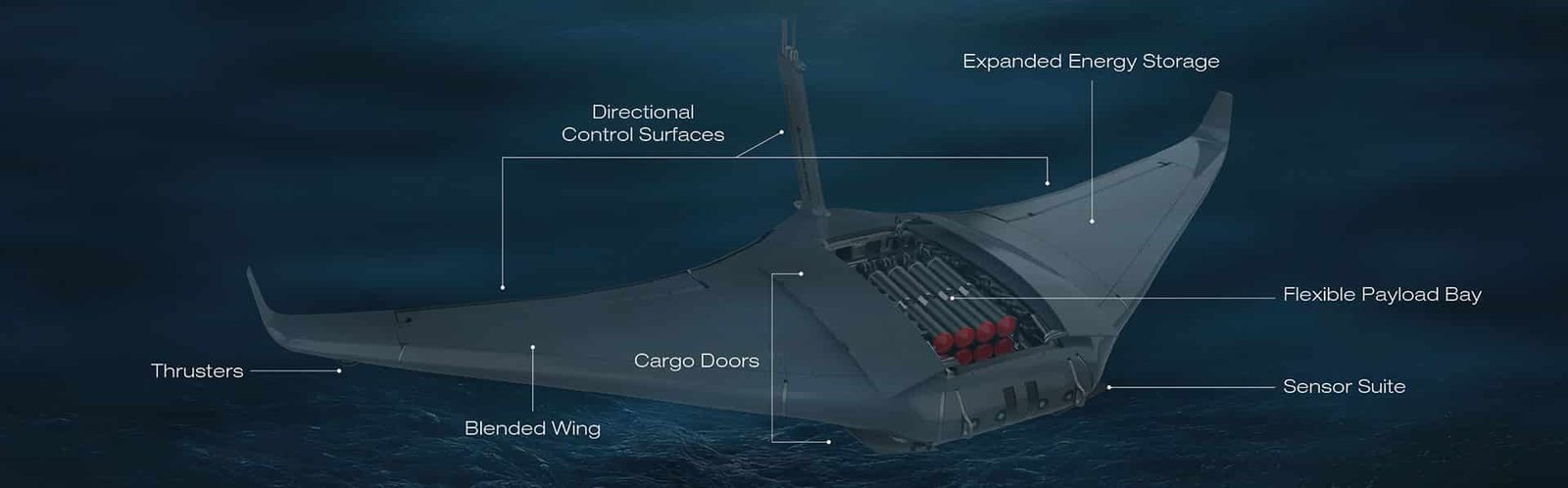
Ziesing explained that the company is working to scale up concept work into a 100 to 135-foot UUV capable of carrying additional drones and other payloads. Compared to traditional propeller-based propulsion methods, General Atomics opted for the buoyancy-derived glider design to increase range and endurance. Ranger and GA-Ray utilize thrusters and specially designed control surfaces for this purpose.
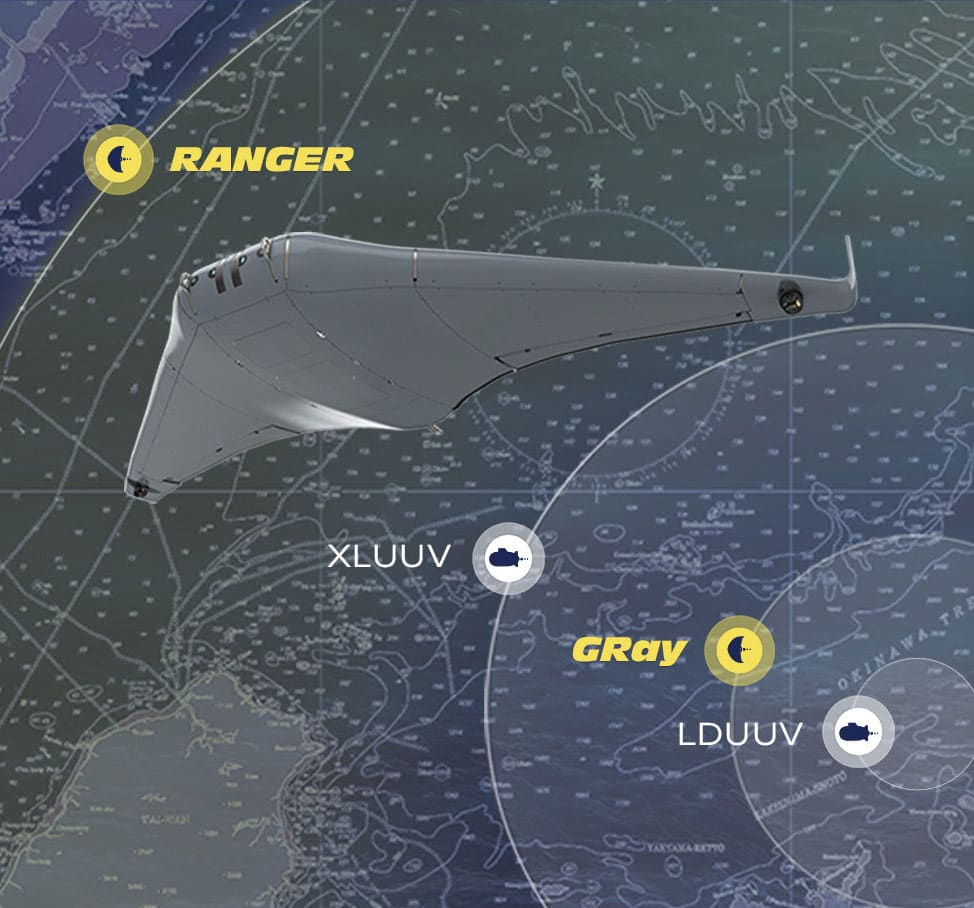
A General Atomic concept graphics highlighted the range of the glider-type UUV using a launch point from Okinawa and Guam. From these basing locations, the UUVs can reach First Island Chain chokepoints or waters within the littorals of mainland China.
“Just looking at Guam as a center of operation, we’re looking at delivering a vehicle covertly to the Western Pacific region to support mission operations. Relative to the existing LDUUV and XLUUV of today, the range and reach of this glider is orders and magnitude greater. That’s really a critical need, to deliver payload and have a platform stay on station for extended periods of time.”
Rolf Ziesing, Vice President of Maritime Programs at GA Electromagnetic Systems
Through the design’s extended-range deployment and mission endurance possibilities, Ziesing emphasized the potential of the payloads that can be carried by Ranger and GA-Ray.
“The glider ship is scalable. We have a 22-foot vessel now that’s dual-purpose. We’re using it now for risk reduction and concept development. At the same time, its a useful platform to deploy these smaller UUVs. We will scale the 22-foot platform up to a 100-foot wingspan platform that will have cargo capacity – the equivalent size of a CONEX box. In that cargo bay, there is a variety of payloads that can be carried,” said Ziesing.
UAV, UUV Payloads
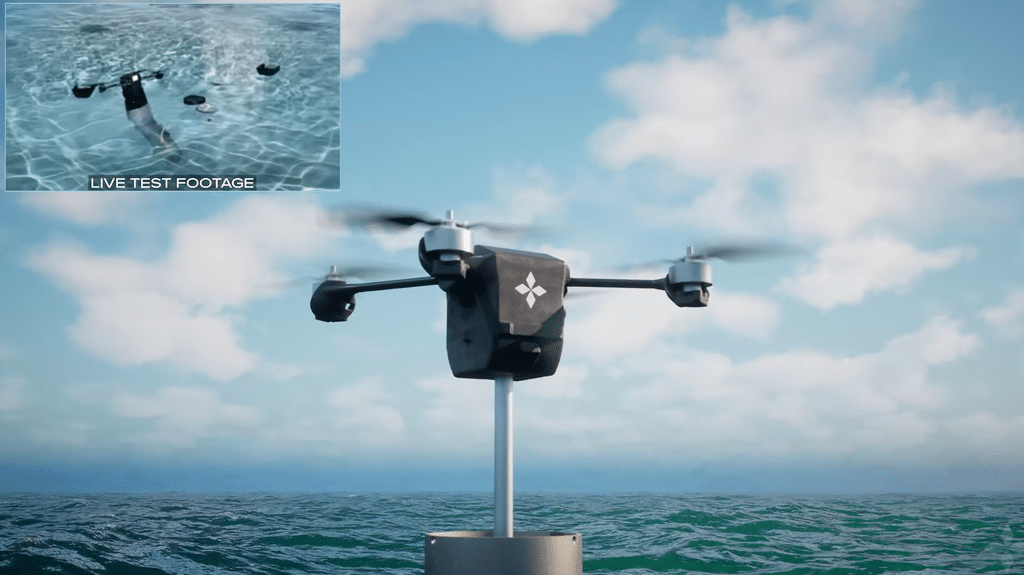
From these smaller UUVs, General Atomics is developing a variety of capabilities and payloads. At Euronaval 2026, General Atomics showcased their development of a submarine-launched quadcopter unmanned aerial vehicle. A video of a real-life test shows the deployment of the UAV from a tube that will be launched from the UUV deployed via Ranger or GA-Ray. The specifications of this UAV were not disclosed to Naval News.
A graphic of Ranger and GA-Ray type UUVs denotes how many of the smaller underwater drones can be carried depending on the size of the variant. According to the depiction, the payload can vary between 16 to 96 sub-UUVs. “We’re really looking at this as a system of UUVs. So we have a large host UUV, which is intended to carry the payload. The payload is another UUV that we have developed and we have operated both of these at-sea,” said Ziesing.
Aside from the sub-UUVs, at least two large displacement drones of an unspecified variant or a containerized payload can also be deployed carried.
“It can transport two large diameter UUVs that can then do their own missions. Or it can drop the CONEX box to remain on station. Or it can just sit at the bottom with the CONEX box, with the door that opens at the top, to deploy different payloads to deliver different types of effects,” said Ziesing. “It’s intended to deliver very large cargo payloads for a variety of missions. So it can stay on mission, stay covert and energize on command to support mission operations.”
General Atomics previously showed a concept of maintaining an extended patrol of dual-sonar array equipped Ranger UUVs off the North American West Coast to protect the continental U.S.
Ranger, GA-Ray Potential Amid New U.S. Navy Plans
The American defense firm’s modular underwater gliders come amid new demands from the U.S. Navy’s Hedge Force Strategy. Debuted by Chief of Naval Operations Daryl Caudle at Surface Navy Association 2026, the sea service plans to combine unmanned systems with warships, aircraft and submarines to tailored “hedges” against specific adversaries.
General Atomics claims that these UUVs can take on missions previously handled by nuclear attack boats and provide multi-month to multi-year on-station endurance to commanders. These include mining, surveillance and anti-submarine missions. Tests held to date include operations while submerged lasting up to 70 days to simulated the type of missions General Atomics anticipates for the drones.
Going forward, Ziesing told Naval News that the company’s UUV work has attracted “many interested parties.”
“There’s a lot of interest. The payloads we’re developing are very unique and novel. You can image that there are other payloads we are developing that we’re not going to talk about. And because of the ability to deliver these payloads covertly for extended periods of time, there’s a lot of interest.”
