



Naval Group will build an operational demonstrator of its Unmanned Combat Underwater Vehicle (UCUV) for the French Navy under a contract signed during Euronaval 2026. Sea trials are scheduled to begin in 2028.
The contract, announced by the French defence procurement agency DGA, the Defence Innovation Agency (AID) and Naval Group, moves the programme from technology studies and testing to the construction of an operational demonstrator.
The project began in December 2023, when the DGA awarded Naval Group a framework agreement covering the development and testing of an ocean-going unmanned underwater combat vehicle, along with studies on secure autonomous navigation.
Since then, Naval Group has used its existing, company-funded extra-large unmanned underwater vehicle (XLUUV) demonstrator to test technologies and reduce technical risks. Qualified at sea in 2023, this platform has supported work on energy management, batteries, autonomous navigation, sensor fusion and specialised payloads.
The new demonstrator is intended to give the French Navy a platform to assess potential missions and performance at sea.
A Multi-Mission Vehicle More Than 10 Metres Long
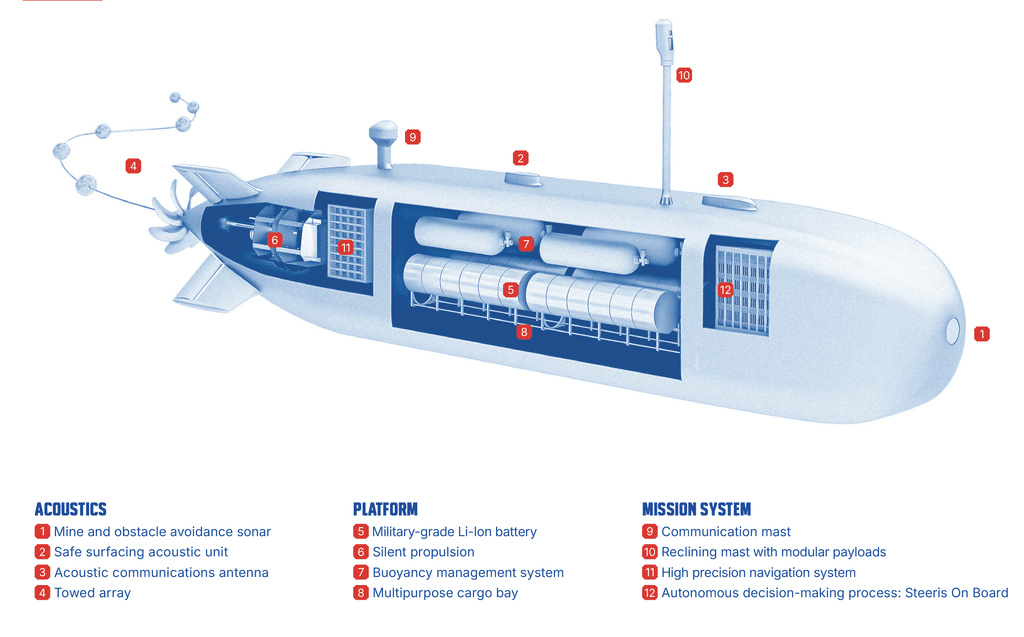
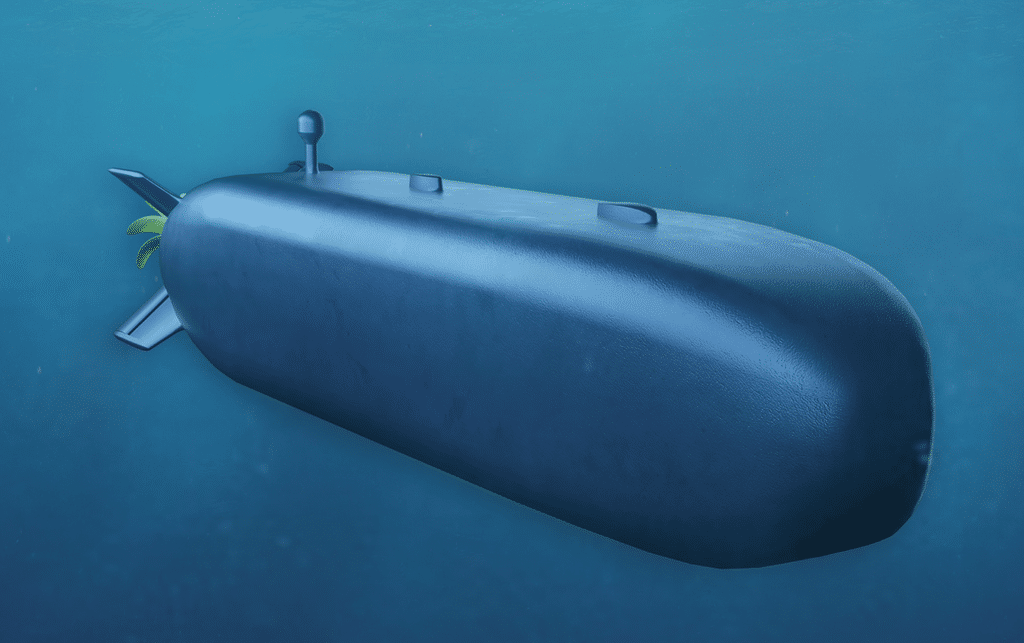
The UCUV is being developed for intelligence gathering as well as defensive and offensive missions. Its detailed specifications have not been disclosed.
“It will be more than 10 metres long and will differ slightly in appearance from the current demonstrator, following feedback from previous studies,” a Naval Group representative explained.
An AID representative told Naval News “Our ambition is to reach the upper end of the capability spectrum compared to our competitors.”
Neither organisation provided details about the weapons under consideration. According to the representatives, those choices remain open and will affect the vehicle’s endurance.
“We currently have several ideas, but we have not yet finalised all the specifications. The choice of weapon systems ultimately selected will naturally have an impact on the drone’s endurance.”
The vehicle will also be able to deploy payloads. An open architecture is intended to allow equipment and software from different industrial partners to be integrated and updated.
The UCUV is being designed for air transport by aircraft such as the A400M. It will be deployable from a harbour facility or a surface vessel, giving the French Navy different options for moving it to an operating area.
Autonomous Operations Under Human Supervision
The demonstrator will use Naval Group’s Steeris OnBoard autonomous decision-making system. Operating under human supervision, the system is designed to allow the vehicle to carry out long missions without continuous remote control, including when communications are limited or unavailable.
Steeris OnBoard will use information about the environment and tactical situation to revise the vehicle’s mission plan. It is intended to respond to changing conditions and potential equipment failures, whether the UCUV is operating alone or alongside other unmanned or crewed systems.
This ability is particularly relevant underwater, where maintaining communications with an operator can be difficult. The demonstrator’s trials will provide an opportunity to assess how the vehicle handles these conditions.
The AID links the programme to growing concerns about activity on the seabed.
“Several countries are developing capabilities to operate in, and even interfere with, the seabed environment, and we need to be able to counter these developments,” the agency’s director explained.
UCUV Sea Trials Planned for 2028
Sea trials are scheduled to start in 2028. They will help the French Navy assess the UCUV’s potential roles and establish how such a vehicle could be used alongside its existing forces.
The programme will also support work on preparing French naval platforms and systems for the growing presence of large underwater drones in other navies.
The industrial team has not yet been disclosed. The future demonstrator is expected to use equipment from a range of suppliers, with its industrial content described as “French or almost entirely French”.
The November 3 contract covers an operational demonstrator rather than a production fleet, making its upcoming trials a critical step in defining the French Navy’s requirements for a future unmanned underwater combat capability. However, Naval News understands that despite the high-profile announcement at Euronaval 2026, the bulk of the funding required to physically build the demonstrator has yet to be secured. A final budget allocation is expected in 2027, contingent upon the outcome of the French presidential elections.
