


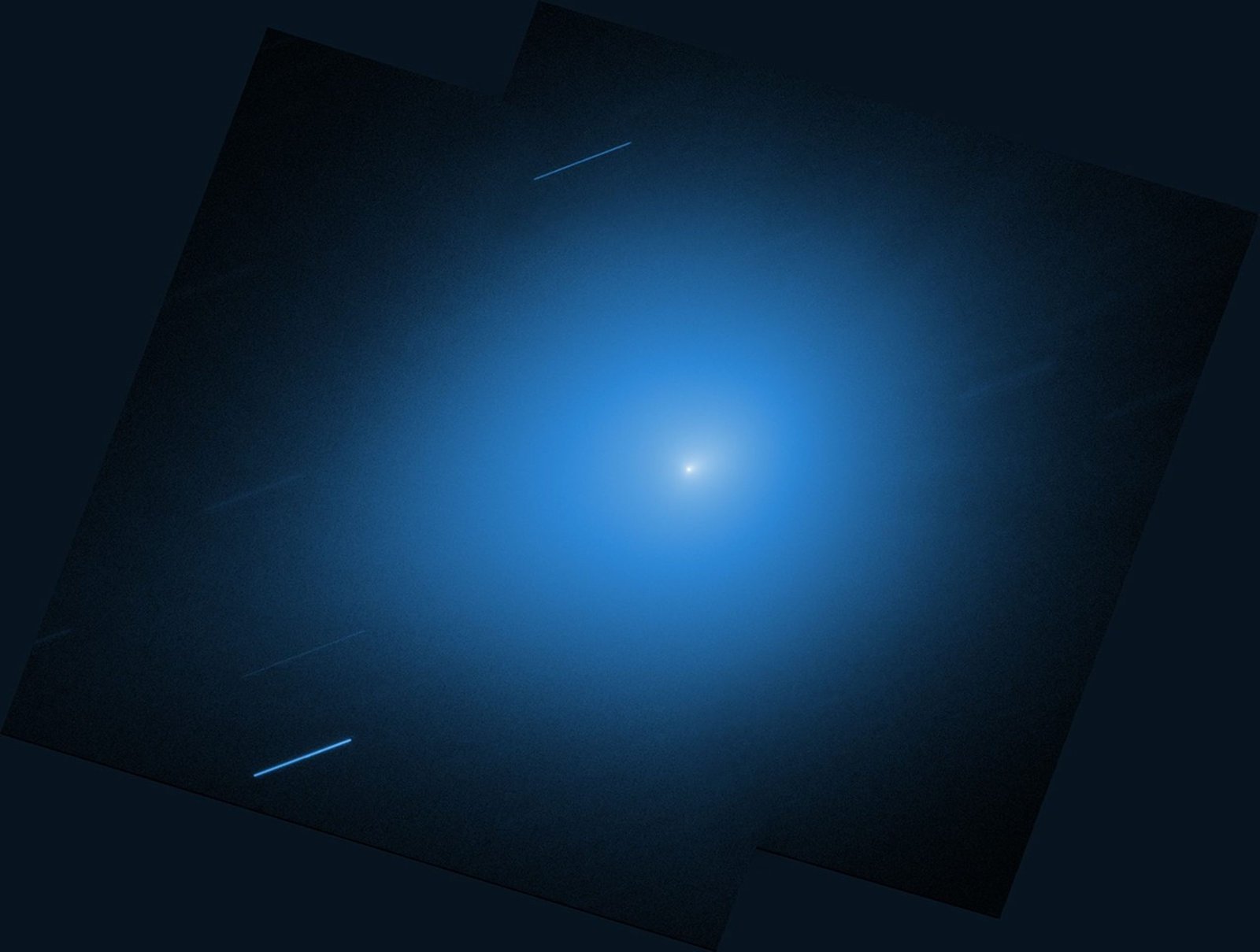
By now, 3I/ATLAS is no stranger to astronomers. The interstellar comet has already reshaped expectations simply by existing, and by lingering long enough to be studied in detail. But its close pass around the Sun has added a fresh layer to that story, delivering rare chemical insights that even well-known comets almost never provide.
A Familiar Visitor That Still Had Surprises
Interstellar objects are typically fleeting, offering little more than confirmation before racing back into deep space. 3I/ATLAS has repeatedly broken that pattern.
Its October solar flyby was expected to be punishing, yet the comet emerged intact, allowing scientists to extend observations across one of the most extreme phases of its journey.
That endurance turned a routine tracking campaign into something far more valuable.
Heavy Metals Under Extreme Heat
Astronomers were able to monitor emissions from atomic nickel and iron both before and after perihelion. In cometary studies, this kind of continuous dataset is exceptionally rare. For an interstellar comet, it is unprecedented.
These heavy elements matter because they underpin rocky planet formation. Their presence and behaviour act as chemical fingerprints, pointing back to the conditions in the protoplanetary disk where 3I/ATLAS formed. Rather than speculation, this offers measurable evidence from another star system.
When the Sun Starts Editing the Record
Post-perihelion data complicated the picture. As 3I/ATLAS moved away from the Sun, its chemistry began to resemble that of familiar solar system comets. Methanol, ethane and dark dust were detected in the coma, which are all standard features of locally born icy bodies.
That resemblance was not coincidence. Solar heating had altered the comet’s outer layers, effectively overprinting its original surface chemistry.
What telescopes were seeing was not untouched interstellar material, but a shell reshaped by intense radiation.
Why Processing Is Part of the Discovery
Rather than weakening the result, this transformation strengthens it. Having pre- and post-solar measurements allows researchers to quantify how stellar radiation modifies cometary material. That makes 3I/ATLAS a reference case for disentangling original composition from later processing.
In effect, the comet provides both the signal and the distortion; a rare combination that improves interpretation of future interstellar visitors.
Refining the Search for Alien Planet Ingredients
Even with its surface altered, 3I/ATLAS has delivered something crucial: a pathway. Tracking heavy metals through a full stellar encounter opens a new approach to probing the metallic makeup of distant planetary systems.
By surviving the Sun and revealing how its chemistry responds, 3I/ATLAS has tightened the link between comet science and the broader question of how planets form beyond our solar system.

