


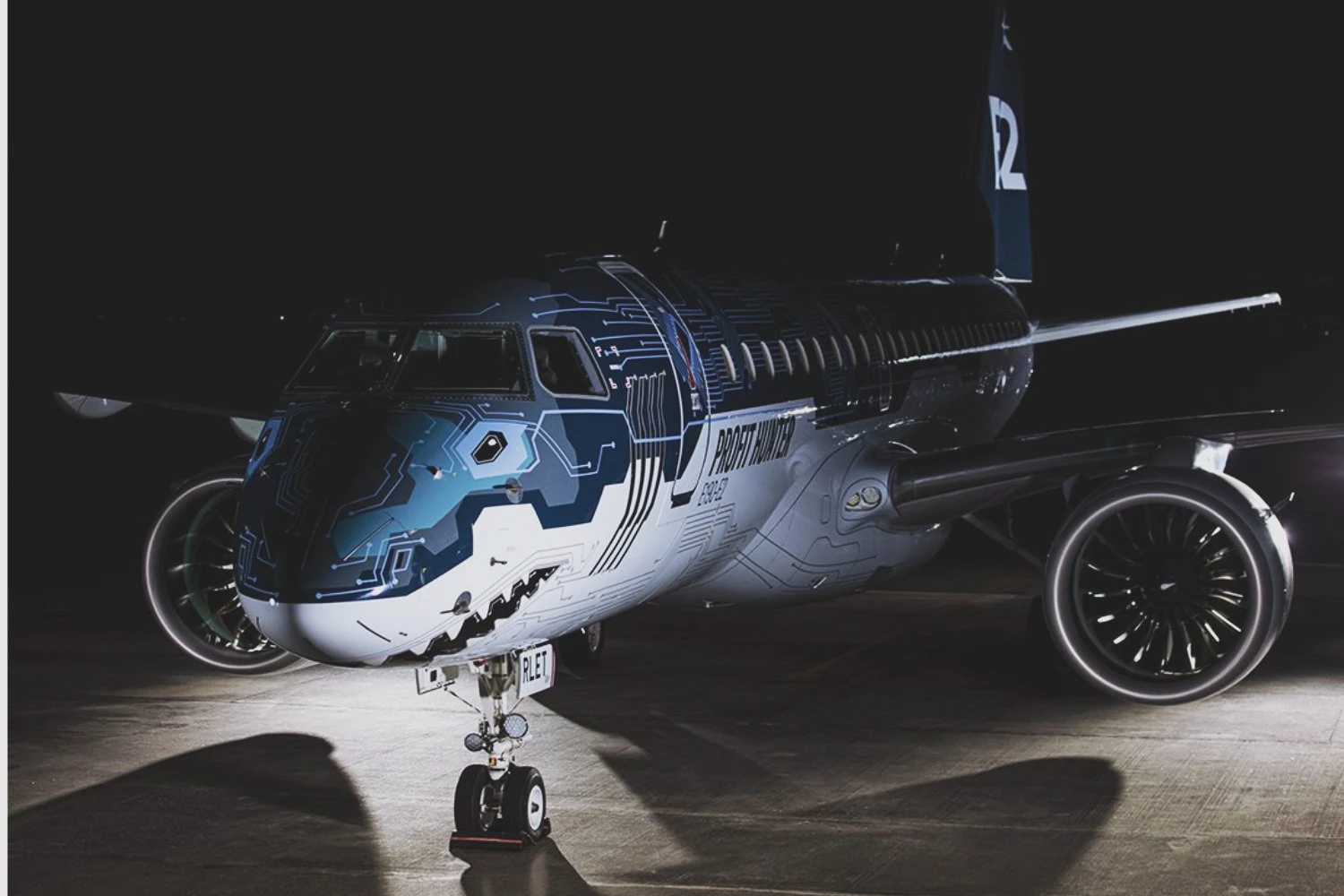
Embraer is evaluating technologies for future aircraft programs, including structures, wings, cockpits and propulsion systems, as the Brazilian manufacturer prepares for a possible new product cycle beyond its current commercial and executive jet families.
CEO Francisco Gomes Neto said during Embraer’s first-quarter earnings call that the company is already talking to potential suppliers while studying new aircraft concepts for both commercial and business aviation.
“We are making studies for a new cycle of products for Embraer, either commercial jets or business jets,” Gomes Neto said.
The executive made the comment after being asked about Rolls-Royce’s interest in returning to the narrowbody engine market, a segment currently dominated by CFM International and Pratt & Whitney.
“In that regard, we are talking to potential suppliers of the different products to understand the new technology and so on,” he added.
During the press portion of the call, Gomes Neto said Embraer is investing in technologies such as structures, wings and cockpits to be ready for a future aircraft program, but avoided identifying which segment the company may target.
“We are not at the point to disclose any more information on that because we don’t have a decision yet about the segment we want to go to,” Gomes Neto said.

The executive also stressed that any future launch would depend not only on Embraer’s internal plans, but also on the maturity of technology available from suppliers.
“This does not depend only on us,” Gomes Neto said. “This depends on the technology available in the market for different products.”
Embraer also intends to avoid repeating the financial risk associated with large aircraft programs that lack a clear market and funding structure.
“We know we need a strong product with a strong value proposition with a robust funding strategy because we don’t want to put at risk the financial health of the company,” Gomes Neto said.
Technology uncertainty
Embraer’s comments come during a transition period for aircraft manufacturers and suppliers, with several technologies under evaluation but no clear consensus on what will define the next generation of commercial aircraft.
Hydrogen propulsion, hybrid-electric systems, advanced turbofans, sustainable aviation fuels and new aerodynamic architectures are all being studied across the sector, but none has yet created the conditions for a major clean-sheet aircraft launch.
Boeing appears to be moving toward an evolutionary approach for its next single-aisle aircraft rather than waiting for a disruptive technology to mature. Recent reports indicate the U.S. manufacturer is studying a conventional tube-and-wing design with more efficient wings and ducted turbofan engines, avoiding more radical concepts such as open-fan propulsion or truss-braced wings for now.
Airbus, meanwhile, continues to study open-fan technologies through the CFM RISE program while also evaluating longer-term decarbonization paths, including hydrogen. But the European manufacturer has not committed to a specific architecture for a next-generation single-aisle aircraft.
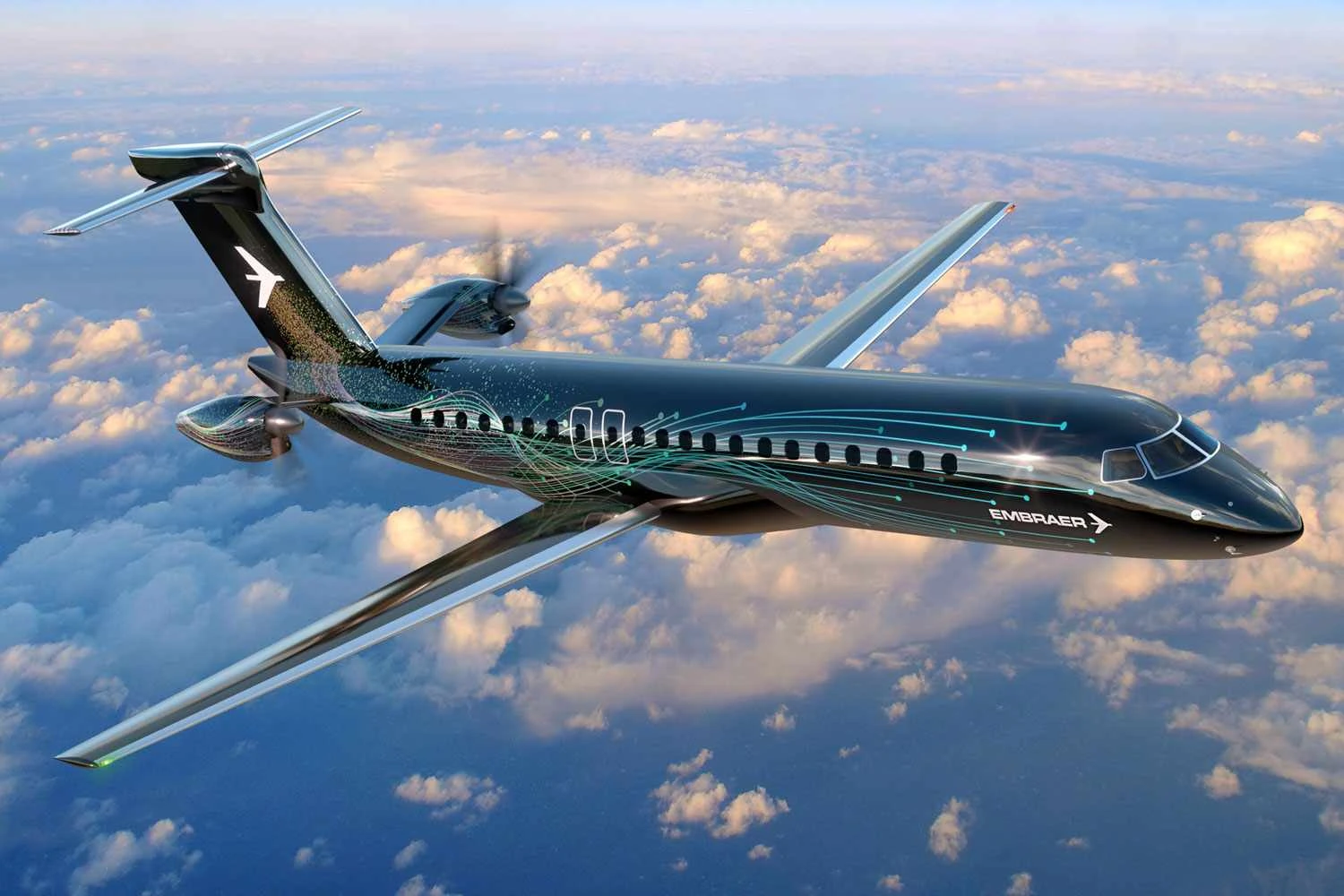
Embraer has already faced similar limits in its own studies. The company previously evaluated a new turboprop seating roughly 70 to 100 passengers but suspended the project after concluding that available engine technology would not deliver enough efficiency improvement to justify a launch.
That experience helps explain why Embraer is keeping multiple paths open.
In commercial aviation, the company may eventually need an aircraft above the E195-E2, which currently seats up to 146 passengers in single-class layout and leaves a gap to larger Airbus A320neo and Boeing 737 MAX family aircraft.
In executive aviation, Embraer remains strong with the Phenom and Praetor families and is unlikely to ignore a segment that has become one of its most profitable businesses.
