


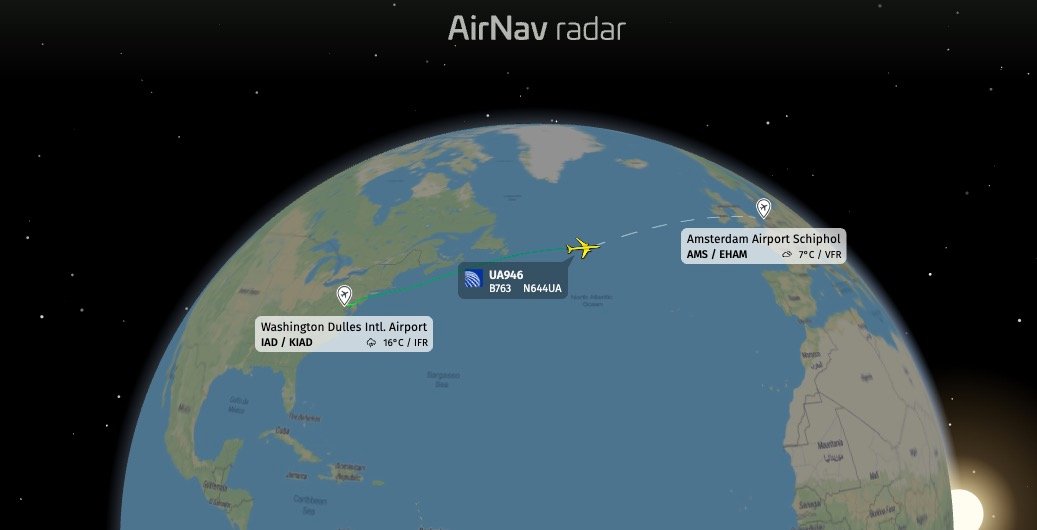
ST. JOHN’S, Canada — A transatlantic United Airlines flight bound for Europe is about to make an emergency diversion late Sunday night after the crew reported an engine issue high over the Atlantic Ocean.
United Airlines Flight UA946 had departed Washington Dulles International Airport (IAD) at approximately 8:30 PM EDT on Sunday for what was scheduled to be an eight-hour flight to Amsterdam Airport Schiphol (AMS).
The transoceanic flight was being operated by a 35-year-old Boeing 767-300ER, registered as N644UA, one of the oldest Boeing 767 aircraft remaining in active service within United’s fleet.
Transatlantic Turnaround
After departing Dulles, the aircraft completed its initial climb, leveling off at its planned cruising altitude of 37,000 feet as it established its route over the North Atlantic.
Approximately four hours into the voyage, the flight crew received a cockpit indication alerting them to a technical issue regarding one of the aircraft’s two engines. Exercising caution, the crew squawked 7700 (the general transponder code used to declare an emergency) and initiated a mid-air U-turn over the ocean.
Flight tracking data showed the twin-engine jet turning back west towards the easternmost tip of North America to land at the nearest suitable airfield.
Precautionary Diversion to St. John’s
The crew requested a diversion to St. John’s International Airport (YYT) in Newfoundland and Labrador, Canada.
Emergency response teams on the ground at St. John’s were briefed and positioned to assist as the aircraft descended toward the airport. A diversion to St. John’s allows crews facing mid-flight mechanical issues to execute a safe landing before embarking further into remote oceanic tracks.
United Airlines is expected to arrange a replacement aircraft or alternative travel plans to carry the stranded passengers onward to Amsterdam once technical assessments on N644UA are complete. No injuries have been reported in connection with the incident.
