


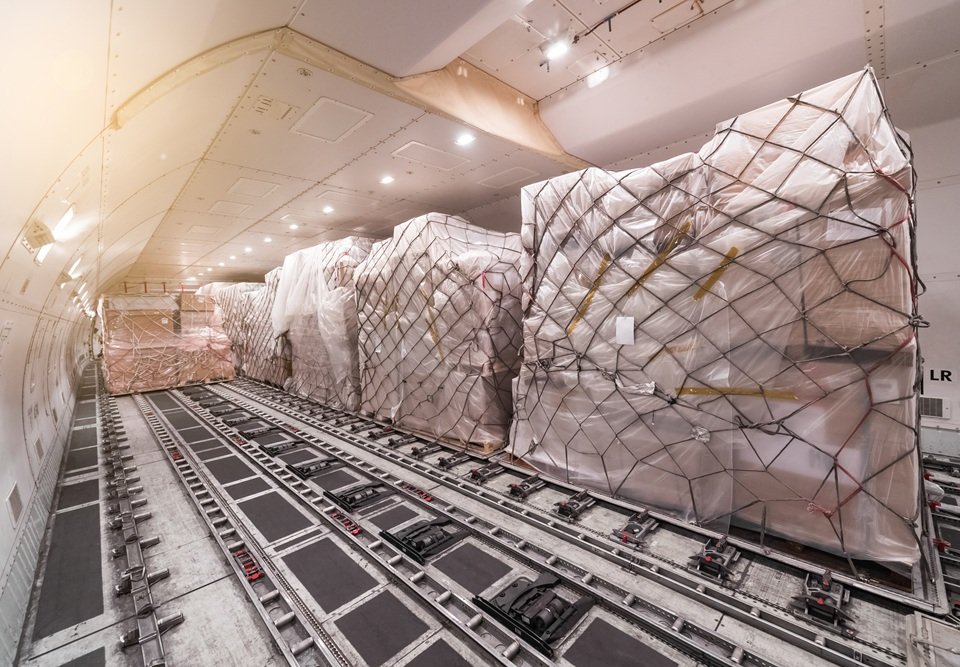
Air cargo executives are concerned with what aircraft will replace the Boeing 767 freighters that now compose a hefty chunk of the midsize cargo aircraft fleet, and at this year’s Cargo Facts Symposium in Nashville, they called on Airbus, Boeing and conversion shops to get busy on such a project.
Many executives view the 787 – either a Boeing-produced dedicated freighter or a passenger-to-cargo conversion – as the most-logical answer to the 767-replacement riddle, though interest also exists for a cargo variant of Airbus’ A330neo.
Basically, airlines are desperate for a new midsize freighter with modern engines.
“Hopefully, Airbus or Boeing come up with something that we can fly, because we’re starting to get nervous about what comes next,” LATAM Cargo Group chief executive Andres Bianchi said on 22 October. “They should have started already… I think both of them are late.”
LATAM now operates 20 767Fs and can add nine more, taking those from LATAM’s passenger operation and converting them into freighters.
But the 767Fs “cannot carry us into the second half of the 2030s”, Bianchi said.
LATAM is one of many airlines globally that depend heavily on 767Fs. The jets can carry roughly 50t of payload – less than half as much as the largest widebody freighters – making them ideal for operating medium-haul, medium-demand routes.
So popular is the type that Boeing continues assembling them, but not for long. Its backlog is dwindling and a production halt is in sight.
The problem is that a one-to-one replacement with a new-generation widebody is not available.
Airbus and Boeing are largely focused on developing much-larger widebody freighters, Boeing with its 777-8F, which is several years from service entry, and Airbus with its A350F, which it aims to have certificated in the second half of 2027.
That is where the 787 could come in. Yes, Boeing’s flagship is larger, costlier and more complex than the 767.
Still, the idea has backers. Those include aircraft conversion shops, whose executives see a chance to develop such an aircraft, likely in partnership with Boeing.
“The right answer will be for [Boeing] to build a passenger-freighter conversion of the 787,” Air Transport Services Group chief executive Greg Mays said on 22 October.
“I’d cut a hole in one today,” he added, referring to a cargo door.
Asked to comment, Boeing offered a previously issued statement. “As we look ahead to future medium-widebody freighter options, the 787 is a natural place for us to look,” the company said. “We continue to evaluate our options in this space and are listening to our customers.”
Israel Aerospace Industries is also interested. The conversion company’s vice-president Yaacov Berkovitz posted on LinkedIn last week: “The Boeing 787 is the next chapter in passenger-to-freighter conversions.”
Speaking in Nashville on 22 October, Berkovitz added: “This is a more-complex conversion. It has to be done with the OEM.”
Jim Gibbs, chief executive of conversion firm Kansas Modification Center (KMC), agreed that any shop seeking to convert a 787 had best partner with Boeing, citing the aircraft’s composite fuselage and advanced systems.
“You have external loads based on carbon fibres, and carbon-fibre stringers. You have common core-technology. There’s a bunch of stuff in there that could easily cost hundreds of millions of dollars,” Gibbs said.
“If you had an OEM partner on the deal, it could actually cut the conversion timeframe and cost in half,” he added.
The idea has momentum, but do not expect to see 787Fs taking to the skies anytime soon. Such projects take years to reach fruition.
Also, demand is roaring for passenger-configured 787s. Boeing already cannot meet demand, and airlines are not yet offering up the number of second-hand 787s required to support widespread conversions.
Subscribe to gain access to all news
Already have a subscription? Log in.
Choose your subscription
Considering a corporate subscription? Contact us to find out more.
Or
Want to read this article for free?
You can read one free article per month. Enter your email and we’ll send you a free link to access the full article. No payment required.
