


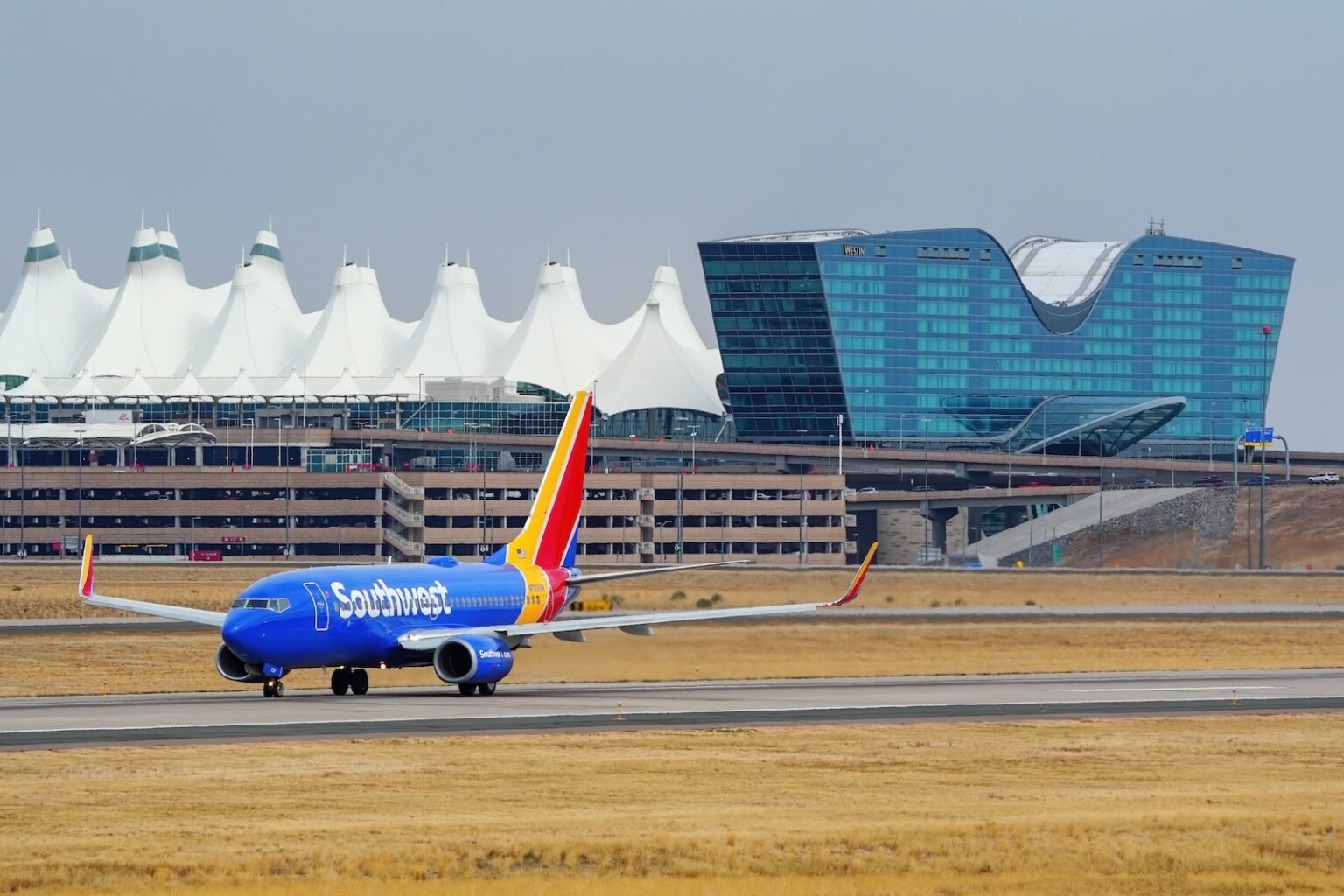
Southwest Airlines may see less activist investor influence after Elliott Management—which pushed it to enact major changes, such as axing its long-standing open seating and “bags fly free” policies—reduced its stake in the carrier in February.
But CEO Bob Jordan said the airline is “not done” shaking up its business.
“We’re going to keep making product changes, because we want to, over time, give you fewer and fewer and fewer reasons to have to go to a competitor,” Jordan said Monday at the Semafor World Economy Summit in Washington, D.C.
The Southwest chief reiterated the rationale he has previously given for the changes—customers want them. Open seating, Jordan said, was the top reason customers were leaving Southwest for competitors. There was no guarantee that a family of four, for example, would be able to sit together on a flight.
“[Customers] have preferences, and they want the airline to be able to meet those preferences, which is why you see this change, and why you will see us change more over time,” Jordan said.
Jordan said lounges—for which the airline is leasing space at Honolulu Daniel K. Inouye International Airport (KHNL) in Hawaii and, per View From the Wing’s Gary Leff, Austin-Bergstrom International Airport (KAUS) in Texas—“would be another example of pursuing what our customers want.”
Asked about the potential for Southwest to adopt lie-flat seats, Jordan declined to speculate. But he didn’t rule it out, either.
“It’s the largest change in our history,” Jordan said. “The good thing is, we’re following our customers…They want the assigned seating. They want more choice, and our employees are behind it.”
The carrier is also looking at adding electric vertical takeoff and landing (eVTOL) air taxi service from Archer Aviation—likely to be priced similar to a premium Uber—to its California terminals.
The New Southwest
Open seating and free checked bags were once calling cards for Southwest, which built a reputation as the most affordable of the major U.S. carriers.
Per Jordan, that’s still true. Southwest fares are about 20 percent less than those of United Airlines, American Airlines, or Delta Air Lines, he said Monday.
However, Southwest’s shift toward more premium offerings makes it tougher to separate it from the field. The airline last week joined United, American, Delta, and JetBlue Airways in raising prices for customers’ first and second checked bags, hiking rates from $35 to $45 and $45 to $55, respectively. That’s identical to what Delta, historically branded as a premium option, offers.
“At the end of the day, if your input costs are up, your fares are going to have to go up,” Jordan said, while noting that airfare, though rising, has increased less than inflation over the past five years.
Southwest passengers can still get free checked bags. But they will need to pay for one of the airline’s loyalty cards or book a fare in the most expensive Choice Extra tier. Moving away from a single-class cabin, the carrier now offers four fare bundles, charging for seat reassignments as well as extra legroom seats on most of its Boeing fleet.
Those changes could be the tip of the iceberg as Southwest shifts to a more conventional airline business model. In December, for instance, Jordan said the carrier was seriously considering adding first class seating.
“We know we have customers who want an even more premium product, basically first class,” he said on The Wall Street Journal’s Bold Names podcast in March. “So no decision, nothing to announce, but those have to go in the bag on the list of what you are willing to consider.”
In February, Southwest announced another premium offering—free Starlink WiFi, but only for loyalty members. The month before, it modified its “customers of size” policy, charging flyers for two seats if they do not fit between lowered armrests.
In short, Southwest customers are now paying more for the perks they previously enjoyed either for free or a small charge. The changes so far have not had the impact Elliott Management had sought—Southwest’s profits fell about 42 percent in the first nine months of 2025 compared to the same stretch in 2024.
As the activist investor pulls back, however, Jordan has signalled that its stamp on the Southwest brand may be permanent. The airline projects profits to surge in 2026, from 93 cents per share in 2025 to about $4 per share this year.
“Yes, we’re changing,” Jordan said. “But our values are not changing—the way we treat people, the way we treat our customers, what’s important. You’ve got to change everything else, but you can’t change who you are, the golden rule, what you stand for.”
