


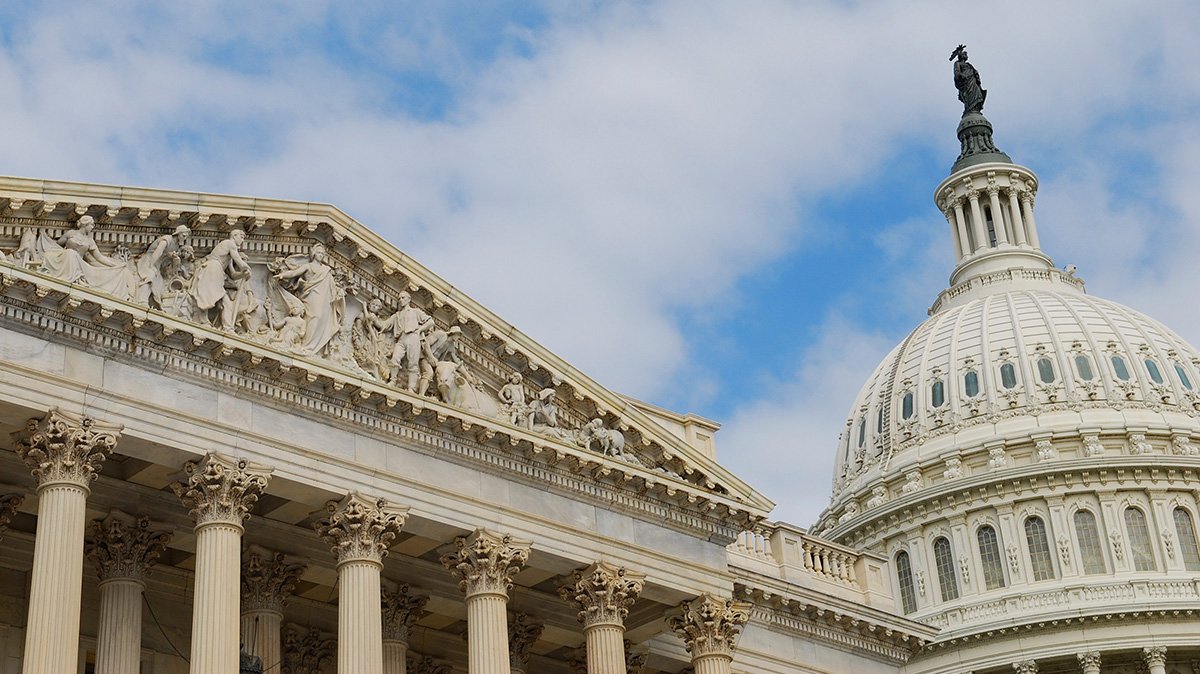
The Airspace Location and Enhanced Risk Transparency (ALERT) Act of 2026 was introduced to the House of Representatives on Feb. 19 as a response to the midair collision between an American Airlines Bombardier CRJ 700 and a Sikorsky UH-60 Black Hawk Army helicopter at the Ronald Reagan Washington National Airport (DCA) on Jan. 2025.
The Act addresses all 50 recommendations issued by the NTSB and considers all probable causes of the collision, according to the Committee on Transportation and Infrastructure. It is led by Committee Chairman Sam Graves (R-MO), Committee Ranking Member Rick Larsen (D-WA), Armed Services Committee Chairman Mike Rogers (R-AL), and Armed Services Committee Ranking Member Adam Smith (D-WA).
“The collision of American Airlines Flight 5342 with an Army Black Hawk helicopter in our nation’s capital was a terrible tragedy, and I will continue to pray for the families of the 67 victims,” said Graves. “The NTSB provided a thorough investigation into all of the factors that caused this crash. As I have said from the beginning, the best way to serve and honor the victims and their families is by thoughtfully addressing the broad range of safety issues raised by the now-complete accident investigation, and that’s just what the ALERT Act does. This comprehensive bill will make our aviation system safer by directly addressing various factors that contributed to this accident. I want to thank Tandamp;I Ranking Member Larsen, Armed Services Chair Rogers, and Armed Services Ranking Member Smith for their partnership and leadership in drafting this important bill, and I look forward to moving it through the House to strengthen the safety of American aviation.”
RELATED STORIES:
Bill introduced in House and Senate to improve aircraft certification process
Trump signs shutdown-ending bill, boosting FAA funding
NTSB releases final report on Potomac Midair Collision
Safety issues ALERT is supposed to address include:
Requirements for equipping collision mitigation, avoidance and alerting technologies and systems
Improving helicopter route design, guidance and separation
Preventing loss of separation incidents
Addressing faults in the FAA’s safety culture
Improving ATC training and procedure
Increasing safety in DCA airspace
“Safety is business aviation’s highest priority, first and always,” said Ed Bolen, NBAA president and CEO. “We commend Committee Chairman Graves, Chairman Rogers, and Ranking Members Larsen and Smith, for joining to introduce this landmark legislation to meaningfully strengthen safety, while providing a path for adoption across the wide diversity of aircraft in the aviation fleet.”
Trending
- Texas trucking firm sued over age limits on drivers
- Salt Lake City’s hangar rent hike is part of a pattern. Budget for more
- Underwriters split over how to manage AI risk
- Royal Air Maroc modernisiert Kabinen ihrer Boeing 787-8
- The Real Reason Why Allegiant Air Still Flies To So Many Secondary Airports
- Do Cleaning Drones Work? 15 Apellix Examples
- France outlines post-FCAS roadmap for next-generation fighter
- Forecast International says fractional fleets now drive jet demand
