


Chris Kemp thinks he could be the last person left working at Astra — but not for the reason most people might think.
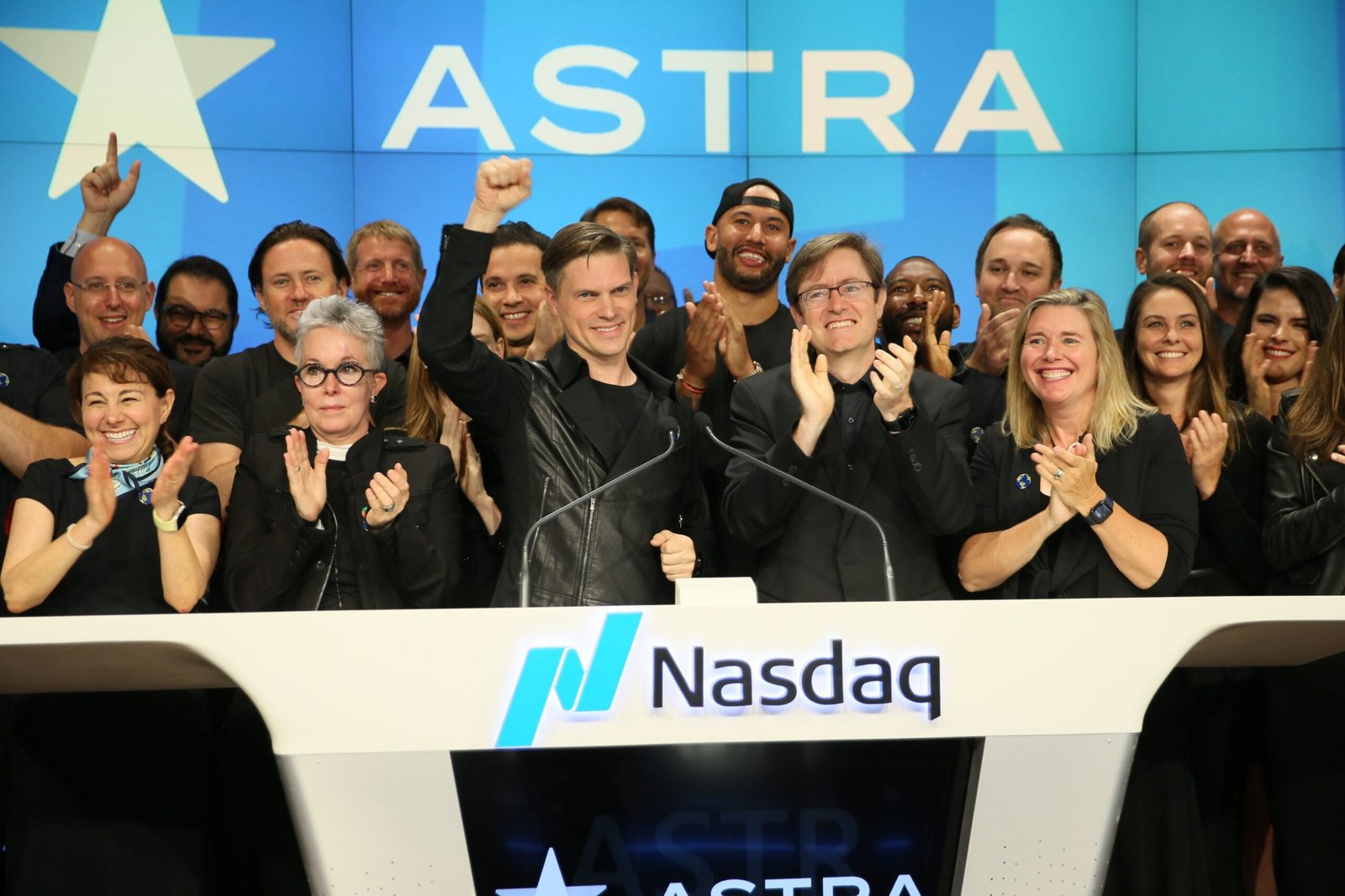
His company rode the SPAC boom five years ago, going public and reaching a valuation of several billion dollars. Astra, though, suffered multiple failures of its Rocket 3 vehicle and investors soured on the company. Low on cash and facing bankruptcy, the company’s board accepted an offer by Kemp and co-founder Adam London in 2024 to take the company private at less than 1% its peak value.
The company has kept a low profile since then, continuing to produce spacecraft electric thrusters while working on the larger Rocket 4. At a breakfast event during the 41st Space Symposium in April, Kemp said the company generated nearly $50 million in revenue in 2025 on sales of those thrusters with a “slight” profit in terms of adjusted EBITDA. He expected the first Rocket 4 to launch by the end of the year from Cape Canaveral.
What is arguably more interesting, though, is how Astra is doing it. The company, based in Alameda, California, is taking a page from startups across San Francisco Bay and using artificial intelligence tools to run the company.
That change stemmed from the frustration Kemp had with the expensive enterprise software Astra had used as a public company. “What we’re on a mission to do this year, because we went private, is eliminate all software. Absolutely no purchased software,” he said. “We’re writing everything that runs our company and our own software.”
Astra has trained an AI model using every bit of information about the company, from budgets and requirements documents to technical specifications. “I guarantee that, every single day, it’s helping every engineer at Astra to not miss things,” he said. “It’s rewriting all of our work instructions and everything we produce to make sure that they’re consistent.”
That requires a commitment from everyone in the company to use and contribute to the model, or else. “I’m making every employee at Astra write software and contribute software to our software stack this year,” Kemp said. “If you don’t, you’re fired.”
He added that he told his senior leadership team that they need to increase their output by a factor of 10 this year. “I want you to figure out how to measure it and I want to see it,” he said. “And if you don’t make that mark, you’re gone.”
Most space companies are using AI tools to some degree, but at least publicly talk about using them to augment their existing employees in areas such as data analysis or back-office work. Kemp, by comparison, sees AI and automated manufacturing tools replacing employees.
That is key to reducing costs and mass-manufacturing rockets and thrusters. “We’re going to do it by eliminating most of our employees,” he said. “We’re taking our staff down, down, down.”
Astra, at its peak, had 400 employees, and Kemp said it now has 110. The company expects that trend to continue as AI tools get better at more complex engineering tasks. The leaders of various engineering teams at the company, he predicted, will become the last members of those teams.
“Robots are putting things together and AI agents are doing all the work. Our cost structure is going to go to nothing,” he said. “That is an insanely scary company.”
That would have sounded outlandish not long ago but is something many in the AI community think is inevitable. Dario Amodei, chief executive of AI company Anthropic, said at his company’s developers conference in May that he expects this will be the year the first billion-dollar company arrives with a single employee, thanks to AI.
How that translates to space, a field with demanding hardware requirements and a culture that can still be conservative and risk-averse, remains to be seen. Astra may be a harbinger or an outlier.
At the breakfast, someone asked Kemp, “Are you going to be the last employee of the company?”
“Yes,” he responded, to laughter. That may be true whether Astra succeeds or fails.
This article first appeared in the June 2026 issue of SpaceNews Magazine.
