


For decades, Hartsfield-Jackson Atlanta International Airport (ATL) has been the world’s biggest airline hub, and it hasn’t even been close. ATL has long been the world’s busiest airport, and this is largely because Delta Air Lines uses it as its primary hub. While the airline has nine hub airports in total, Atlanta serves as its largest hub, where it serves almost every destination imaginable, and no other US hub has been able to compare until recently. However,  American Airlines is nipping at ATL’s heels with its hub in Dallas/Fort Worth International Airport (DFW).
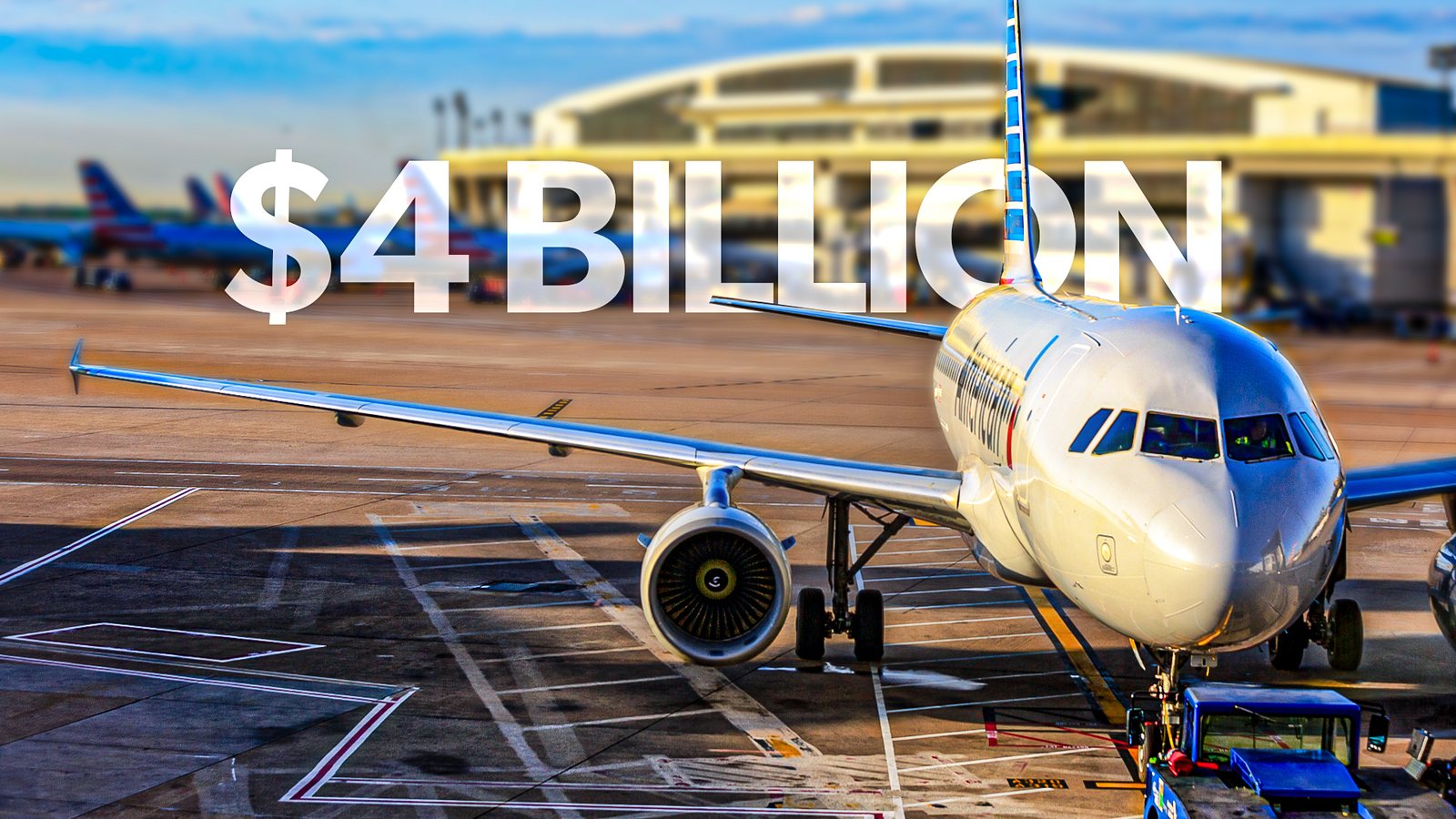
DFW is one of ten hub airports for American, but the airline (which is based in Fort Worth) has been increasingly focusing on building up DFW over other hubs, turning it into a megahub that nearly rivals ATL. In terms of flight count, American at DFW is just slightly below Delta at ATL, and the two operations are much larger than any other airline hub in the country. In the future, American will continue to focus on DFW, as the airport is working on a new $4 billion expansion.
DFW’s New Expansion

Construction is currently underway on a new terminal at DFW, named Terminal F. The facility is projected to cost a total of $4 billion, and the initial opening in 2027 will include 15 new gates, while the terminal will include a total of 31 gates (at the request of American Airlines, which will also be the exclusive tenant at Terminal F). The airport has titled its strategy ‘Forever Forward at DFW: A Connection Machine’, and this reflects the main role that it serves within American’s network.
As expected, Terminal F will be modern and spacious on the inside, but the real focus of the terminal is to make it efficient for connections, enabling more passengers to pass through the airport. This will be accomplished through the design of the building, an advanced automated baggage system, and a new SkyLink station. In addition, Terminal F will incorporate biometric scanning at international gates, along with more efficient check-in facilities incorporating self-serve kiosks and automated baggage systems.
The project is expected to run until 2030, and American Airlines’ use and lease agreement with DFW has been extended until 2043 for operational stability. It’s a significant commitment from American Airlines, but DFW has worked wonderfully for American within its network, and this operation is a crucial part of the airline’s network. The carrier is now being given the tools to expand even further, and DFW is further cementing its place as one of two ‘superhubs’ in the US (alongside ATL). Here’s why.
DFW Within American’s Network

 Delta Air Lines has ATL as its largest hub by far, along with a mix of fortress hubs in smaller cities and competitive hubs in major business centers.
  United Airlines, meanwhile, doesn’t have a ‘megahub’ and most of its hubs are in cities with high business demand, although it holds dominant positions in most of these airports anyway. In this respect, American is more like Delta, with DFW being the airline’s megahub while it also has fortress hubs in some locations that don’t have quite as much local demand but also have less competition.
DFW is located farther west than ATL and therefore has traditionally been smaller. ATL is the closest major US airline hub to the mean center of population in the country, and is therefore well positioned to capture passenger flows within the US East Coast as well as the East Coast to the rest of the country. Although DFW’s location makes it ill-suited for connections within the eastern part of the US, it is north enough to capture flows between the eastern and western parts of the country, making it a major connecting operation for American.
American Airlines Hubs | |
|---|---|
Charlotte Douglas International Airport (CLT) | New York John F. Kennedy International Airport (JFK) |
Chicago O’Hare International Airport (ORD) | New York LaGuardia Airport (LGA) |
Dallas/Fort Worth International Airport (DFW) | Philadelphia International Airport (PHL) |
Los Angeles International Airport (LAX) | Phoenix Sky Harbor International Airport (PHX) |
Miami International Airport (MIA) | Washington Ronald Reagan National Airport (DCA) |
In addition to connections, Texas has generally been growing significantly in recent years, with business and premium leisure demand as high as ever. The Dallas/Fort Worth region is the largest metropolitan region in the state, and so DFW is becoming more lucrative than ever. American is ensuring that it’s well-positioned to take advantage of rising local demand out of DFW with the new Terminal F and other improvements at the airport, which will continue to be its most important hub.
American’s Low-Cost Hub Strategy

Over the past decade, American Airlines has been highly focused on cost reductions, schedule, and unit costs. You see this reflected in its cabin layouts, where it often sacrifices premium capacity to maximize total capacity, as well as the carrier’s focus on short-haul routes that are relatively cheap to operate while its expensive long-haul network is kept at a minimum. Another area where American focuses on costs is with its hubs, because it has very low operating costs at its two largest hubs: DFW and Charlotte Douglas International Airport (CLT).
Both of these airports are quite cheap to operate out of, with American having tremendous influence due to just how dominant it is at these two airports. American has prioritized growing out of these airports, and while DFW has become a truly massive operation, CLT has also grown tremendously. Delta operates just under 1,000 daily departures out of ATL, and American operates just over 900 daily departures out of DFW, while it runs over 670 daily departures out of CLT.
In terms of its geographic position and role in the network, CLT is essentially American’s ATL, while DFW is its megahub. Because of the low operating costs at these two hubs, American’s route economics are quite compelling, and it operates truly immense schedules out of them while its presence at its more competitive hubs has become smaller. Given the cost advantages offered by these hubs, it’s hard to see American not continuing to focus on DFW and CLT in the future.
American’s Sun Belt Strategy

The ‘Sun Belt’ is a term used to broadly define the southern part of the US, and this region has generally been the fastest-growing part of the country. Delta’s only hub within this region is ATL, whereas United’s only hub directly in the Sun Belt is Houston George Bush Intercontinental Airport (IAH). American, however, directly serves the Sun Belt with its hubs in Phoenix Sky Harbor International Airport (PHX), Miami International Airport (MIA), CLT, and crucially, DFW.
American is the dominant airline in this rapidly growing area, and its DFW hub is well located for convenient east-to-west connections while also serving one of the region’s largest cities. American has developed a behemoth of a network out of DFW that’s well-positioned to take advantage of future trends in the country. More recently, American has been operating robust schedules that far outmatch competitors to destinations within the Sun Belt, and the airline now operates 13 flight banks in DFW.
Delta Air Lines Hub Airports | United Airlines Hub Airports |
|---|---|
Boston Logan International Airport (BOS) | Chicago O’Hare International Airport (ORD) |
Detroit Metropolitan Wayne County Airport (DTW) | Denver International Airport (DEN) |
Hartsfield-Jackson Atlanta International Airport (ATL) | Guam Antonio B. Won Pat International Airport (GUM) |
Los Angeles International Airport (LAX) | Houston George Bush Intercontinental Airport (IAH) |
Minneapolis-St. Paul International Airport (MSP) | Los Angeles International Airport (LAX) |
New York John F. Kennedy International Airport (JFK) | Newark Liberty International Airport (EWR) |
New York LaGuardia Airport (LGA) | San Francisco International Airport (SFO) |
Salt Lake City International Airport (SLC) | Washington Dulles International Airport (IAD) |
Seattle-Tacoma International Airport (SEA) |
Because of its hub structure, American is uniquely well-positioned to capitalize on the rise of the Sun Belt, and so it ideally wants to grow DFW as much as possible. Although it’s difficult to see ATL ever being overtaken as the US’s largest airline hub, there’s no doubting that DFW will continue to nip at the former’s heels in terms of passenger numbers and aircraft movements. While American is currently looking to switch strategies in multiple ways, DFW is certainly not something that American will take its eyes off.
DFW Within American’s Future Strategy

American Airlines is not making nearly as much money as its competitors. The carrier focused too much on operating massive domestic schedules in the Sun Belt, cut corporate contracts, kept long-haul flying to a minimum, and cut premium cabin sizes. Today, however, passengers are more willing to spend on premium cabin tickets while long-haul routes have been increasingly successful for American’s rivals, and the competitive business hubs in the US are as important as ever.
American is looking to reverse course by moving back upmarket and shifting focus, but this doesn’t mean that DFW will suddenly be neglected. American has faced criticism for its ‘El Paso to the world’ strategy, which essentially outlines how its Sun Belt network is structured, but ‘El Paso to the world’ on its own was never the issue. The problem with the network was that American let its competitive positions in key markets like New York and Los Angeles falter, relying too much on ‘El Paso to the world’.
American is looking to shift its strategy and close the profitability gap, but if it can address its network shortcomings in the major cities, it’ll actually have an extremely competitive route network. DFW is and will remain a key asset to the airline, as it’s operationally efficient, has low costs, has enough local demand to support a massive domestic and long-haul network, while also being well-located for connections.
