


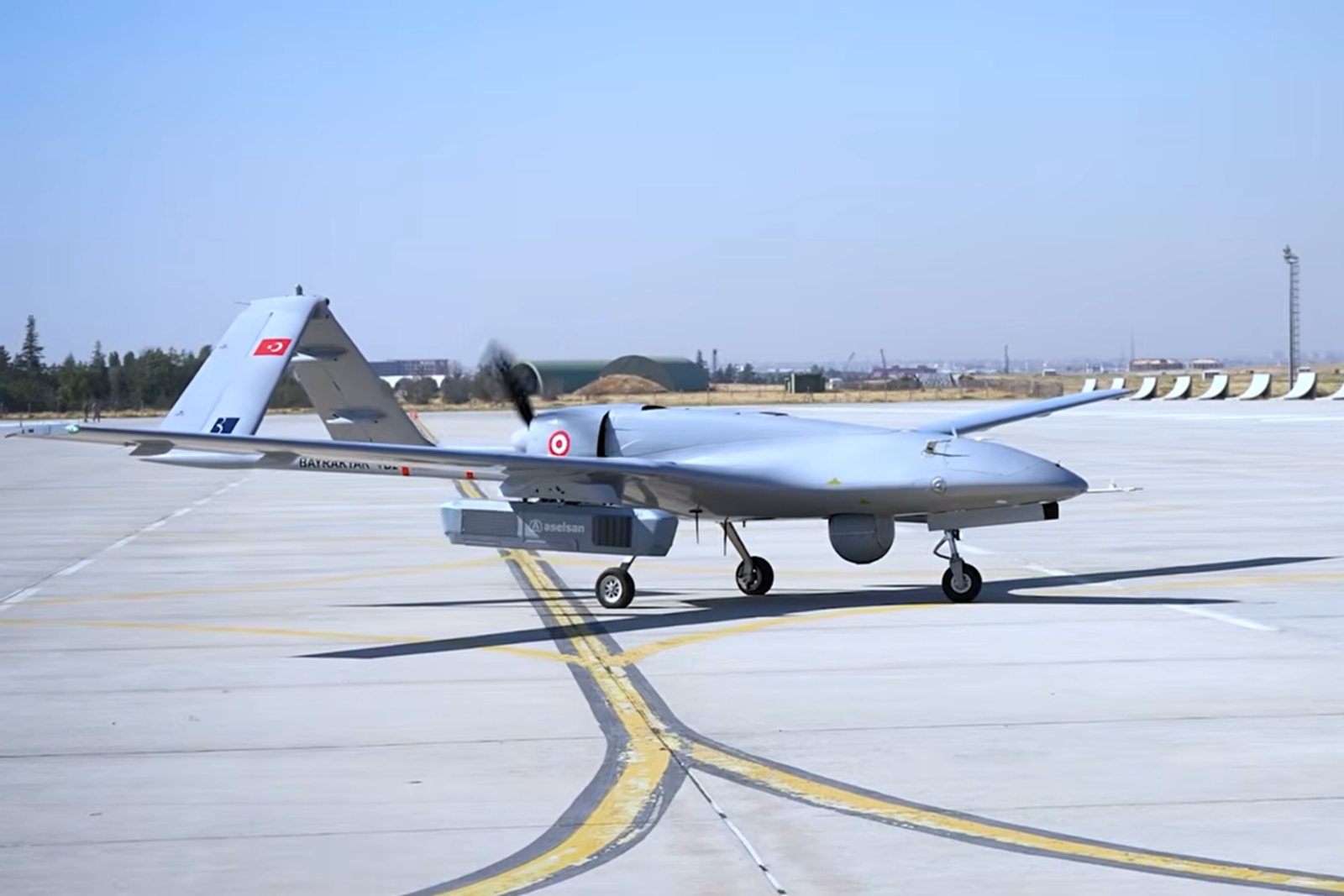
ASELSAN said on September 18, 2026, that it had flown three of its airborne electronic warfare and radar pods on Bayraktar TB2 drones during a demonstration in Konya, Turkey, in front of defense delegations from 18 countries.
The systems involved were the ANTIDOT 2ES 100 electronic support pod, the ANTIDOT 2EA 200 electronic attack pod and the FULMAR 200 synthetic aperture radar (SAR) pod. According to ASELSAN, the two ANTIDOT pods were carried by one TB2 and the FULMAR 200 by a second aircraft, with the two drones working the same scenario.
From radar detection to electronic attack
In the first sequence described by the company, the electronic support pod detected a target radar in flight and established its position. The ANTIDOT 2EA 200 then conducted an electronic attack on that radar using the targeting data the support pod had generated. ASELSAN said the result allowed the TB2 carrying the pods to approach the target without being detected.
In the second sequence, the electronic support pod located a different emitter and passed its position to the FULMAR 200, which produced a high-resolution SAR image of the target area.
ASELSAN said the activity marked the first time ANTIDOT had been tested against real radar systems while carried on a TB2, and the first demonstration of the two pod families working together.
The company did not identify the radar systems used as targets.
Bringing air-defense suppression to the Bayraktar TB2
The configuration is aimed at the suppression of enemy air defenses (SEAD), a mission set that has historically required dedicated crewed aircraft. ASELSAN showed the same ANTIDOT pair mounted externally on the larger Bayraktar TB3 in June 2026, a configuration it described at the time as a world first, and brought both pods and the FULMAR radars to Farnborough in July 2026.
Moving the pair onto the TB2 could provide a lower-cost route to that capability, although ASELSAN has not disclosed the cost of the pods or their integration.
The TB2 is the most widely exported drone in Baykar’s range, with the company reporting agreements covering the type in 36 countries. Existing operators could, in principle, add a pod-based electronic warfare capability without buying a new airframe.
