


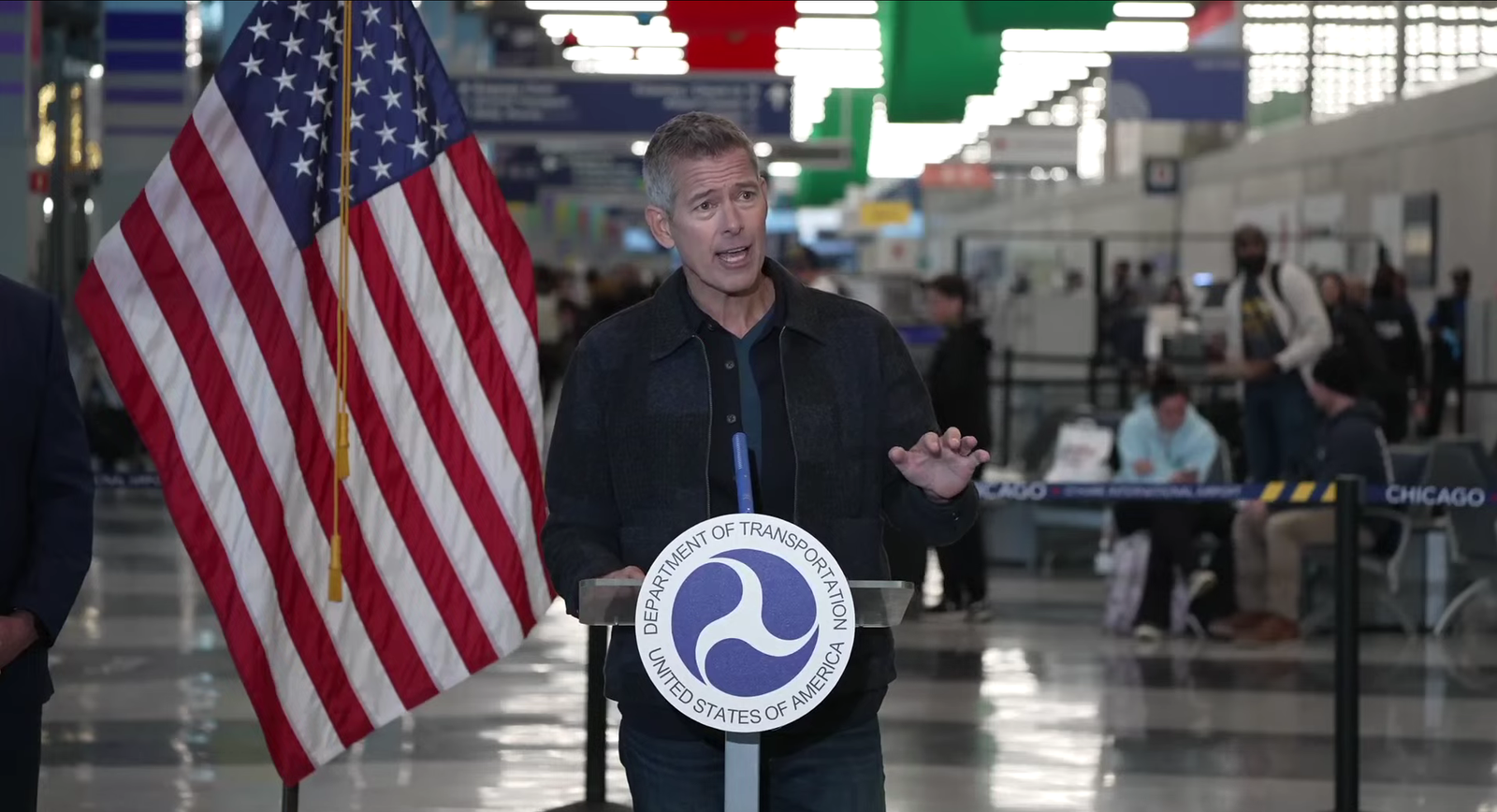
U.S. Transportation Secretary Sean Duffy said Friday that the FAA’s latest air traffic control (ATC) hiring push—targeting gamers—is paying early dividends in addressing a chronic shortage of more than 3,500 controllers.
Speaking at the Semafor World Economy Summit in Washington, D.C., Duffy said 6,000 people have applied to become ATCs since the FAA opened a new hiring portal at midnight on Friday. The portal will close on April 27, or earlier if the number of applicants hits 8,000.
“We’ve had a flood of young people coming in that want to be air traffic controllers,” Duffy said. “They have to be qualified. We have to go through an assessment process. But this has been wildly successful.”
The FAA has taken a range of measures to combat the ongoing shortage, from streamlining the hiring process to awarding cash bonuses and adding new schools to air traffic collegiate training initiative (AT-CTI) and Enhanced AT-CTI programs. It said last week that there are almost 11,000 controllers in service and another 4,000 in training pipelines. But that figure is well short of the approximately 14,600 controllers called for in the agency’s staffing plans.
Per an August staffing blueprint, the FAA will look to onboard 2,200 ATC trainees in fiscal year 2026. The White House’s FY27 budget request calls for a $481 million increase to the FAA’s operations account, including $95.4 million to hire 2,300 trainees—in line with the August blueprint.
By the end of fiscal year 2028, the FAA aims to recruit 8,900 new ATCs. But it also expects to lose about 6,800, meaning it will net closer to 2,000 during that period.
Tackling the ATC Shortage
The FAA has tried and failed to properly staff its control towers for years. Its latest strategy enlists the twitchy fingers of gamers.
“If you think just what these gamers are doing on screens, and they’re talking and there’s a lot of things going on—they’re used to that,” Duffy said Friday. “And that’s actually what you’re doing in a tower.”
The agency this month estimated that more than 200 million Americans—or about 65 percent of the population—regularly play video games. It said that controllers in exit interviews have cited video games as beneficial to their cognitive functioning, multitasking ability, and ability to solve problems on the fly.
The FAA previously recruited gamers to address the ATC shortage in 2021. Experts interviewed by The New York Times were divided on the atypical strategy’s efficacy.
“Our union welcomes innovative approaches to expanding the candidate pool—including outreach to individuals with high-level aptitude skills such as gamers—so long as all pathways maintain the rigorous standards required of this safety-critical profession,” Nick Daniels, president of the National Air Traffic Controllers Association (NATCA), said in a statement shared with FLYING last week.
Gamers’ dexterity and spatial awareness could be useful tools in such a fast-paced environment. Those skills alone won’t prepare them for one of the most stressful jobs on the planet.
Due to shortages, controllers are often forced to work 10 hours a day, six days a week, and handle multiple positions. Thousands worked weeks without pay when the government shut down in late 2025, struggling to afford food, gas, day care, and even lifesaving medicine. Per Daniels, many took second jobs to bridge the gap.
“The problem is when you’re leveraging the safety of the American people, or you’re leveraging air travel—I get that there’s a political disagreement—but is this the appropriate forum in which to have that disagreement?” Duffy said Friday.
The FAA’s ATC Academy in Oklahoma City has a historical attrition rate of about 30 percent, meaning that 1,800 of the 6,000 new applicants are likely to fail or burn out. Before heading to the Academy, applicants must pass the Air Traffic Skills Assessment and meet a few other requirements. Graduates typically spend two to three years training at an FAA facility before they are entrusted to oversee airspace.
