


UK-based alloy design firm and Oxford University-spinout Alloyed has received £1 million from the UK’s Aerospace Technology Institute (ATI) Programme to help bring a new nickel superalloy closer to use in commercial jet engines.
Named ABD-1000AM, the alloy is developed for additive manufacturing, and the funding will go toward resolving one of the more stubborn problems in the field: getting high-performance nickel alloys to work with laser powder bed fusion (LPBF) without cracking during the process. The alloy design firm is running the project with ITP Aero and Cranfield University.
Dr. David Crudden, Alloyed’s Chief Metallurgist, highlighted, “This project, focused on advancing the manufacturing readiness level of ABD-1000AM, is a great example of where ATI Programme funding helps UK companies to bridge the gap between early research and industry development programs. ABD-1000AM is the world’s highest temperature nickel-based superalloy designed for additive manufacture. We have identified huge demand for this material and believe it will be a game changing technology for gas turbines across aerospace propulsion and industrial power generation.”
Collaboration Across Academia and Industry
For this initiative, Cranfield is contributing its work in high-temperature materials and surface engineering, including protective coatings to improve the alloy’s resistance to oxidation. Meanwhile, ITP Aero UK brings expertise in combustor technology, working with OEMs on both commercial and defense aviation programs.
The grant is part of a wider relationship between Alloyed and the ATI Programme. The Oxford-originated company is also working with the institute on a high-strength aluminium alloy for aerospace, and separately received £14 million through the programme to develop a digital platform aimed at cutting down the time and complexity involved in qualifying and certifying additively manufactured components for flight.
Chris McDonald, Parliamentary Under-Secretary of State (Minister for Industry), commented, “This is a strong example of how government and business can work together to keep the UK at the forefront of innovation in our world-class aerospace sector, and I look forward to seeing how Alloyed’s project can contribute to the jet engines of the future. We’re bolstering our support for the aerospace industry through our modern Industrial Strategy – giving business the confidence it needs to invest in UK advanced manufacturing and delivering on growth as part of our Plan for Change.”

Overcoming Material Limits in 3D Printed Jet Components
Developing parts for next-generation jet engines involves significant material and manufacturing challenges. Components must withstand temperatures approaching 1000°C, endure high thermal and mechanical stresses, and be produced in complex geometries that conventional methods struggle to achieve. Tight production timelines and the gap between lab-scale research and industrial-scale manufacturing further constrain additive manufacturing of high-performance superalloys.
The Oxford University-spinout’s ATI-funded project reflects this broader challenge, focusing on improving the manufacturability of ABD-1000AM for LPBF while maintaining high-temperature performance. Similar UK initiatives illustrate how these constraints are being addressed.
For instance, Skyrora, in collaboration with Metalysis and the European Space Agency (ESA), is developing the high-performance alloy Tanbium for rocket engine combustion chambers and nozzles, specifically tackling extreme thermal and mechanical limits. Elsewhere, Argive has used 3D printed nickel superalloy microturbines, reducing part count and improving thermal performance while navigating the challenges of high-temperature operation and manufacturability.
Like Alloyed’s project, these efforts demonstrate how advanced AM methods must overcome material, geometric, and process limitations to produce functional, heat-resistant propulsion components. Alloyed’s current project remains focused at the component level, with further work required before such materials can be integrated into certified, flight-ready engine systems.
3D Printing Industry is inviting speakers for its 2026 Additive Manufacturing Applications (AMA) series, covering Energy, Healthcare, Automotive and Mobility, Aerospace, Space and Defense, and Software. Each online event focuses on real production deployments, qualification, and supply chain integration. Practitioners interested in contributing can complete the call for speakers form here.
To stay up to date with the latest 3D printing news, don’t forget to subscribe to the 3D Printing Industry newsletter or follow us on LinkedIn.
Explore the full Future of 3D Printing and Executive Survey series from 3D Printing Industry, featuring perspectives from CEOs, engineers, and industry leaders on the industrialization of additive manufacturing, 3D printing industry trends 2026, qualification, supply chains, and additive manufacturing industry analysis.
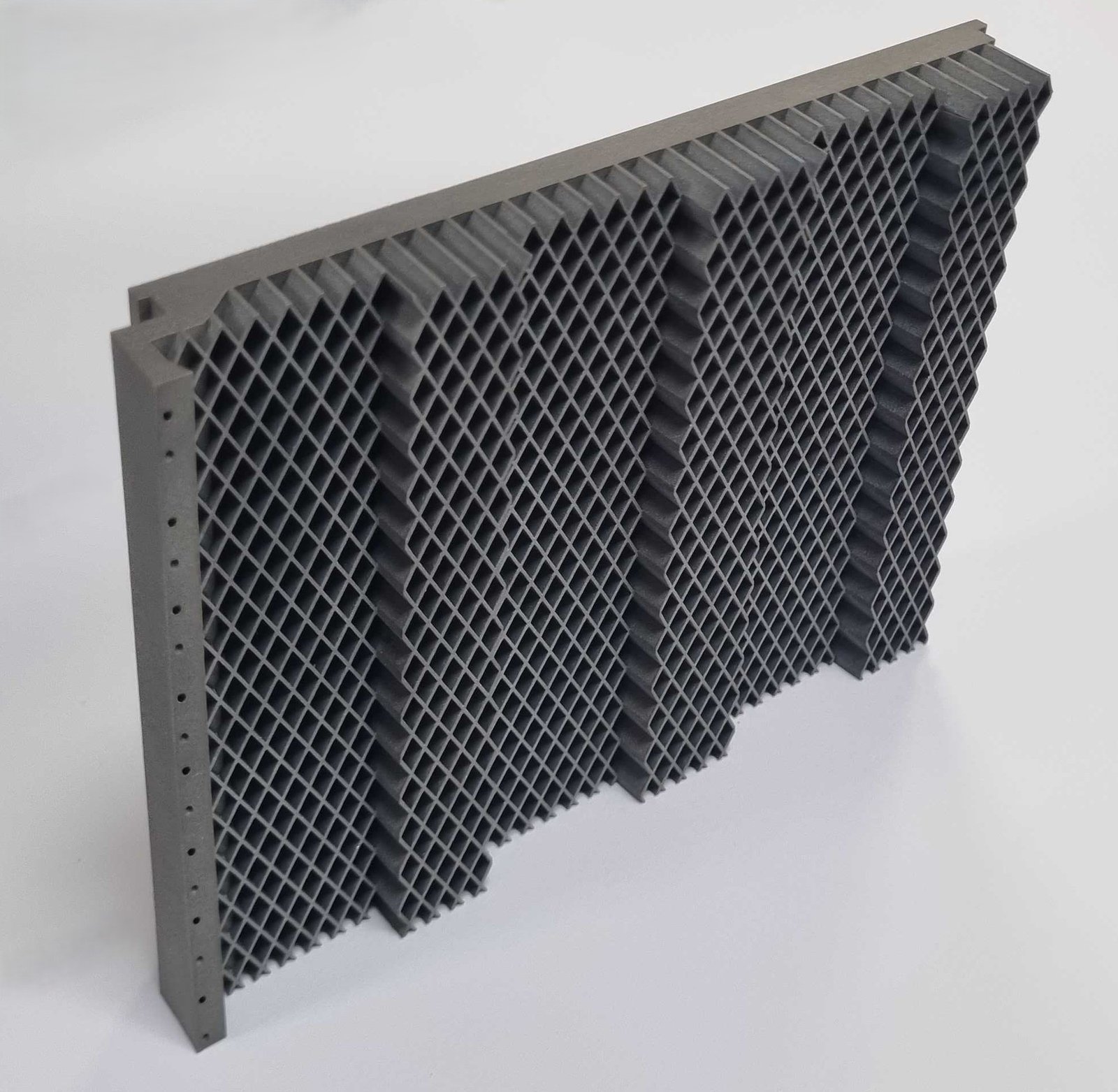
Featured image shows 3D printed honeycomb tile created using ABD-1000AM. Photo via Alloyed Ltd.
