


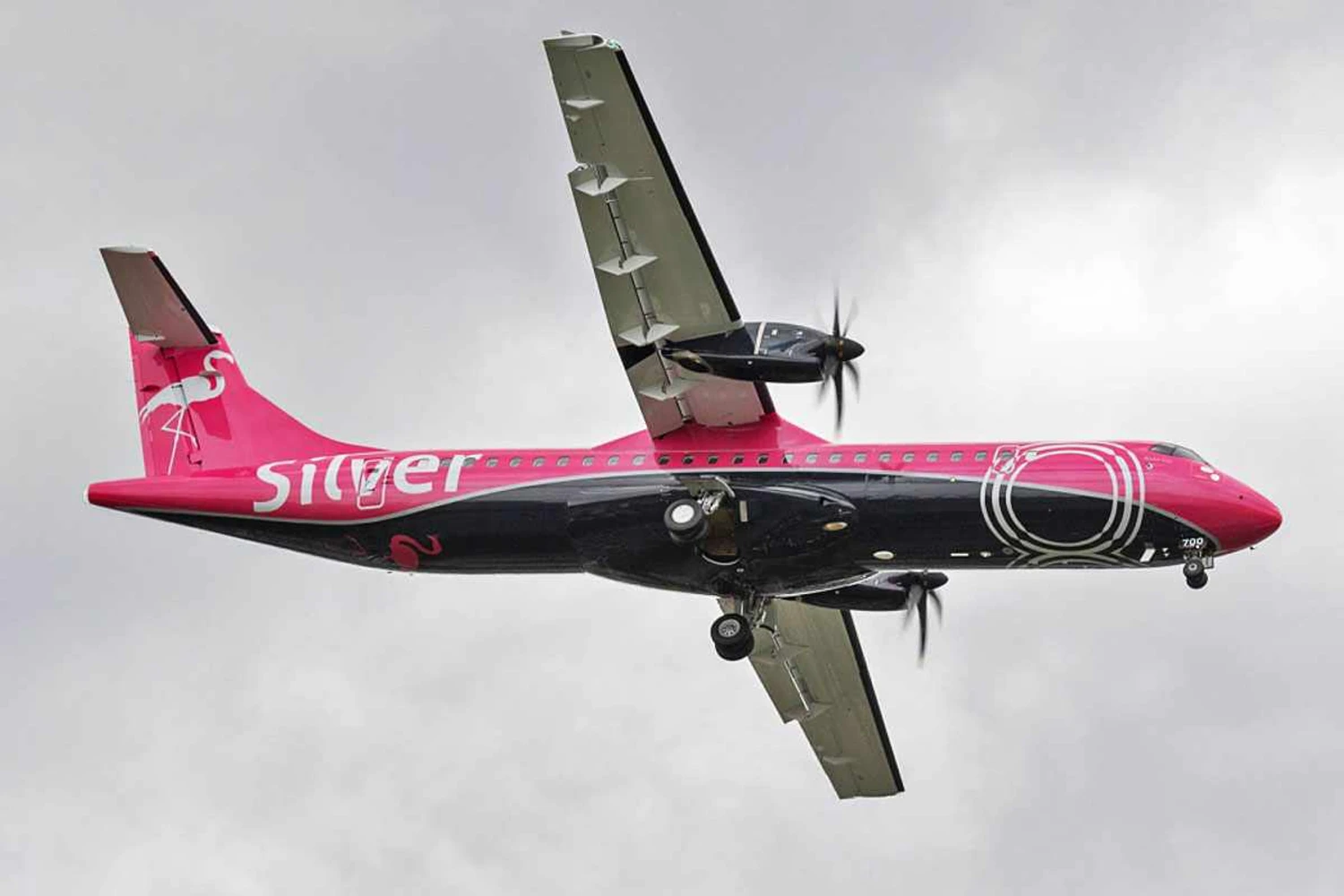
ATR is studying changes to the ATR 72-600 aimed at attracting more U.S. regional airline customers, including a new three-class cabin and a forward passenger door compatible with airport jet bridges, according to Aviation Week.
The European manufacturer has spent years trying to expand its presence in the U.S. regional market, where turboprops have steadily lost ground to regional jets despite their lower operating costs. The collapse of Silver Airways in 2025 removed one of the few scheduled U.S. operators of ATR aircraft, although dozens of ATR turboprops remain active in the country on charter, cargo, government and other non-scheduled missions.
According to the report, ATR is evaluating a 50-seat cabin featuring first class, premium economy and economy seating. The layout would comply with U.S. scope clause restrictions while targeting routes currently served by 50-seat regional jets such as the CRJ450 and CRJ550.
The manufacturer is also considering adding a forward passenger door, allowing passengers to board through jet bridges instead of the aircraft’s traditional rear entrance. ATR believes the change would make the aircraft more attractive to major U.S. airlines seeking a consistent passenger experience across their regional networks.
The proposed cabin would include a forward galley to support first-class service, enabling airlines to offer premium seating on flights to smaller communities without changing the onboard product after passengers connect from mainline aircraft.
ATR has not launched the configuration and says it is assessing market demand before making a final decision. The company plans to display a full-scale cabin mock-up at the Regional Airline Association conference in the United States in September.
The U.S. version of the ATR 72 would also require additional certification changes, including a secondary cockpit barrier and a 25-hour cockpit voice recorder to comply with FAA requirements for Part 121 airline operations.
