



A consortium of Australian universities, research institutions, and an advanced manufacturing firm has launched a collaborative initiative to tackle a pressing challenge in naval defense: the domestic production of nickel aluminum bronze (NAB), a high-performance alloy essential to marine propulsion systems.
The project, backed by funding from the Queensland Defence Sciences Alliance (QDSA), brings together Charles Darwin University (CDU), James Cook University (JCU), the Australian Institute of Marine Science (AIMS), and manufacturing technology company SPEE3D.
NAB Relevance
NAB is valued across a wide range of demanding applications, from aircraft landing gear bearings and submarine propellers to pumps, valves, gears, and non-sparking tools, owing to its exceptional strength, toughness, wear resistance, and corrosion performance. Despite its importance, conventional methods for producing NAB components are no longer feasible within Australia, creating a vulnerability in the country’s defense supply chain.
CDU Research Professor Kannoorpatti Krishnan, who is leading the effort, framed the stakes clearly: “This reduces downtime, strengthens resilience in forward operating bases, and ensures continued operational effectiveness in contested maritime environments. The project also secures a strategic advantage by generating new knowledge of material behaviour in Pacific tropical waters, where microbial communities are unique and largely unstudied.”
Cold Spray Technology Steps In
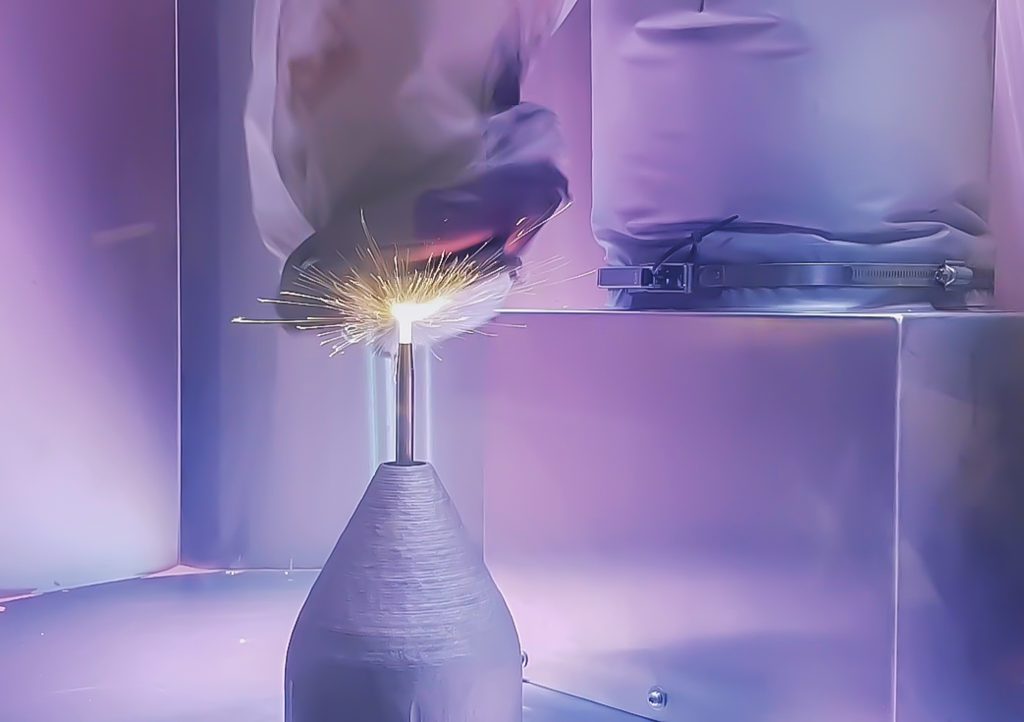
The solution proposed by the team centers on SPEE3D’s cold spray manufacturing (CSM) process, a high-speed additive manufacturing approach that the company claims is the only method in the world currently capable of producing an NAB-equivalent material. Rather than relying on traditional casting, this technique offers a faster, more localised, and more controllable production pathway.
SPEE3D co-founder and Chief Technology Officer Steven Camilleri highlighted the broader significance: “If NAB can be printed with a demonstrated equivalence to qualified cast material, the opportunity is far more than novelty. It represents the recovery of a strategically important maritime alloy; one that, when produced using additive manufacturing techniques, means parts will become more readily available through a faster, more local, and more controllable production route.”
QDSA Director Stuart Blackwell echoed this perspective, noting that the approach represents “a step change in the future of logistics and sustainment” by enabling maritime parts to be manufactured closer to where they are actually needed.
Rigorous Testing in Tropical Marine Conditions
A key component of the project involves subjecting the 3D printed NAB parts to real and simulated seawater environments to evaluate their long-term durability. JCU’s Distinguished Professor Peter Junk and his team will contribute expertise in rare earth incorporation into the NAB base alloy, as well as surface analysis to understand microstructural behaviour after field exposure. Corrosion testing will be conducted under variable conditions, adjusting pH, salinity, temperature, and flow, at AIMS’ National Sea Simulator (SeaSim) in Townsville.
SeaSim Director Craig Humphrey noted that the facility is uniquely positioned for this work: “AIMS’ tropical location allows for the testing of these alloys under controlled experimental aquarium conditions in the SeaSim and in nearby coastal waters, providing valuable insights into their performance in simulated and real-world marine environments.”
Printing Sovereignty: How Australia Is Reclaiming Control of a Critical Naval Alloy
Australia’s push to 3D print NAB components is fundamentally a sovereignty play. The country’s vast geography, remote northern operating bases, and deepening exposure to Indo-Pacific maritime competition have made dependence on fragile global supply chains for critical naval alloys a strategic liability. Regaining domestic production of NAB closes a vulnerability that no ally can reliably fill on short notice.
Australia has been building toward this moment for years. As early as 2019, SPEE3D partnered with the Advanced Manufacturing Alliance and CDU on an AU$1.5 million Royal Australian Navy project to pilot cold spray metal 3D printing for patrol vessel maintenance. That foundation expanded considerably under the AUKUS framework: in early 2025, AML3D delivered Copper-Nickel tailpiece components for the US Navy‘s Virginia-Class nuclear submarine program, with Australia’s Deputy Prime Minister describing the delivery as proof that “AUKUS is happening now.” Later that year, ASC and Austal formalised a collaboration at the Indo Pacific International Maritime Exposition in Sydney to advance Australia’s domestic additive manufacturing supply chain for both Collins Class and Virginia Class submarines, alongside workforce training programs.
The same urgency is playing out across allied navies. During the RIMPAC 2024 naval exercise in Hawaii, the US Navy deployed SPEE3D’s XSPEE3D printer alongside other systems to demonstrate the ability to slash parts delivery times from up to 200 days down to mere hours.
The CDU-SPEE3D project signals that the future of naval sustainment will be decided not only by who has the most ships, but by who can keep them running, faster, closer, and on their own terms.
3D Printing Industry is inviting speakers for its 2026 Additive Manufacturing Applications (AMA) series, covering Energy, Healthcare, Automotive and Mobility, Aerospace, Space and Defense, and Software. Each online event focuses on real production deployments, qualification, and supply chain integration. Practitioners interested in contributing can complete the call for speakers form here.
To stay up to date with the latest 3D printing news, don’t forget to subscribe to the 3D Printing Industry newsletter or follow us on LinkedIn.
Explore the full Future of 3D Printing and Executive Survey series from 3D Printing Industry, featuring perspectives from CEOs, engineers, and industry leaders on the industrialization of additive manufacturing, 3D printing industry trends 2026, qualification, supply chains, and additive manufacturing industry analysis.
Featured image shows From left: Dr Naveen Kumar Elumalai, AIM’s Craig Humphrey, Research Professor Kannoorpatti Krishnan and Darron Kavanagh AM. Photo via QDSA.
