


US-based propulsion manufacturer Beehive Industries has signed an agreement to buy 30 EOS M4 ONYX metal 3D printers for $50 million.
The systems will be installed at the company’s Colorado and Tennessee facilities over the next 12 months, raising Beehive’s total fleet of EOS metal 3D printers to 50.
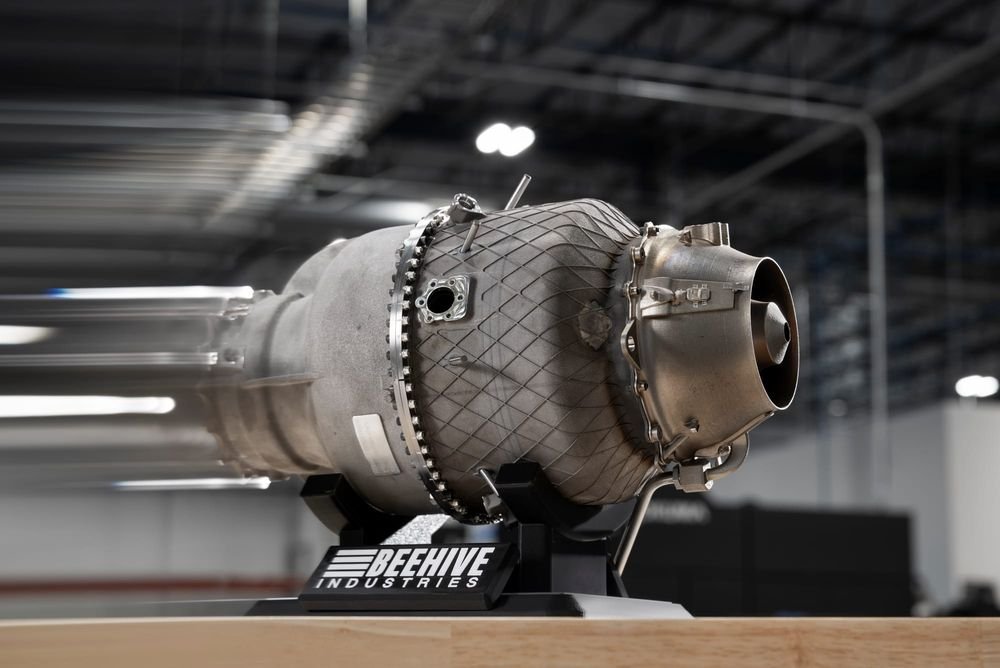
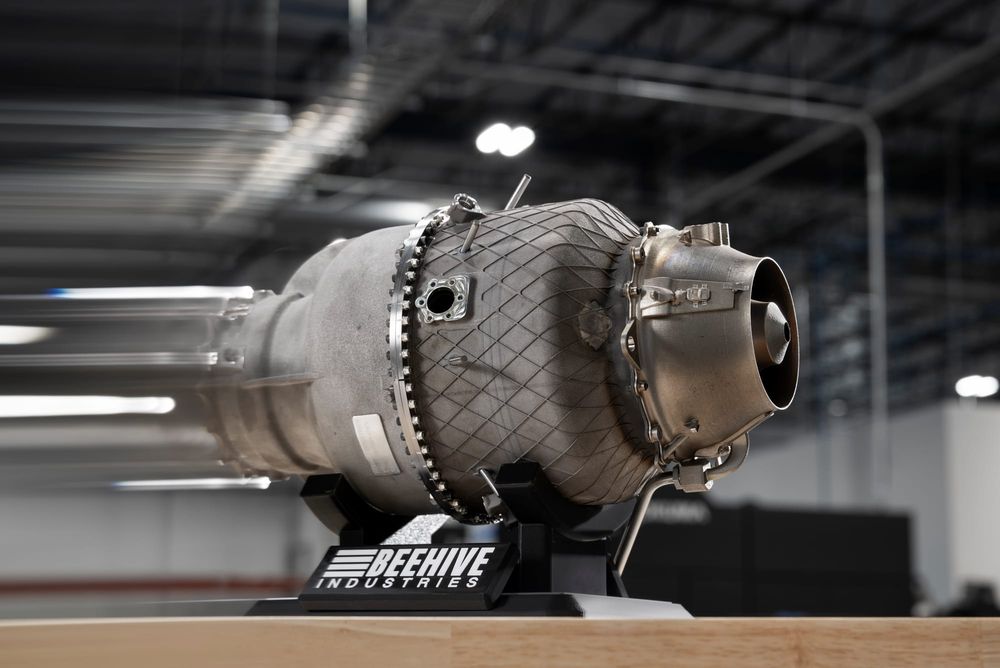
That capacity is meant to support production of the Frenzy 8, Beehive’s engine line for swarm-class drones and other uncrewed aerial systems. The order follows a $29.7 million contract awarded to Beehive by US Air Force (USAF) for vehicle integration, flight testing, and qualification of the Frenzy 8 platform, along with what the company describes as successful high-altitude testing and flight readiness validation of the engine.
“Choosing to expand our fleet with these 30 EOS M4 ONYX systems was a strategic decision driven by EOS’s willingness to truly partner with us. Throughout this process, the EOS team leaned in, worked creatively, and demonstrated a deep commitment to our long-term growth,” said Jonaaron Jones, Beehive’s President of Additive Parts Sales.
The Hardware Architecture Driving Fleet Expansion
The equipment behind that buildout is EOS’s newest industrial metal printing platform. Announced during Formnext 2025, the M4 ONYX uses a six-laser setup, has an expanded build chamber compared to earlier EOS systems, and includes a powder filtration system EOS calls RFS Pro. Beehive said it will also run EOS software for process monitoring and production tracking across its additive manufacturing operations.
That scale of equipment purchase fits a company that already runs one of the larger metal AM footprints among US aerospace and defense suppliers, by its own account. Beyond the Frenzy engine family, Beehive has also unveiled a Rampart propulsion platform aimed at applications requiring more than 1,000 pounds of thrust.
The decision to expand printer capacity ahead of full engine qualification reflects a wider change in defense procurement, which increasingly favors uncrewed systems built for high-volume, low-cost production rather than the traditional model of small batches of expensive, long-lifecycle hardware. AM has become one of the main routes suppliers are using to meet that shift, since it allows companies to produce complex engine components without the tooling and lead times associated with conventional casting or machining.
That shift was visible at the industry’s latest event this year. Beehive’s printed Frenzy 8 engine was on display at the Eurosatory 2026 defense trade show in Paris, on EOS’s exhibition stand.
Defense Procurement Shifts Toward Scaled Capacity
The timing also lines up with how the Pentagon is now funding production capacity rather than just finished systems. The FY2026 defense budget allocated $3.3 billion to AM programs, an 83% increase over the prior year, while the DoD separately committed $1 billion to domestic low-cost drone production using 3D printing.
That shift suggests capacity is becoming a more direct factor in procurement planning, which may help explain why propulsion suppliers are investing in large-scale AM capability before full engine qualification is complete.
A similar pattern is emerging in UAV propulsion, where AM is moving beyond prototyping into production hardware. MGI Engineering’s SkyShark drone uses Argive’s A300 microturbine, which incorporates additively manufactured components to reduce part count and enable a compact, fuel-efficient engine designed for the weight and packaging constraints of contested environments.
Beehive’s addition of 30 EOS metal AM systems reflects the same direction of scaling production capacity for UAV propulsion, positioning AM as a throughput enabler for flight-relevant engine systems in swarm-class uncrewed platforms.
3D Printing Industry is inviting speakers for its 2026 Additive Manufacturing Applications (AMA) series, covering Energy, Healthcare, Automotive and Mobility, Aerospace, Space and Defense, and Software. Each online event focuses on real production deployments, qualification, and supply chain integration. Practitioners interested in contributing can complete the call for speakers form here.
To stay up to date with the latest 3D printing news, don’t forget to subscribe to the 3D Printing Industry newsletter or follow us on LinkedIn.
Explore the full Future of 3D Printing and Executive Survey series from 3D Printing Industry, featuring perspectives from CEOs, engineers, and industry leaders on the industrialization of additive manufacturing, 3D printing industry trends 2026, qualification, supply chains, and additive manufacturing industry analysis.
Featured image shows the production version of Beehive Industries’ Frenzy 8 engine. Photo via Beehive Industries.
