


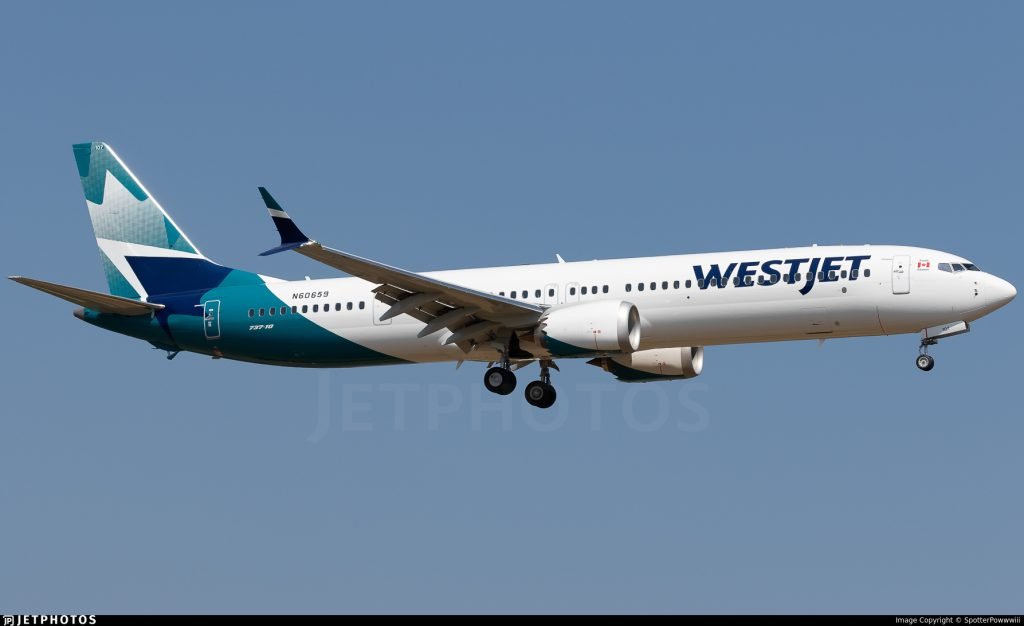
More than five years after its first flight, Boeing’s largest 737 has received FAA type certification. The approval, announced today, 20 October 2026, clears the way for deliveries of the 737-10 and completes certification of the four main variants in the MAX family. The 737-8 and -9 were certified in 2017 and 2018, respectively. The 737-7 received FAA certification in August of this year. Boeing says deliveries of the 737-10 will begin “in the coming months.”
For airlines awaiting the aircraft, the attraction is straightforward: more seats in a familiar fleet. But the 737-10 also introduces safety improvements that will extend beyond the newest and longest MAX to other members of the family via retrofits.
What the FAA says
In its release noting the certification milestone, the FAA said the following, “The FAA issued an amended type certificate, which confirms the aircraft complies with all applicable design and safety requirements, and an updated Production Limitation Record, which authorizes aircraft production.
“Before granting approval, the FAA required the MAX-10 to incorporate key improvements that address requirements in the Aircraft Certification, Safety, and Accountability Act and NTSB recommendations, including updates to the flight-control system with an enhanced angle of attack (airplane pitch) sensor.”
FAA Administrator Bryan Bedford added, “The FAA’s decision follows a thorough review of the aircraft’s design and safety requirements. We will continue to hold Boeing to the highest safety standards as the company begins production of the 737 MAX-10.”
Today’s certification allows Boeing to move forward with production and move toward the milestone of the first deliveries. Canadian carrier WestJet is currently scheduled to be the launch customer for the 737-10.
What changed during certification
In order to achieve certification, Boeing was required to make changes to the 737-10 MAX’s flight control system as well as other onboard systems.
One of the most consequential additions is the enhanced angle-of-attack system. Angle of attack describes the relationship between the wing and oncoming airflow. Faulty readings from an angle-of-attack sensor were central to the sequence of events in both fatal MAX accidents in 2018 and 2019.
Boeing’s enhanced system uses monitoring software to identify sensor behavior that does not match expected conditions. If it detects erroneous information, it can prevent that data from reaching other systems. Pilots will also receive an alert identifying the affected sensor, decreasing the amount of effort and time required to diagnose the problem.
The flight deck gains a switch allowing pilots to silence an erroneous stick-shaker warning—the strong vibration of the control column intended to warn of an impmending stall. Boeing says these improvements will become standard on newly produced MAX aircraft, with a retrofit available for aircraft already in service.
Testing also covered an updated engine anti-ice system. That change addresses conditions in which the system could overheat without pilot intervention when operating in certain conditions. The anti-ice improvement will also extend across the MAX fleet through new production and retrofits.
According to Boeing, “the 737-10 is the first commercial airplane to be certified to the full extent of the 2020 Aircraft Certification, Safety, and Accountability Act (ACSAA), which mandated enhanced documentation of safety assessments and human factors evaluations.”
Thousands of hours of testing

By the completion of its final planned certification flight test in July, the 737-10 program had accumulated 976 flights, more than 2,060 flight hours and approximately 1,040 hours of ground testing. Three aircraft supported the campaign, which included landing-gear evaluations, wet-runway braking, maximum-energy stops and testing of the new safety systems.
Since July, Boeing and the FAA have been working through the data to arrive at today’s certification announcement.
Which airlines are waiting for the 737-10?

Beyond WestJet, United Airlines, Delta Air Lines, American Airlines, Ryanair and Alaska Airlines all have orders for the 737-10. The aircraft gives Boeing a larger offering against the Airbus A321neo family in a market where airlines have increasingly sought more capacity from single-aisle jets. In the long wait for certification, airlines like United turned to the A321neo for the transcontinental needs.
While Ryanair’s fleet will be configured for maximum density, Alaska Airlines is going the opposite direction by adding lie-flat suites to some of its 737-10s that will operate transcontinental flights for the airline.
Boeing’s statement that deliveries will begin in the coming months tracks with airline expectations that they’ll see aircraft entering their fleet beginning in early 2027.
Are you excited to fly the 737-10 MAX?
After years of waiting, are you excited to finally get the chance to fly the 737-10 MAX or is this just another 737? Let us know in the comments below.
The post Boeing 737-10 MAX receives FAA certification appeared first on Flightradar24 Blog.
