


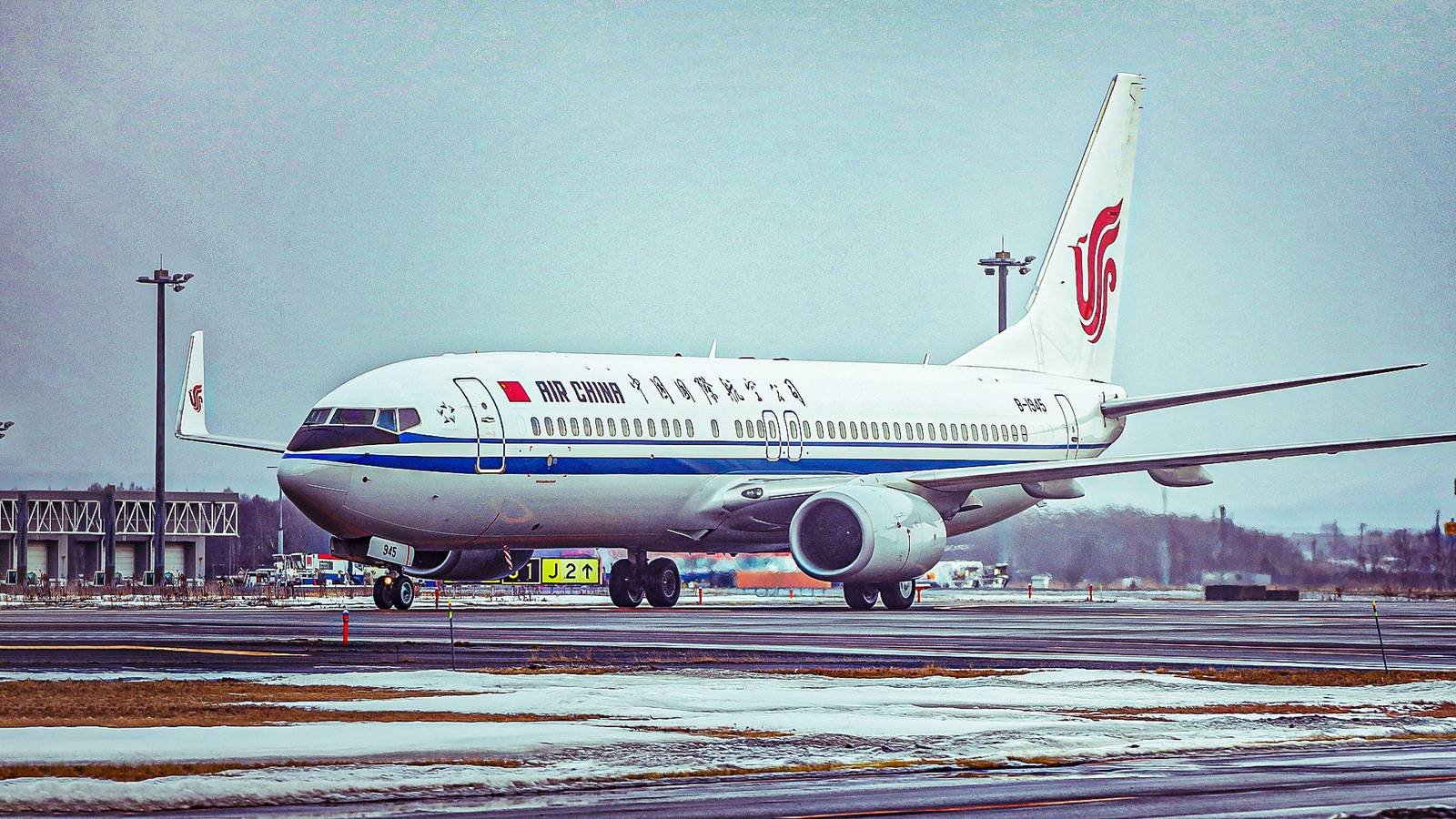
2026 has been a largely positive year for Boeing as far as its Chinese prospects are concerned, with improving diplomatic relations between the US and China paving the way for the American planemaker to land several major orders and continue deliveries. Going forward, China is certainly a market where Boeing will want to have a strong footing, given its latest projections for the Asian country.
Specifically, a recent report published by the US-based planemaker has highlighted the fact that, according to Boeing’s projections, the fleet of commercial aircraft in China will more than double in the next two decades. This growth will see the country’s portfolio of airliners grow to almost 10,000 planes, based on steady annual traffic growth. Most of these are set to be single-aisle passenger jets.
Crunching The Numbers

Boeing’s latest projections show that, in 20 years’ time, China’s commercial fleet will consist of more than 9,800 aircraft. This would be more than twice as many as the country has today. Crucially, almost all of these will be newly delivered planes, with Boeing expecting Chinese carriers to take delivery of 9,240 new aircraft in the next two decades. Of these, 42% are set to directly replace older models.
Single-aisle passenger jets will be at the heart of this growth, with 7,215 of the 9,240 projected deliveries (78.1%) falling under this category. Perhaps unsurprisingly, this is where Chinese manufacturer COMAC is currently placing a particular emphasis, with its C919 narrowbody. Boeing also projects many new widebodies (1,460), regional aircraft (405), and freighters (160), with Darren Hulst saying:
“With a partnership spanning nearly 55 years, Boeing jets are the backbone of China’s civil aviation industry growth, connecting people and carrying goods within and across continents.”
Various Factors Will Catalyze Traffic Growth

China’s airlines won’t be picking up thousands of new aircraft for the sake of it. Rather, projected growth in passenger traffic will make such a fleet expansion a necessity. According to Boeing, China’s passenger traffic is set to increase at an annual rate of 5% over the next 20 years, with “an expanding middle class, more visa-free travel destinations, and continued infrastructure investment” being key.
This figure represents a better-than-average rate when compared to the world as a whole. On this front, Hulst, who serves as Boeing’s VP of Commercial Marketing, says that “China’s passenger air traffic outpaces growth globally, supported by favorable economic and policy fundamentals that will make air travel more accessible.” Likewise, long-haul growth will also outpace rates seen elsewhere in Asia.
However, and perhaps unsurprisingly given the size and scale of China’s internal network, domestic traffic will play a particularly important role. By 2045, Boeing projects that “China’s domestic air travel market is expected to become the world’s largest as more people choose to fly for leisure or business.” This is where the huge single-aisle demand comes in, although Boeing will have to fight Airbus for orders.
The Current State Of The Chinese Market

Despite Boeing’s recent positive inroads in the Chinese market, it still lags behind its main rival, the multinational European planemaker Airbus, when it comes to overall capacity in the country. Looking at Chinese domestic flights in November 2026, data from Cirium, an aviation analytics company, shows that Boeing aircraft account for 150,354 of the country’s 391,760 internal services this month.
HOW MANY ARE FLYING?
Pick an aircraft to see how many are in the air right now
This represents a respectable proportion of 38.4%, but still leaves it short of Airbus, whose figure of 209,331 flights accounts for some 53.4% of China’s domestic capacity. More seats and available seat miles are also offered on flights operated by Airbus jets, although both it and Boeing remain streets ahead of Chinese manufacturer COMAC. These aircraft account for just 20,616 domestic flights, or 5.3%.
