



Flight data monitoring (FDM) and flight operations quality assurance (FOQA) are crucial tools for helicopter safety. Specialist developer Brazos Safety Systems is working to leverage the expanding range of data available today, while delivering an intimate level of service to meet every operator’s needs.
Brazos provides a range of flexible FDM and FOQA solutions for the commercial helicopter sector, delivering comprehensive flight data collection, actionable insights, and scalable offerings that range from safety essentials to advanced analytics.
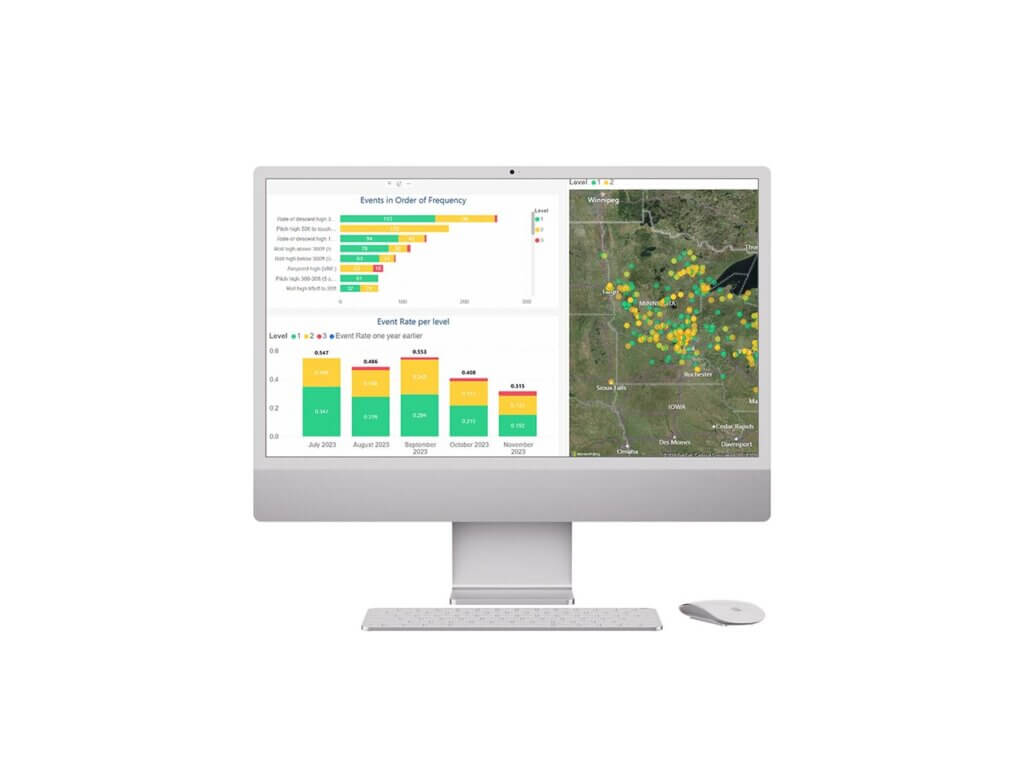
The systems download data from operators after a flight, run it through preset algorithms, and search for behaviors that may exceed established operating envelopes. The data can cover everything from airspeed and altitude to engine performance and more, offering operators crucial insights into safety, aircraft condition, and beyond.

A growing range of services
Many of the company’s initial capabilities were derived from military applications, said Tom Nied, vice president of sales and marketing. The company began by supporting Air Methods in the U.S. and Toll Aviation in Australia, but has since expanded to nearly 30 operators, analyzing data from more than 310 helicopters of various types as of January 2026.
“We are continually onboarding new aircraft types and new clients,” Nied explained.
Originally known as Truth Data Insights, the company was renamed in 2024 following new investment that enabled it to expand its operations. While it continues to offer the same core capabilities built on the same expertise, Brazos now provides data-driven safety services to a growing range of industries.
In addition to its FDM and FOQA offerings, Brazos has expanded into a range of consulting services, Nied noted. For example, the company serves as a rotorcraft subject matter expert for the Federal Aviation Administration’s (FAA) Aviation Safety Information Analysis and Sharing (ASIAS) program.
About a third of the aircraft Brazos monitors are Bell 407s, Nied said, which are very common in emergency medical services (EMS) and rescue operations. The Leonardo AW139 and Airbus AS350 (AStar) are also key platforms, along with several variants of the Sikorsky S-76.
Brazos has worked across a range of sectors, notably EMS and search-and-rescue, where there is a strong emphasis on operating safely at the limits in challenging environments. The company has also supported offshore operations in both the U.S. and Australia, as well as VIP transportation services.
There are additional markets that could benefit from Brazos’ FDM and FOQA services, Nied added. These include military training operations and post-flight debriefing. “There’s a lot of flight safety requirements for these hazardous operations, so we want to support that area.” Tour operators and utility operations are also potential areas of focus.

Technological advances
Nied pointed to two major advances in recent years that have transformed how data is collected and analyzed. First, he highlighted developments in data transfer capabilities — notably the growing availability of Wi-Fi and satellite communications. These advances make it possible to download data wirelessly, rather than relying on manual processes involving SD cards, for example.
“That shortens the cycle time between flight analysis and feedback to our clients, so that’s really helped quite a bit.”
Second, he noted growing interest from clients in integrating different types of aviation data. Some operators, for instance, have asked whether Brazos can integrate data from health and usage monitoring systems (HUMS) or safety management systems. In response, the company is partnering with specialist providers in these areas, as well as in engine monitoring and other disciplines, to deliver more integrated services.
“I think fusing these different types of data is going to be a big initiative in our industry,” Nied said. “How fast can we really analyze what’s happening in flight operations and provide expanded insights? How is the helicopter actually flying? Is there significant vibration or other factors that need to be known? There’s also a lot of interest in engine monitoring, fuel management, and associated services.”
Nied expects Brazos to expand these partnerships in the coming years, integrating a growing range of data sources to deliver increasingly valuable insights for operators. He also highlighted the ability to incorporate artificial intelligence, an area of growing focus for the company as it looks to enhance trend analysis across large data sets.
An intimate business model
Even as the company grows, Brazos will maintain its focus on “intimate services and relationships where we work very closely with our clients” to meet individual needs, Nied stressed.
He emphasized that Brazos does not simply provide data, but delivers operational insight. The goal is to continue building expertise across different mission profiles, regulatory environments, and technical requirements in order to support each operator’s specific needs.
“Our business model has been to really work with our clients based on their individual operations, the aircraft types they have, and their specific missions — and that will remain our focus for the future.”
