



Pan American World Airways (Pan Am) is attempting one of the most ambitious airline comebacks in modern aviation — and it is doing so with a fully AI-driven operating model announced on May 4. Through a new partnership with San Francisco-based GeoSpatios, Pan Am will deploy the AIR-OS platform, “a first-of-its-kind AI-powered airline operating system,” as part of its broader Thayer AI strategy. The objective is to create a predictive, real-time operational system from day one, addressing an industry where irregular operations alone “cost the airline industry tens of billions of dollars annually.” For US regulators such as the Federal Aviation Administration (FAA) and Department of Transportation (DOT), who are currently overseeing certification, and for American travelers, this matters because Pan Am is preparing to return as a next-generation carrier built on data rather than legacy systems.
According to the airline’s official release and historical performance data, this comeback is not about nostalgia alone. Pan Am was once the largest international airline in the US, operating routes to 86 countries at its peak and pioneering innovations such as the Boeing 707 jet age and early computerized reservation systems. Today, the airline’s relaunch strategy focuses on combining its legacy with advanced operational intelligence. This analysis explores whether Pan Am can truly revive the “golden age” of aviation by examining the following key factors: its AI-driven operating model, the realities of modern airline economics, and how its approach compares with that of today’s global carriers.
Will Pan Am Recreate The Golden Jet Age?
The short answer is that Pan Am is unlikely to recreate the golden age exactly as it once existed, but it may succeed in redefining it. The original era was shaped by exclusivity, rapid technological breakthroughs, and a near-monopoly on international routes. Today, success depends on efficiency, resilience, and data-driven operations. In that sense, Pan Am’s comeback is less about restoring the past and more about building a new standard for airline performance.
The airline’s latest announcement makes that direction clear. “As it prepares to return to service, Pan American World Airways is building an AI-driven operating model,” the company confirmed, with AIR-OS designed to unify flight planning, crew scheduling, weather data, and airport constraints into a single system. This is a significant departure from traditional airline operations, which typically rely on fragmented tools that slow decision-making and limit flexibility.
To understand why this matters, consider what Pan Am once represented. For decades, it was a symbol of global connectivity and technological leadership. The company “built airports, opened continents, [and] carried presidents, world leaders, and icons,” as stated on their website, shaping the very infrastructure of international travel. It also introduced numerous industry firsts, from long-range weather forecasting to round-the-world scheduled service. However, the aviation industry, once dominated, has evolved into a highly competitive, cost-sensitive environment where operational efficiency is paramount.
Factors Affecting The Comeback

The success of Pan Am’s comeback will depend on a combination of technological execution, regulatory progress, financial sustainability, and passenger expectations. Unlike the mid-20th century, when the carrier benefited from limited competition and strong government support, today’s airline industry is intensely competitive and globally interconnected.
At the center of Pan Am’s strategy is the AIR-OS platform, which “is designed to model and optimize operations in real time,” integrating multiple operational layers into a unified system. This includes aircraft movement, crew scheduling, weather systems, and airspace constraints, all of which are continuously updated to enable real-time decision-making. The airline is also “currently undergoing certification and working toward its official launch with the Airbus family of aircraft, subject to all US FAA and DOT approvals,” underscoring the regulatory complexity of launching a new carrier.
One of the most critical challenges this technology addresses is irregular operations. Weather disruptions, maintenance issues, and air traffic constraints can quickly cascade across an airline’s network. As the official release notes state, a single disruption can “impact hundreds of passengers across an entire network.” By modeling these interactions as a dynamic system, AIR-OS aims to shift airlines from reactive problem-solving to proactive coordination—an approach that could significantly improve reliability and reduce costs.
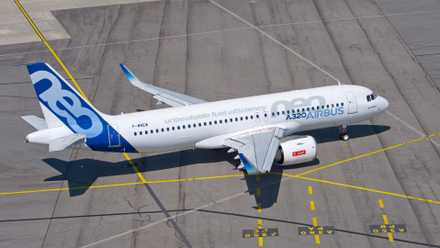
Pan Am’s Secret Weapon: The Airplane That Could Make or Break Its Comeback
Pan Am’s surprising choice that could redefine its future in the skies
The Leadership Behind Pan Am’s Relaunch

The leadership behind Pan Am’s relaunch is clear that this is not an attempt to recreate the past, but to build something fundamentally new. The emphasis is on operational intelligence and efficiency rather than traditional notions of luxury.
“Pan Am’s flight operations will be coordinated and managed by best-in-class software technology using artificial intelligence to enable faster decision making,” said Ed Wegel, Chief Executive Officer and Co-Founder of the new Pan American World Airways.
He emphasized that the partnership “supports our vision of building a modern airline grounded in operational intelligence, efficiency, and passenger experience.” This statement reflects a broader shift in the industry, where backend performance increasingly defines customer satisfaction.
From the technology side, GeoSpatios founder Zilin Dong highlighted the transformative potential of AIR-OS.
“We are building the infrastructure – and not just individual capabilities – for airlines operating in this new environment,” he said.
He further explained that the system provides “a complete, real-time understanding of their network so they can anticipate disruptions before they cascade and make better decisions in seconds.” This approach stands in contrast to most existing airline systems, which focus on isolated functions rather than the entire operational network.
These perspectives suggest that Pan Am’s comeback could serve as a test case for the future of airline operations. If successful, it may demonstrate that predictive, AI-driven systems can deliver measurable improvements in efficiency and reliability. These two factors are increasingly critical in modern aviation.
Pan Am Vs Established Airlines

Compared to established airlines, Pan Am has a unique advantage: it is building its operations from scratch. Most legacy carriers operate with a patchwork of systems developed over decades, making it difficult to implement real-time, network-wide optimization. Pan Am, by contrast, can design its entire operation around a unified platform from the outset.
However, this clean-slate approach also presents challenges. Established airlines benefit from extensive route networks, established customer bases, and operational experience. Pan Am must develop all of these elements simultaneously while also proving that its technology-driven model can compete in a crowded market.
Historically, Pan Am thrived in an environment with limited competition, operating as the dominant international carrier for the United States. It was instrumental in ushering in the jet age, introducing aircraft such as the 707 in 1958 and, later, the 747, which helped make long-haul travel more accessible. Today, however, the airline must compete with global giants that have spent decades refining their operations and expanding their networks.
This contrast highlights the boldness of Pan Am’s strategy. Rather than attempting incremental improvements, it is pursuing a fundamentally different approach. If successful, it could redefine industry standards. If not, it will underscore the challenges of launching a new airline in an already mature market.

7 Things We Don’t Miss About The ‘Golden Age’ Of Air Travel
We may look back at the golden age of air travel with rose-tinted glasses – what was it really like?
The Main Risks

Despite its ambitious vision, the Pan Am revival faces significant risks. Regulatory approval remains one of the most immediate challenges, as the airline must meet all regulatory requirements before it can begin operations. Any delays in this process could impact its launch timeline and financial outlook.
Operational risks are also significant. While AIR-OS is designed to improve decision-making and reduce disruptions, aviation remains inherently unpredictable. Weather events, technical issues, and external factors such as geopolitical instability can still disrupt even the most advanced systems. The shift from reactive to predictive operations represents a major step forward, but it does not eliminate uncertainty.
Financial sustainability is another key concern. Launching an airline requires substantial investment, particularly when aiming to integrate advanced technology and deliver a high-quality passenger experience. Pan Am’s historical decline in the late 20th century was partly due to rising competition and economic pressures following deregulation, factors that remain relevant today.
There is also the challenge of managing expectations. Pan Am was once synonymous with “white-glove service and jet-set style,” an image that continues to resonate with travelers. However, modern passengers often prioritize reliability, affordability, and convenience over traditional luxury. The airline must strike a balance between honoring its heritage and meeting contemporary demands.
Overall Takeaway

So, can Pan Am bring the glory days of aviation back to the skies? Not in the way they originally existed — but it may succeed in creating a new version of them. The defining characteristics of the original golden age were innovation and transformation, and in that sense, Pan Am’s current strategy aligns closely with its historical identity.
By leveraging AI-driven systems like AIR-OS, the airline is positioning itself as a pioneer once again. Instead of leading the jet age, it is aiming to lead the age of intelligent aviation, where data and predictive systems drive performance. For passengers, this could mean fewer delays, smoother journeys, and a more reliable travel experience.
Pan Am’s success will depend on its ability to execute this vision while navigating the complexities of modern aviation. If it succeeds, it may not just revive a historic brand but also redefine what a “golden age” of aviation looks like in the 21st century. Only time will show us the outcomes of this endeavor.
