


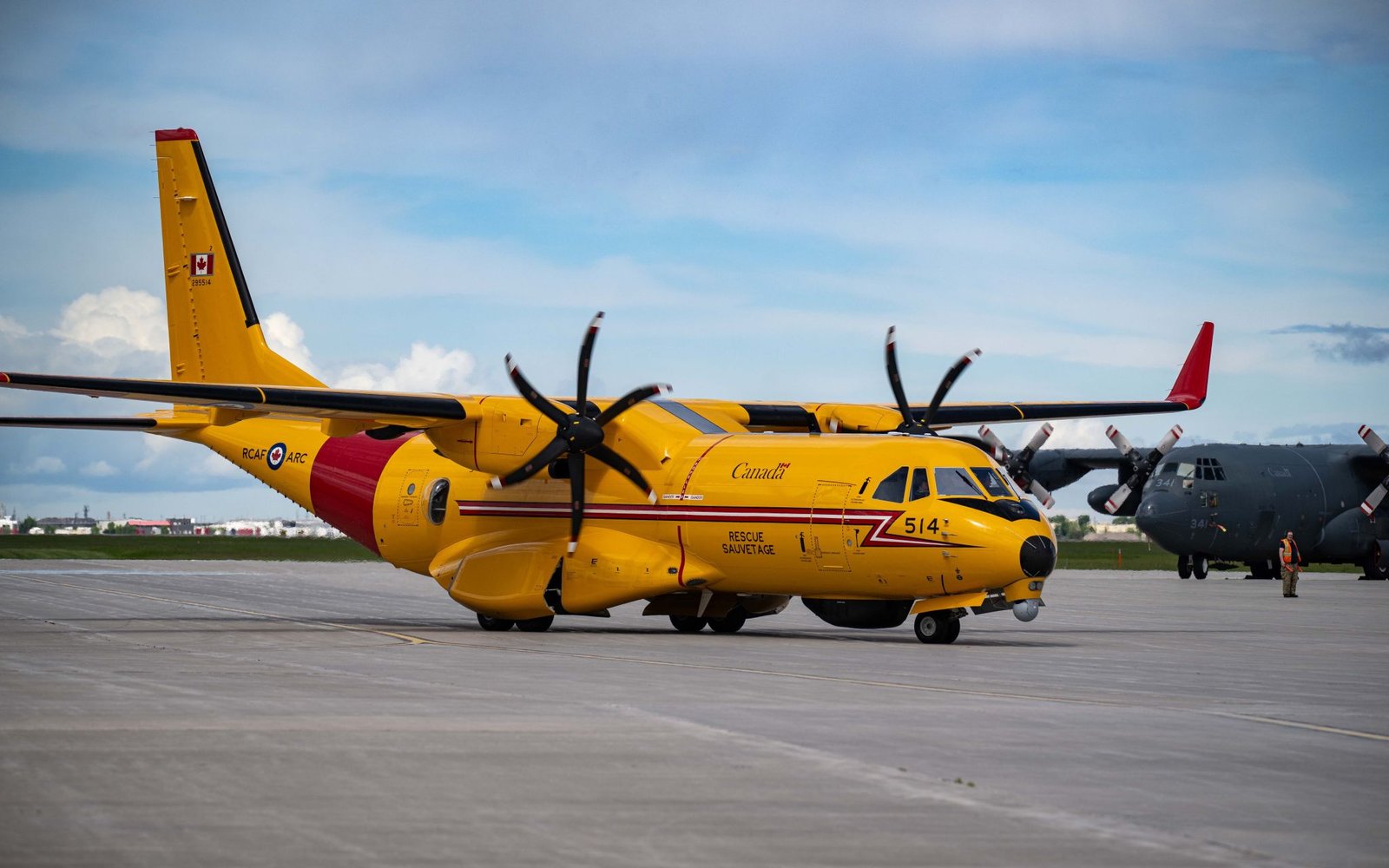
The Royal Canadian Air Force is replacing its legacy search and rescue transports with new Airbus twin-turboprops.
The Royal Canadian Air Force (RCAF) is continuing to expand its use of the Airbus Defence & Space C295 transport for search and rescue (SAR) missions.
Locally designated the CC-295 Kingfisher, Ottawa signed a contract for 16 C295s in 2016 under a project to replace the legacy model Lockheed Martin C-130H and De Havilland Canada DHC-5, respectively designated as the CC-130H Hercules and CC-115 Buffalo by the RCAF.
The CC-115 was retired from service in 2022, while five C-130Hs have also been withdrawn, leaving another five still operated by the RCAF.
Canada’s first CC-295 was delivered to 19 Wing in Comox, British Columbia, in 2020, but evaluation flights and delays in certifying flightcrews, maintainers and instructor pilots pushed back the start of frontline service until May 2025.
Comox was the first operating base, with 14 Wing Greenwood in Nova Scotia becoming the second in January 2026.
Now the roster of Kingfisher hubs is expanding again.
On 10 July, the service said the first CC-295 has arrived at 17 Wing in Winnipeg, Manitoba, one of the four bases from which the RCAF’s fixed-wing search and rescue aircraft operate. The turboprop was ferried to CFB Winnepeg in June.
“This marks the latest step in the RCAF’s implementation of the CC-295 capability across Canada,” the service says.
The Manitoba-based 435 Transport and Rescue Squadron is currently flying C-130H in both military airlift and rescue roles. Ottawa says the squadron will now begin the process of transitioning to the CC-295 for the SAR mission, a milestone expected later this year.
Additional C295s will be stationed at CFB Trenton in southern Ontario – rounding out the RCAF search and rescue modernisation.
The Kingfisher fleet is set to achieve full operational capability by 2030.
Although offering lower range and endurance than the C-130s they replace, the SAR-configured C295s provide significant improvement in the form of modern sensors. These include the Collins Aerospace Enhanced Vision System sensor, which is located just above the nose to improve pilot situational awareness in low-visibility conditions.
A rotating L3Harris Wescam MX-15 electro-optical/infrared camera is also mounted below the nose, allowing for airborne systems operators to search for targets while in flight. Each aircraft also features an Elta Systems ELM-2022A active electronically scanned array maritime patrol radar and datalink for sharing sensor data with other aircraft like the Leonardo Helicopters CH-149 Cormorant.
Data from the various sensors is displayed on an Airbus Fully Integrated Tactical System housed behind the cockpit.
The RCAF also requested a number of Canada-specific airframe modifications for its C295 fleet, including an emergency egress hatch above the cockpit for water landings, a head-up display and fuselage sponsons located over the landing gear that allow for increased fuel capacity and improved range.
Subscribe to gain access to all news
Already have a subscription? Log in.
Choose your subscription
Considering a corporate subscription? Contact us to find out more.
