


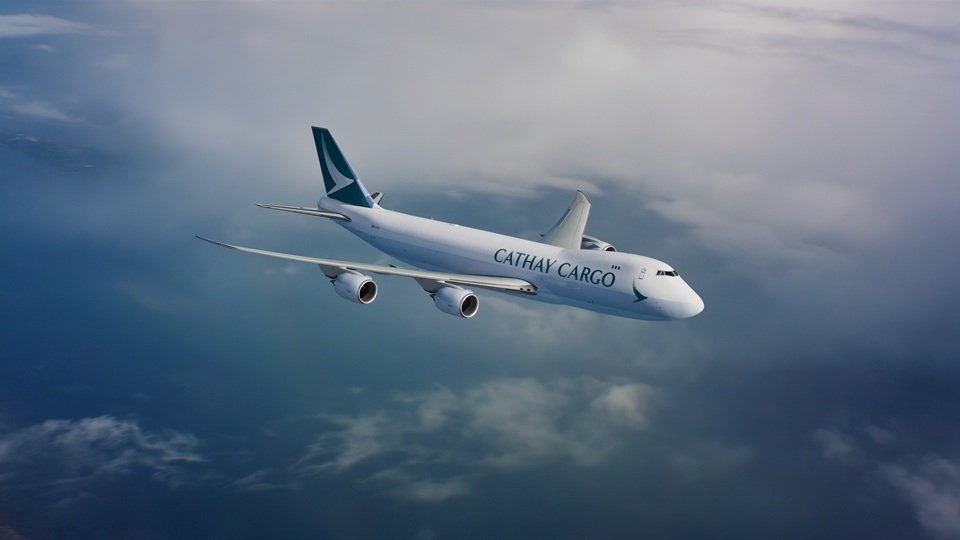
The Cathay Group has reported that air cargo volumes remained strong in March, though payload limitations and the increasing price of jet fuel as a result of the Middle East conflict has put it under pressure.
Cathay Cargo carried 11% more cargo in March compared to a year ago, while available freight tonne kilometres (AFTKs) increased by 2%.
Cathay chief customer and commercial officer Lavinia Lau said that the airline benefitted from increased demand for priority shipments as shippers looked to secure cargo transportation due to Middle East conflict-related shifts in the air cargo market.
In the first three months of 2026, the total tonnage increased by 8% compared with the same period for 2025.
Lau elaborated: “March marks the traditional quarter-end peak period for cargo. Tonnage growth was solid across our network, particularly from our home market of Hong Kong and the wider Greater Bay Area, as well as the rest of the Chinese Mainland, Southeast Asia and Europe.
“Among our specialist solutions, Cathay Priority recorded increased tonnage as shippers sought to secure capacity on our long-haul routes amid ongoing market capacity adjustments arising from the Middle East situation.
“Meanwhile, Cathay Expert and Cathay Dangerous Goods also saw a boost from semiconductor and chemical shipments.”
Operational challenges persist
Although Cathay Cargo performed well last month, the situation in the Middle East means its freighter services to Dubai and Riyadh remain suspended until 31 May and cargo capacity is constrained.
At the beginning of this month, Cathay Cargo confirmed it was searching for mid-point stops on the Asia-Europe trade as five out of its eight freighter services that had been flying on the Asia-Europe trade via Dubai are now flying directly, resulting in payload limitation.
Cathay Cargo director of cargo Dominic Perret said the carrier was “currently reviewing alternative mid-points with the aim of removing this restriction”.
Meanwhile, Cathay continues to contend with rising jet fuel prices. Lau said: “In the past month, we have pursued every suitable means to keep our flights operating as normal, including the adjustment of fuel surcharges. However, these measures have not been enough to mitigate the significantly increased fuel costs.”
Cathay has also temporarily reduced capacity on its passenger flights. Normal scheduled operations are expected from July, subject to developments in the Middle East situation and jet fuel price in the coming months.
Lau did not comment on whether belly cargo was impacted, however she did confirm that capacity adjustments had affected around 2% of Cathay Pacific’s total frequencies.
Discussing the airline’s cargo market expectations for April, Lau stated: “Turning to April, we anticipate demand on long-haul trunk routes to remain healthy through the seasonal holidays.
“Market conditions are expected to remain dynamic and sensitive to the ongoing developments in the Middle East, and the consequential capacity constraints across certain trade lanes.”
