


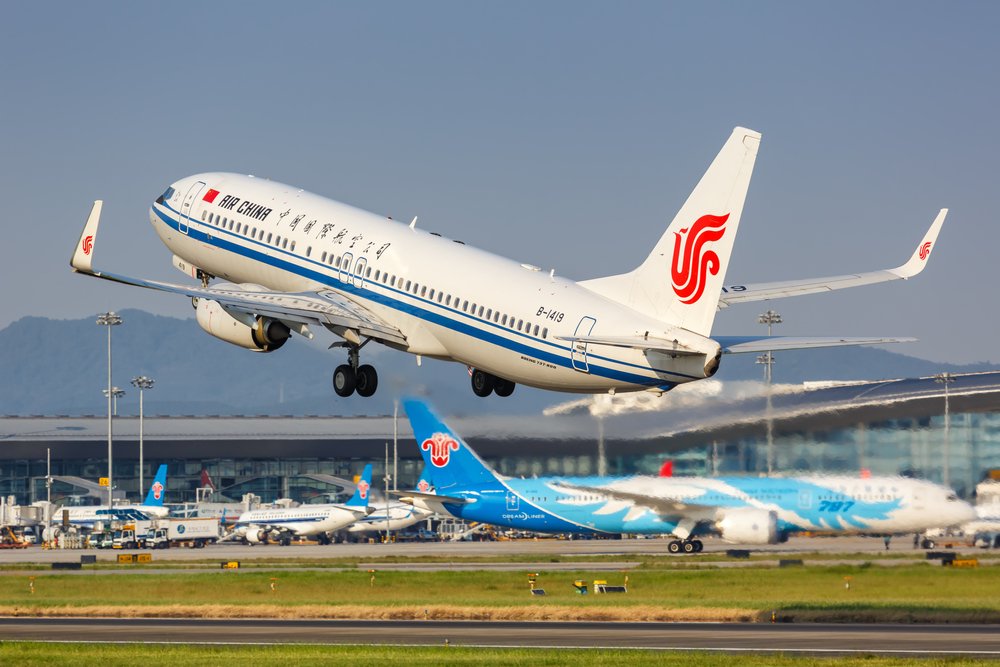
According to President Donald Trump, China has agreed to purchase 200 Boeing aircraft, marking what would be the country’s first major commercial jet order from the United States in nearly a decade and signaling a potential thaw in long-strained U.S.–China economic relations.
Trump announced the deal during his state visit to Beijing, stating in an interview with Fox News that President Xi Jinping committed to the purchase during their bilateral talks. “He’s going to order 200 jets… Boeing wanted 150, they got 200,” Trump said in a clip released Thursday, May 14.
However, the reported 200-jet deal appears to be based solely on Trump’s statement and has not been formally confirmed. Neither Chinese authorities nor Boeing have announced a finalized order or provided details, suggesting the commitment remains at a preliminary stage rather than a binding contract. Even so, the potential agreement would represent a significant breakthrough for Boeing, which has struggled to regain access to the world’s second-largest aviation market after years of trade tensions, the 737 MAX grounding, and a freeze on Chinese deliveries that lasted until 2025.
The presence of Boeing CEO Kelly Ortberg underscored the central role of aircraft sales in the U.S Presidential visit, as negotiations advance over a potential large-scale order from Chinese carriers, possibly the largest since 2017. His inclusion in the presidential delegation has heightened expectations that the trip could help unlock long-stalled demand from Chinese airlines. He is joined by GE Aerospace CEO H. Lawrence Culp Jr., whose company supplies jet engines for Boeing aircraft, highlighting the broader U.S. aviation supply chain at stake.
Smaller Than Expected, but Still Significant
U.S. officials and industry analysts had anticipated a much larger package, potentially up to 500 aircraft, including hundreds of 737 Max jets and additional widebody models. The smaller-than-expected figure prompted a decline in Boeing’s share price, but analysts still view the 200-jet commitment as a meaningful step toward reopening the Chinese market.
The specific aircraft types included in the order have not yet been disclosed. Recent negotiations have focused heavily on the 737 Max, with discussions also involving the 787 Dreamliner and potentially the 777X.
Aircraft engines account for a significant share of the total cost of commercial jets built by Boeing and Airbus, typically representing about 20%–30% of the price of narrowbody aircraft such as the Boeing 737 Max and Airbus A320neo, and up to 25%–35% for widebody jets like the Boeing 787 Dreamliner and Airbus A350. GE Aerospace, CFM International and Pratt & Whitney are major U.S. engine manufacturers.
First Major Chinese Boeing Order Since 2017
China has not announced a major Boeing aircraft order since 2017, instead shifting heavily toward Airbus in recent years. A deal of this scale would mark a significant reversal and provide a meaningful boost to Boeing’s long-term production pipeline.
Analysts say Chinese airlines are under growing pressure to modernize fleets and expand capacity. Domestic travel demand has surged beyond pre-pandemic levels, while long-haul international routes continue to recover. At the same time, many older widebody aircraft are nearing retirement, increasing the urgency for new deliveries.
A large Boeing order would help Chinese carriers meet these needs while also signaling broader stabilization in U.S.–China commercial relations. China’s last confirmed Boeing purchase came in 2017, when China Aviation Supplies Holding Co. agreed to buy 300 aircraft during President Trump’s previous state visit.
Since then, Chinese airlines have leaned heavily toward Airbus, particularly the A320neo family, while Boeing deliveries stalled amid geopolitical and regulatory tensions. This new agreement would represent the first major shift back toward Boeing.
Recent China Southern Massive Airbus Order
China Southern Airlines has placed a major order for 137 Airbus A320neo-family aircraft valued at approximately $21.4 billion, reinforcing Airbus’ growing dominance in China while a long-anticipated deal with Boeing remains uncertain.
The Guangzhou-based carrier will receive 102 aircraft directly, while its subsidiary Xiamen Airlines will take an additional 35 jets. Deliveries are scheduled between 2028 and 2032 for China Southern and from 2029 to 2032 for Xiamen Airlines. Although the list price exceeds $21 billion, industry norms suggest significant discounts were likely negotiated.
Aviation Demand Surging in China
China’s airlines are under increasing pressure to expand and modernize their fleets as domestic travel surpasses pre-pandemic levels and long-haul routes gradually recover. Industry forecasts suggest China will require approximately 1,000 new aircraft in the near term and more than 9,000 by 2045, making it one of the most critical markets for global manufacturers.
Next Steps
This announcement comes shortly after Donald Trump’s meetings in Beijing. Even if a formal agreement is not immediately signed, officials indicate that negotiations have advanced to the point where a signing ceremony could take place later this year.
Regardless of timing, the combination of the President’s visit, Boeing’s presence in the delegation, and the company’s unusually large batch of unidentified April orders has thrust the U.S.–China aviation relationship back into the global spotlight.
Neither Boeing nor Chinese aviation authorities have released details on delivery schedules, aircraft types, or which airlines will receive the jets. Additional announcements may follow as negotiations continue, particularly if China moves forward with the larger 500-aircraft package previously discussed.
For now, the 200-jet commitment stands as a rare moment of commercial alignment between Washington and Beijing, and a significant win for Boeing at a pivotal moment for the U.S. aerospace industry.
Related News:
Sources: AirGuide Business airguide.info, bing.com
