


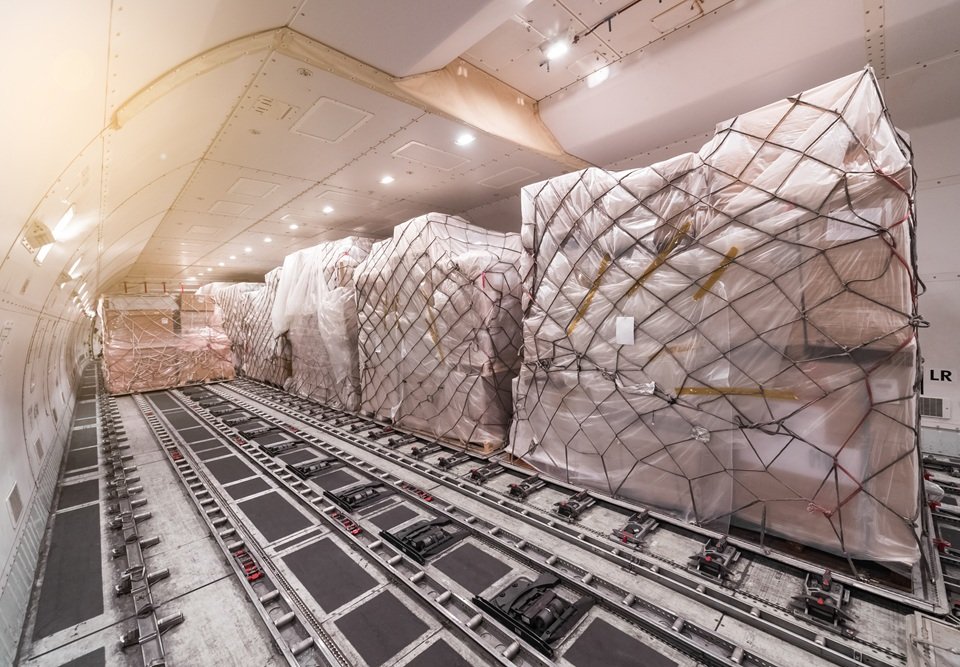
China-to-Europe freighter capacity is down nearly 30% from June due to a reduction in e-commerce imports into Europe, shows new data from Rotate.
E-commerce imports into Europe in July dropped 24% in July drop compared to June. This followed the EU’s introduction on 1 July of a €3 customs duty on low-value parcels imported from outside the EU.
As a result, direct China-Europe freighter capacity immediately fell 10% compared to June levels.
Now, China-to-Europe freighter capacity is consistently 28% below June levels and “no clear sign of recovery”, said Rotate.
Alongside this, according to the latest data from TAC Index, rates on the busiest lanes out of China to Europe have become firmer, even as volumes have been under pressure due to the EU customs duty.
Overall utilisation down
While has been some rerouting to the transpacific, overall global freighter utilisation is down as most lost capacity has not been redeployed elsewhere, said Rotate.
In the case of Boeing 747-400Fs, which typically fly ad hoc, utilisation is down by 13.8%.
Freighter capacity declines are concentrated in e-commerce gateways. In Europe, Madrid is down 78%, Budapest is down 58% and Liege is down 35%.
Meanwhile, in China, freighter capacity at Ürümqi Tianshan International Airport is down 72%, and 28% at Hong Kong.
Despite how the e-commerce market has changed to date, e-commerce shipping may recover within 12 months, suggests Rotate.
This has been the case in the US, which ended de minimis treatment for shipments from China and Hong Kong on 2 May 2025 and globally on 29 August 2025, and Brazil, which ended de minimis on 1 August 2024.
