


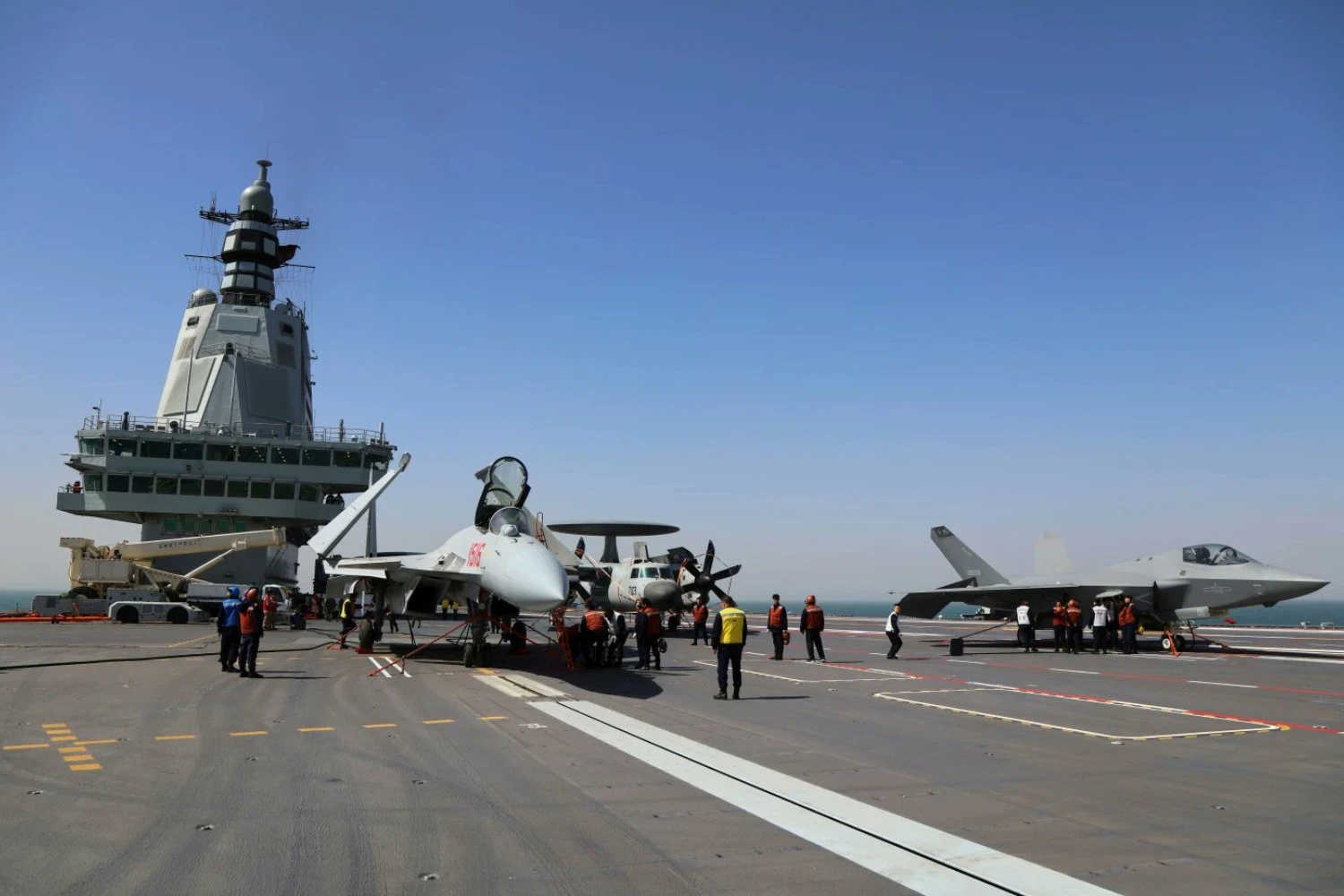
China’s third aircraft carrier, Fujian, could become fully operational by the end of 2026, according to reports in state media citing military analysts. The timeline marks the next phase in the ship’s testing and work-up cycle following its commissioning in late 2025.
Fujian is the first aircraft carrier built entirely in China and the largest in the country’s fleet, with a displacement estimated above 80,000 tons. Unlike the earlier Liaoning and Shandong, which use ski-jump ramps, the new vessel is equipped with electromagnetic catapults, allowing it to launch heavier aircraft with more fuel and weapons.
The carrier is expected to operate an air wing of around 50 to 60 aircraft, including the J-15T carrier-based fighter, the J-15DT electronic warfare variant, the KJ-600 airborne early warning aircraft and the J-35 stealth fighter, which is already in production. The inclusion of fixed-wing early warning aircraft marks a shift from previous Chinese carriers, which relied on helicopters for that role.
Fujian began sea trials after its launch in 2022 and was commissioned in November 2025. Since then, it has carried out initial training activities and early flight operations, with satellite imagery showing the ship operating in northern waters as testing expands gradually.
Despite its more advanced configuration, Fujian differs from U.S. Navy carriers such as the Nimitz and Ford classes by relying on conventional propulsion rather than nuclear reactors, which limits endurance and requires more frequent logistical support during extended deployments. A future carrier, known as the Type 004, is widely expected to be larger and could become China’s first nuclear-powered aircraft carrier.
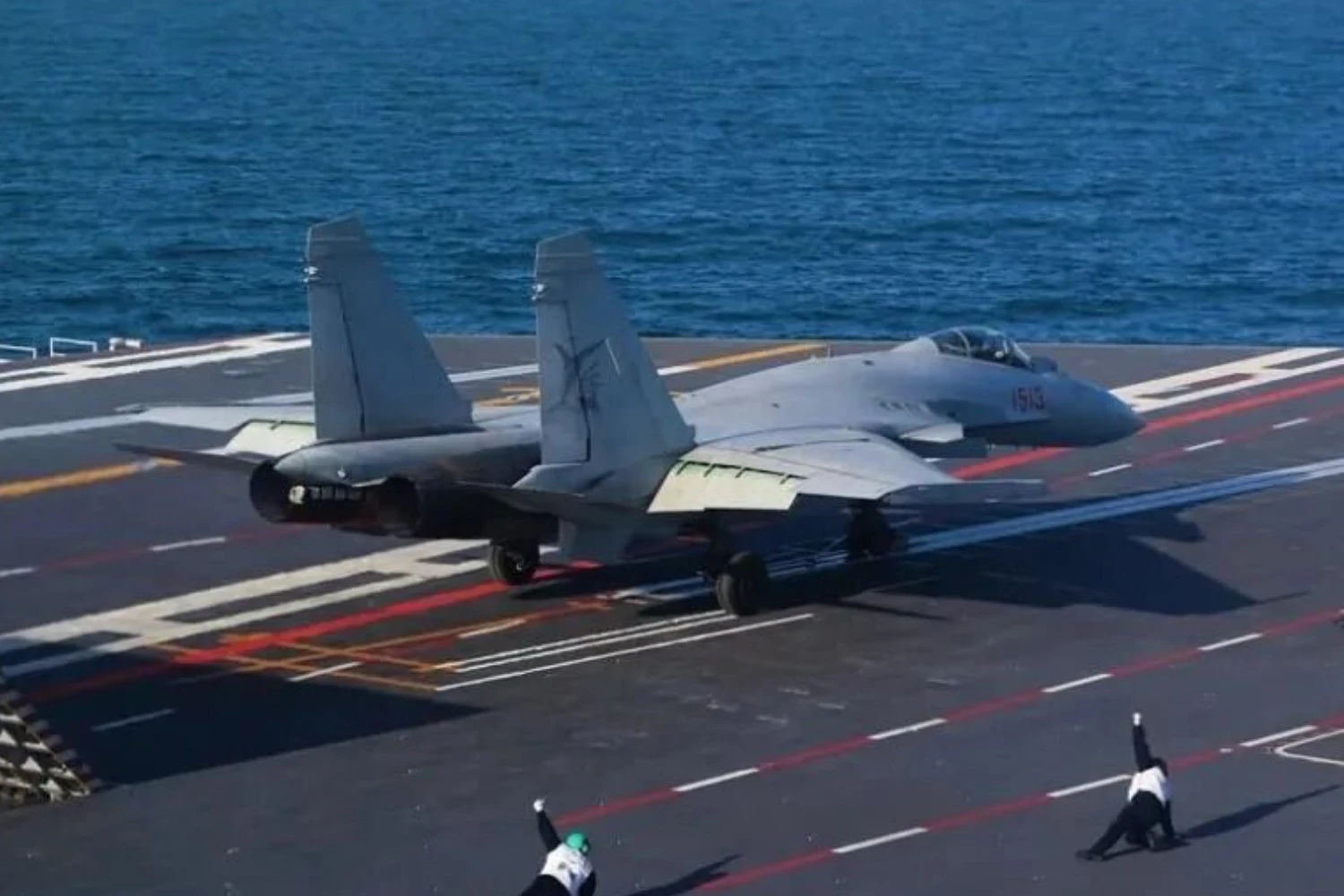
Chinese analysts cited by Global Times say the carrier will only be considered fully operational once it can conduct sustained flight operations with a complete air wing and operate as part of a carrier strike group. That includes integration with escort ships, submarines and support vessels.
If achieved, this capability would allow China to deploy a carrier group beyond its coastal waters on a more regular basis, extending its reach into areas such as the Western Pacific and South China Sea.
