


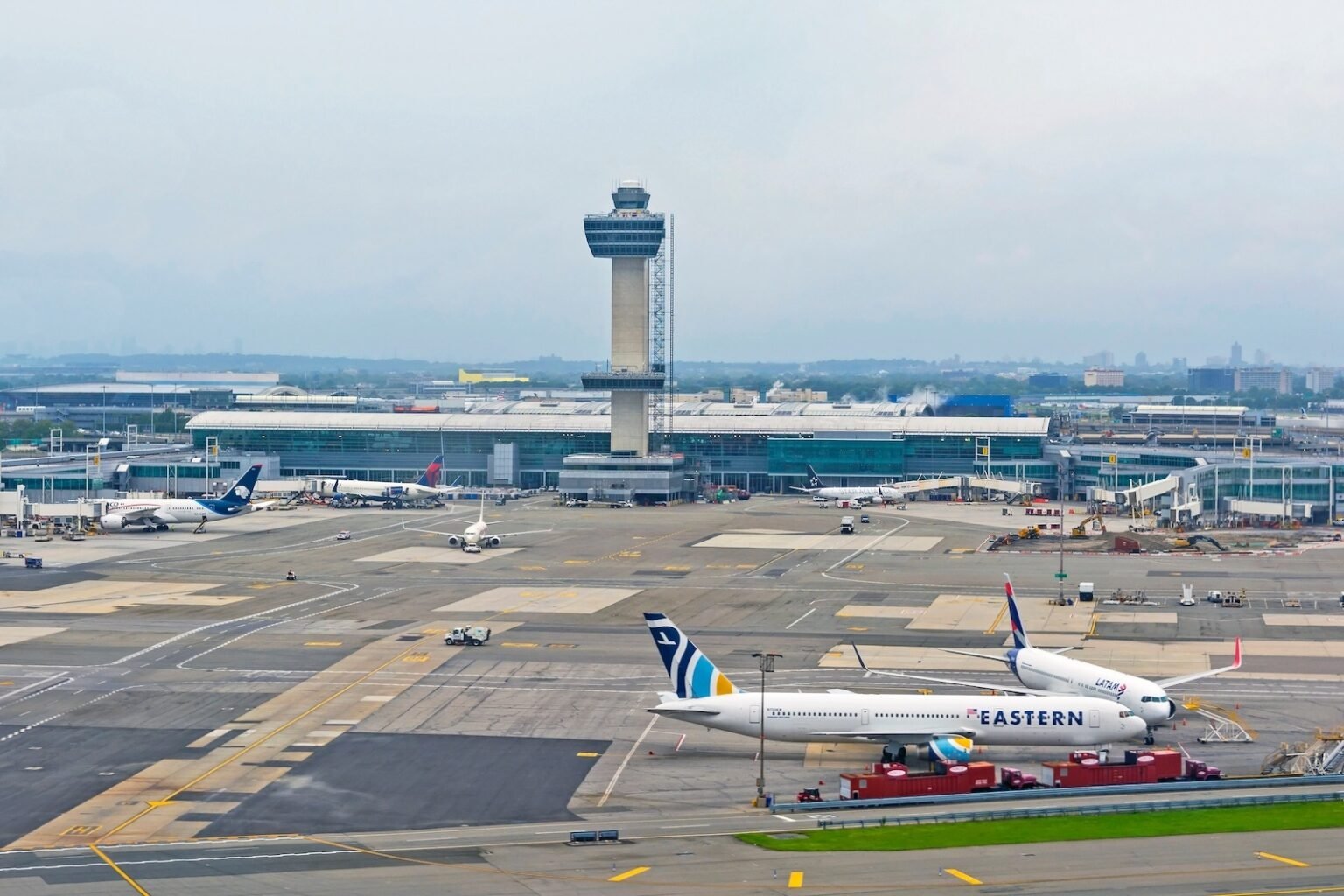
A coalition of airports, air traffic controllers (ATCs), OEMs, and federal and regional partners is pushing for the widespread adoption of digital and remote control tower systems, which use arrays of cameras and sensors to enable oversight of multiple airports from a centralized location that could be tens or hundreds of miles away.
Despite legislation directing the FAA to define clear standards for digital and remote tower systems, the regulator has been slow to act.
The technology has the “potential to be one of the most transformative advancements to the [National Airspace System] since the introduction of automation,” according to Richard Kennington of Rinaldi Consultants, spokesperson for the newly launched Digital Tower Technology Coalition (DTTC).
“Digital tower technology delivers immense cost-saving benefits while enhancing safety, supporting long-term growth, and extending reliable air traffic services to communities of all sizes,” Kennington said. “From major hubs to the smallest ZIP codes, this technology strengthens access to safe and sustainable air travel nationwide.”
The U.S. has lagged behind other nations in adopting remote towers. Per a database created by the International Federation of Air Traffic Controllers’ Associations, there were more than 40 of them in operation, development, or planning in 2023. Norway led the way with 14 projects, followed by Sweden with eight and Finland with seven.
The world’s first remotely controlled airports came online in Sweden in 2015 under approval from the Swedish Transport Agency. The country’s Sundsvall Remote Tower Centre manages several airports. Avinor’s Remote Tower Centre in Norway similarly oversees up to 15 airports at once.
London City (EGLC) in 2021 became the world’s first major international airport to be fully controlled by a remote, digital tower. ATCs in Swanwick—about a two-hour drive away—use Saab’s r-TWR digital tower solution to manage operations.
Though the FAA Reauthorization Act of 2024 required the agency to clearly define standards for remote and digital towers, it has yet to publish system design approval (SDA) for any project. The agency as of May 2025 was testing a system developed by RTX and Frequentis at Atlantic City International (KACY) in New Jersey. But it has not certified it for deployment in the NAS.
The DTTC believes digital and remote towers could spur major safety, efficiency, and accessibility improvements. Cameras and sensors, it said, can eliminate blind spots and provide infrared imagery in low visibility conditions.
Remote towers are also cheaper to build and maintain than traditional towers, offering a simpler alternative for nontowered or FAA Contract Tower airports. Small rural or community airports that lack the resources for a new tower could leverage them to offer year-round ATC services.
Amid a chronic shortage of more than 3,500 ATCs, the ability to manage multiple airports from one location could also ease staffing issues.
The DTTC said it will advocate for federal funding and FAA approval of these systems. The coalition further intends to define standards and best practices for system design and approval, study multi-airport management strategies, develop enhanced visual detection tools, and strengthen the ATC and aviation safety workforce.
The group is a member of the Modern Skies Coalition, created in 2025 to endorse the U.S. Transportation Department’s multibillion-dollar ATC modernization push. That effort also involves software that could predict airspace conditions days, weeks, or even months in advance.
Why the U.S. Lacks Remote and Digital Control Towers
The U.S. has one of the world’s most complex airspace systems. Yet it still relies on copper wiring, floppy disks, paper flight strips, and other antiquated infrastructure.
The FAA has tried but so far failed to introduce remote and digital towers.
The effort began in 2007 with initial testing at the William J. Hughes Technical Center in Atlantic City, New Jersey. Controllers gave positive feedback on the visibility of the digital displays, though they said they would feel more comfortable using a combination of existing and virtual tower technologies.
State and private backers—without the FAA—later funded remote tower projects at Leesburg Executive (KJYO) in Virginia and Northern Colorado Regional (KFNL) in Loveland.
The FAA in 2021 authorized Saab, the developer of the Leesburg system, to manage traffic without using a backup tower, kicking off a type certification process to approve it as a non-federal system. But Saab in 2022 pulled out of the project, citing “no reasonable path for approval.” The agency terminated the remote tower’s operations in 2023.
Also in 2023, developer Searidge pulled out of the Loveland project, placing the effort on hold. That prompted Congress to step in.
The FAA Reauthorization Act of 2024 directed the agency to define system design and operational approval for remote and digital towers, publish milestones for their testing and deployment, and assess their safety benefits, all within 180 days of publication. It set the same deadline for it to deliver a comprehensive research, development, testing, and evaluation plan.
The act further required the FAA to expand digital and remote tower assessments beyond Atlantic City to at least three new airports.
None of that has materialized. The agency has yet to publish system design approval for any remote tower concept or submit a comprehensive plan. Per the Reason Foundation, as of May 2025, it still required vendors to test their systems in Atlantic City rather than the airports where they will operate. Reason’s analysis indicated that the agency’s sudden publication of draft technical requirements in 2024 delayed the installation of RTX and Frequentis’ system.
However, a few U.S. airports have deployed partial remote tower systems.
Searidge’s Virtual Ramp Control (VRC) system was the first of its kind to be installed at a U.S. airport, coming online at Fort Lauderdale-Hollywood International (KFLL) in Florida in 2017. The company’s hybrid digital tower solution is used by Manchester (EGCC) in the U.K., providing a potential blueprint for how it could be integrated in the U.S.
United Airlines in 2019 installed Saab’s r-TWR solution at Houston’s George Bush Intercontinental (KIAH). The airline uses a VRC system to combine two ramp towers into one facility. The digital tower system is integrated with Saab’s Aerobahn surface management platform as well as MLAT and ADS-B sensors. Kansas City International (KMCI) in Missouri deployed Saab’s digital tower and VRC systems in 2023.
In Florida, Orlando International’s (KMCO) Terminal C uses a $7 million VRC system, replacing out-the-window visuals with walls of digital displays. Frequentis in March said a remote tower system it installed at Bartow Executive (KBOW) will be operational by July.
The 2024 FAA Reauthorization bill directed the agency to target installations at airports that lack a permanent tower, provide rural or community service, or were recently added to the Contract Tower program. Keep an eye on those sites as candidates to receive the nation’s first digital and remote towers.
