


This article was updated on Thursday, November 12, 2026, to include additional details and a statement from Alaska Airlines. It was originally published on Wednesday, November 11, 2026.
Passengers on an Alaska Airlines flight from Dallas to Seattle spent the night sleeping on Red Cross cots inside a regional airport terminal after their aircraft was diverted. Despite apparently promising to cover hotel costs, Alaska Airlines did not provide rooms or meal vouchers for passengers, leaving local emergency services, the Red Cross and airport staff to intervene.
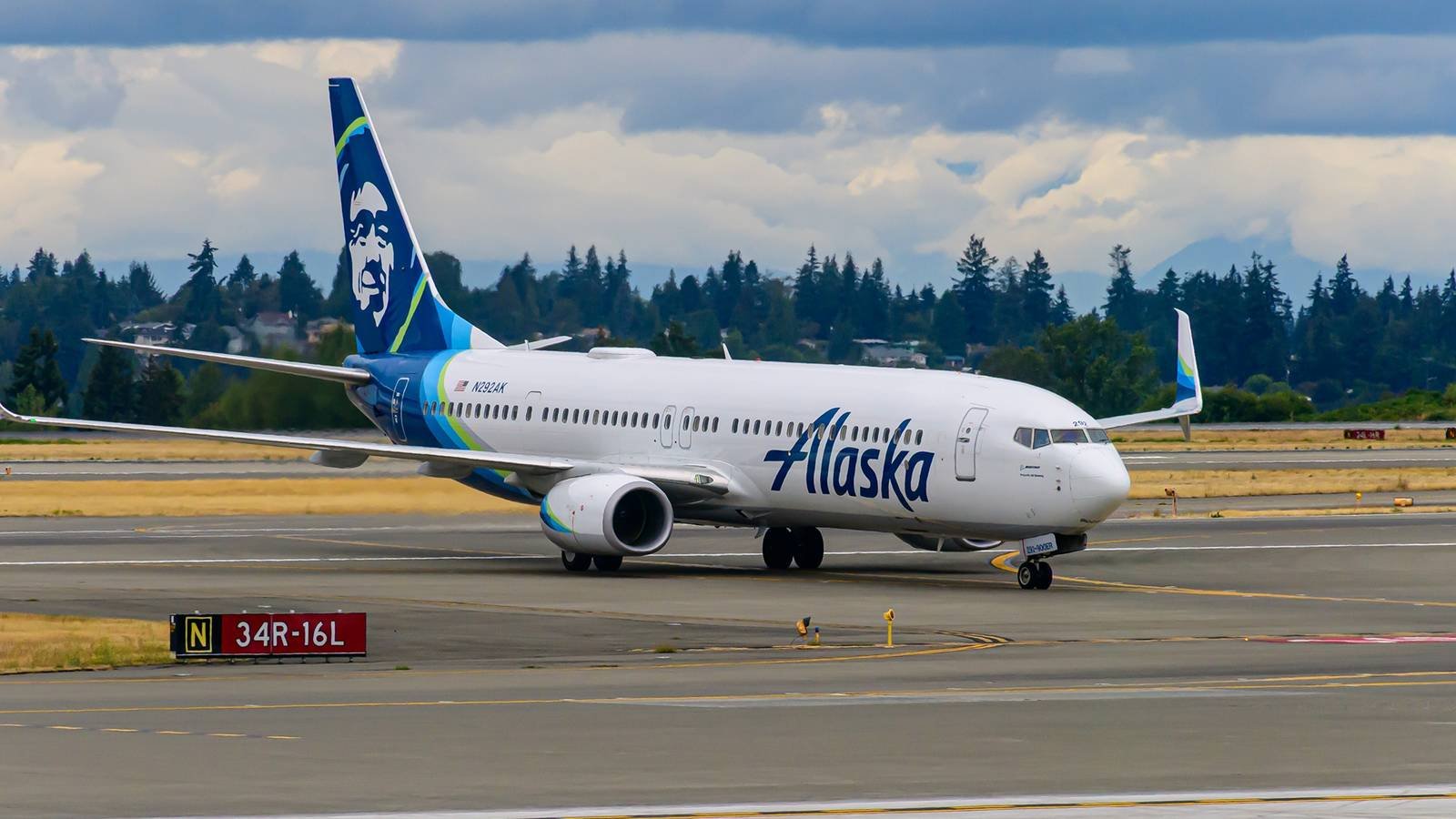
Flight AS322 diverted to Yakima Air Terminal (YKM) on November 7 after abandoning its approach to Seattle-Tacoma International Airport (SEA) amid severe weather. However, a reported problem with the fuel indicator then grounded the Boeing 737-900ER overnight. Alaska Airlines reportedly did not provide rooms or vouchers because the initial diversion was weather-related.
Weather Diversion Turns Into Overnight Stay With No Hotel
AS322, with 137 passengers and eight crew on board, departed Dallas Fort Worth International Airport (DFW) at 6:56 PM local time on Saturday, around 50 minutes behind schedule. The Boeing 737-900ER, registered as N277AK, was en route to Seattle when poor weather forced the crew to abandon its approach.

The flight diverted to Yakima, roughly 100 miles from Seattle, and landed safely at around 9:25 PM. However, while the 737 was being refueled, a faulty fuel indicator was discovered, grounding the plane until engineers coming from Seattle could inspect it. According to NBC Right Now, passengers remained on board for more than two hours after landing and were not allowed to disembark until around 12:15 AM.
They were then informed that the flight would not continue until the following day. According to passenger Michael Pinter, those on the flight were “offered rooms” by an Alaska Airlines rep, who later went home at around midnight. However, Alaska Airlines classified the original diversion as weather-related.
This meant that it considered the disruption outside its control and ultimately did not provide hotel accommodation or meal vouchers, according to the Yakima Herald-Republic.
Red Cross Steps In To Help Stranded Passengers

With up to 137 passengers needing somewhere to stay, Yakima Air Terminal Director Christopher Hopkins arranged assistance from the American Red Cross. The organization brought in various supplies, including cots, blankets, toiletries, baby formula, and water. Staff from Alaska Airlines’ subsidiary Horizon Air also bought Taco Bell for passengers on Saturday night.
Meanwhile, local authorities provided breakfast burritos the following morning. It is reported that around 50 passengers ultimately spent the night in the terminal, sleeping on cots provided by the Red Cross, while the remaining passengers presumably made their own hotel or onward travel arrangements.
Date | November 7, 2026 |
Airline | Alaska Airlines |
Flight code | AS322 |
Plane | Boeing 737-900ER |
Passengers | 127 |
From | Dallas |
To | Seattle |
Fate | Diverted to Yakima due to weather, then grounded overnight by a faulty fuel indicator |
Passengers’ bags also remained on the aircraft, and they were told that if they left the terminal, there would be no re-entry as TSA facilities were uncrewed. Later that night, at around 4:00 AM, passengers were forced to move out of the secure area. According to Pinter, many ended up sleeping in an under-construction office and meeting space for the remainder of the night.
Members of Alaska Airlines’ maintenance team arrived on Sunday morning to inspect the aircraft, which eventually departed Yakima at 2:02 PM as flight AS9230, landing in Seattle around 30 minutes later. Yakima is a regular diversion airport for Seattle-bound flights impacted by poor weather.
Its own scheduled service is limited, with Horizon Air operating two daily flights to Seattle under the Alaska Airlines brand. Yakima has handled notable diversions before, including two Seattle-bound Delta flights with more than 300 passengers in March this year, prompting changes to the airport’s readiness program.
Alaska Airlines Statement Offers More Details

In a statement to Simple Flying, Alaska Airlines described the events at Yakima as “a very unusual situation.” It confirmed that AS322 diverted because of strong storms in Seattle, and said the aircraft remained on the ground at Yakima while the storm passed through Seattle.
It then experienced a delay with fueling procedures “since this was a 737,” before an ill passenger needed to be removed from the aircraft. By this point, it was close to midnight, and the flight was canceled. The airline added that “for weather delays or cancellations, airlines typically do not provide accommodations.”
Why Alaska Airlines Did Not Provide Hotels Or Meal Vouchers

Like most major US airlines, Alaska Airlines determines its hotel and meal assistance based on whether a disruption is within its control. According to its website, the carrier will offer complimentary hotel rooms and ground transportation for overnight disruptions it is responsible for, provided passengers are at least 100 miles from home. It also offers meals for delays of three hours or more.
However, it excludes disruptions caused by weather, air traffic control, passenger illness, and other circumstances deemed outside its control. The situation at Yakima is not so straightforward. While the flight was initially diverted for a reason outside the airline’s control, the aircraft was ultimately grounded by a mechanical fault rather than the weather.
The rules determining which disruptions airlines are held responsible for are also set to change next year. Under a new DOT rule, ten causes will be excluded from an airline’s control, including unscheduled maintenance that cannot be deferred. As Simple Flying previously explored, this could mean fewer disruptions qualify for hotel accommodation and other assistance.
Alaska Airlines At DFW

Seattle is one of three West Coast airports that Alaska Airlines serves from Dallas/Fort Worth on a regularly scheduled basis using Boeing 737 narrowbody twinjets from its mainline fleet. According to scheduling data from Cirium, an aviation analytics company, and as seen above, its other routes from the Texan airport serve Portland International Airport (PDX) and San Diego International Airport (SAN).
This month, the route to Seattle dwarfs the other two in terms of frequency, with four flights a day typically serving this domestic corridor. Meanwhile, San Diego sees two daily rotations, compared to just one for Portland. With Alaska Airlines being a oneworld member, and DFW being a hub for its alliance partner American Airlines, these flights likely get a lot of connecting traffic as well as point-to-point flyers.
