


Electra has joined the Virginia Advanced Air Mobility Smart Airspace Program as a technical lead to design, implement and test the first instrument flight rules network built specifically for advanced air mobility aircraft in the USA.
The program aims to create a low-cost, scalable instrument flight rules (IFR) network complete with new access points certified by the FAA. Nearly all commercial aviation operates under IFR to ensure reliability, predictability and safety, particularly in poor weather, but existing procedures were not designed with AAM aircraft in mind.
Electra’s engineers and pilots will work with fellow technical lead NAVOS Air to design and test instrument procedures for short take-off and landing aircraft, including the most technically challenging phase of poor-weather operations – transitioning from cloud cover to a landing site.
The GPS-based procedures will enable flight in instrument meteorological conditions, broadly when visibility is less than 3 miles (4.8km) and cloud ceilings are below 1,000ft above the ground.
Tombo Jones, director of Virginia Tech’s Mid-Atlantic Aviation Partnership (MAAP), an FAA-designated test site, said, “The Virginia AAM Smart Airspace Program is establishing the regulatory, procedural, and operational foundation for real-world AAM deployment.
The program’s routing, procedures and new access points will separate AAM traffic from conventional flights and enable more direct routing. The network will be based on GPS navigation, making it a scalable model for replication across the USA.
Four Virginia nodes will be connected to create a repeatable model for expanding AAM IFR networks, including off-airport and on-airport access points, an existing FAA-approved vertiport in a mixed civilian and military environment, and a rural airfield in northern Virginia.
Electra’s EL9 aircraft development
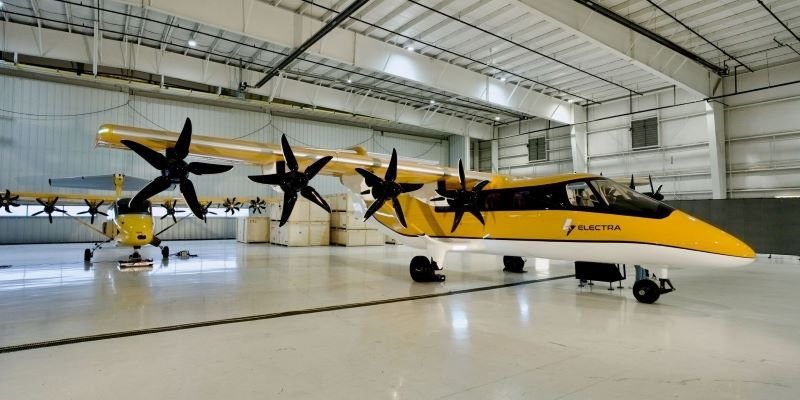
Electra is developing what it describes as the first hybrid-electric ultra-short take-off and landing aircraft, capable of operating from sites as small as 150ft (46m). The company aims to use this capability to unlock thousands of new access points including fields, parking lots and underutilized runways.
In December, Electra submitted an application to the FAA for Part 23 type certification for the nine-passenger EL9 aircraft. The company plans to use the EL9 for FAA certification flight tests in 2028 and and to have the aircraft enter service in late 2029 or early 2030.
Parker Vascik, director of product strategy at Electra, said, “By creating the necessary operational, physical, and digital infrastructure in an affordable package, we are one step closer to enabling safe, scalable, and reliable all-weather AAM operations across the country. Ultimately, our goal is to transform the future of travel, giving people the freedom to travel from where they are to where they want to go.”
