


AeroTime columnist Ori Gross is an airline pilot, flight instructor, and engineer/developer with a background in airline management. He covers commercial aviation, defense, and technology, combining technical insight with real-world operational experience to deliver informed analysis of developments across the industry.
The views and opinions expressed in this column are solely those of the author and do not necessarily reflect the official policy or position of AeroTime.
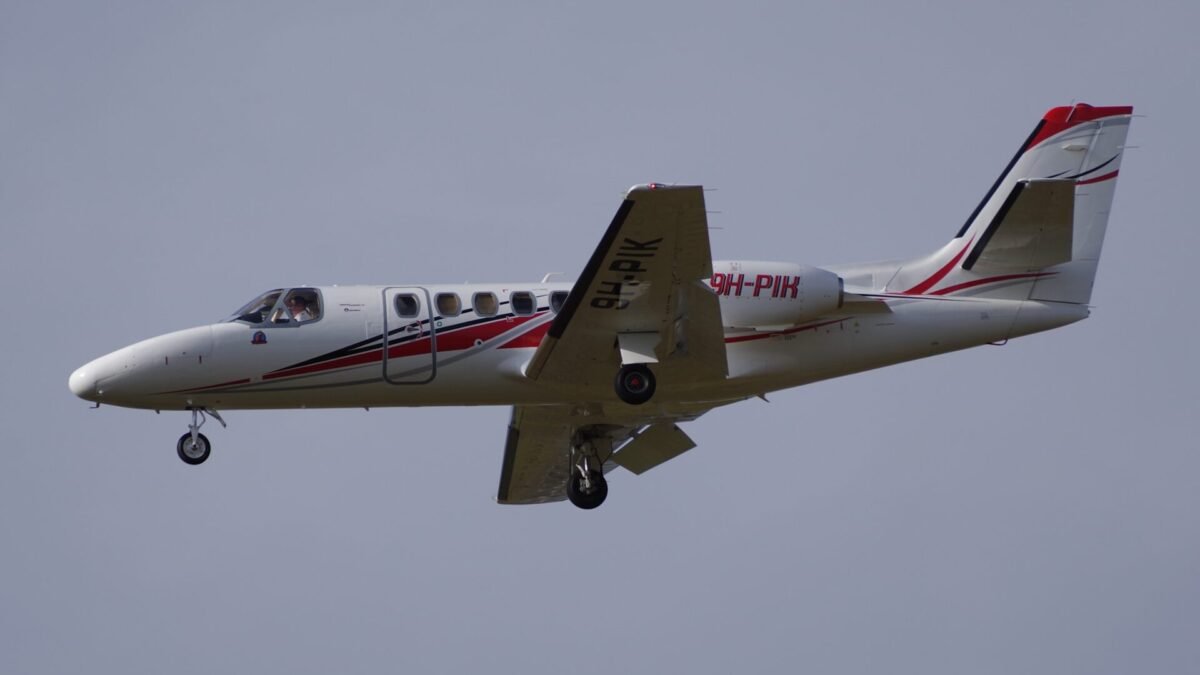
The Federal Aviation Administration (FAA) has released a crucial policy change that ends the Single-Pilot Operations (SPO) exemptions for legacy Cessna Citation 500 series jets.
Because of this decision, which moves away from exemptions given since 1984, planes such as the CE-500 (Citation I), CE-550 (Citation II/Bravo), CE-S550 and CE-560 (Citation Ultra/Encore/Encore+) must now always have a trained Pilot acting as Second-in-Command (SIC) onboard in addition to the Pilot acting as Pilot-in-Command (PIC).
(Note: Purpose-built Part 23 single-pilot aircraft such as the Citation 501/551 SP, the Citation Mustang 510, and the CJ/525 series remain unaffected, as single-pilot operation is certified directly on their type certificates).
While this policy update carries significant financial and operational ramifications, the deeper issue is not just regulatory: it is ergonomic, procedural, and psychological.
1. The regulatory trigger: Safety disparity and systemic non-compliance
According to 14 CFR Part 11 laid down by the FAA, all operational exemptions to baseline regulations must fulfil equivalent safety standards. The FAA’s multi-year review process resulted in the conclusion that equivalency is not fulfilled based upon two principal findings:
- Double the accident rates: An 18-year operational data analysis showed that Part 25 CE-500 single-pilot aircraft had about twice as many accidents compared to other Part 23 jets with similar specifications.
- Training and oversight violations: A review of the processes of the 14 Part 61 exemption training organizations showed numerous violations, such as missing documents and unapproved training devices, besides faulty or fabricated checks. 13 out of 14 training organizations were denied their renewals of permits by the FAA.
Lacking even the slightest statistical equivalency or reliable institutional oversight regarding training, there is no legal ground for justifying these exemptions in their current form.
2. Ergonomics vs. paperwork: The physical cockpit
If an early Citation 501 SP can be flown solo, why does a structurally similar Citation 500 now require two crewmembers?
The difference boils down to the aircraft certification philosophy. The legacy part 25 Citations were arranged for use in multi-pilot operations, with an arrangement that accommodates access to switches, breakers, emergency deployment systems as well as warning instruments throughout the cockpit to both pilots equally well.
In contrast, single-pilot aircraft such as the Citation 501 SP or initial CJ series were specifically designed from the start with Single-Pilot Resource Management (SRM) in mind. Meaning that all controls and critical systems are within the PIC’s immediate view and reach.
Trying to operate an aircraft originally intended for a minimum crew of two pilots creates significant cognitive challenges in cases of higher workload such as emergency situations like system failures while flying in instrument meteorological conditions (IMC).
3. A warm body ≠ CRM
The most neglected risk of the decision might be overlooking the fact that Crew Resource Management (CRM) is a learned skill, not a simple consequence of two people being sat into the cockpit.
Adding a second-in-command in the right seat of an aircraft flown by a pilot who has been flying on his own entails some significant human factors difficulties such as workload monopoly.
A lone pilot has developed a quick, internalized way of doing things. The pilot will tend to operate frequencies, systems, and solve problems all at once while flying by hand. Without training, the newly appointed second-in-command becomes a mere silent witness to what is happening all while a regulatory criteria box is being ticked off.
Another aspect is the significant unequal authority gradients that might occur across the cockpit. An experienced owner-pilot hiring someone with little flying experience, only to fulfill legal and insurance requirements often results in authority imbalance that hampers the challenge-and-response principle adoption. A junior second-in-command may feel reluctant to raise concerns about altitude deviations or skipped items on a checklist.
Solo flyers tend to make quick and silent decisions. True multi-crew operations necessitate proper information exchange between the crew members including standardized briefings, challenge-and-response checklists, callouts, and mutual cross-verification.
To avoid friction and latency in communications, the operator needs to establish all of that as part of their standard operating procedures (SOPs) and maybe even craft a Flight Crew Operating Manual (FCOM) for an aircraft that never had one to begin with as I’ve had the pleasure of doing in the past. Without structured CRM training, this sudden verbalization overhead can initially increase pilot workload during critical phases of flight rather than decrease it.
4. The military contrast
If a military pilot can fly an F-16 or F-35 solo through hostile airspace, weather, and supersonic speeds, why does a civilian business jet require two pilots?
While the crew count may be identical, the operational environment and cockpit architecture are fundamentally distinct for a number of reasons. To name a few:
- The modern single-seat jet fighters utilize the HOTAS (hands on throttle-and-stick) principle, wide-field head-up displays (HUDs), and autonomous sensor fusion. The pilot’s workplace is arranged in such a way that the pilot does not have to take the hands off controls or the eyes from the outside/HUD during the critical phases.
- Military aviators undergo constant and very intense sessions on simulators and employ a very firm debriefing culture. A civilian pilot flying around 50 to 100 hours in the whole year, juggling flight duties around business obligations, while tactical aviation pilots fly exclusively to improve on a daily basis.
- In civilian aviation, namely in general aviation, a pilot is often simultaneously a flight planner, dispatcher, meteorologist, systems operator, and a pilot-in-command and hast to perform all these functions without the usual features of military command systems and support units.
5. The operational fallout
The end of the CE-500 exemption immediately brings changes to the business aviation space.
For low-time commercial multi-engine pilots, it creates a welcome surge in second-in-command demand allowing them to accumulate valuable turbine time experience.
At the same time, the gap in valuation between the traditional Part 25 aircraft and modern single-pilot aircraft made under Part 23 is going to widen.
Most importantly, operators of legacy CE-500 aircraft are forced to let go of relying solely on SRM and hopefully learn and deploy CRM responsibly.
The bottom line
Cockpit safety cannot be judged by a skilled pilot’s ability to handle all aspects of flying on a clear day; it is tested when emergency procedures come into play together with adverse weather conditions and the workload exceeds what a single-pilot can manage.
Since the industry is considering the introduction of single-pilot airline operations and fully automated cockpits, the CE-500 decision reaffirms a basic truth in this area: an exemption can only be justified if equipment design, human factors, and crew dynamics are aligned.
Will they ever be aligned? We will see.
