


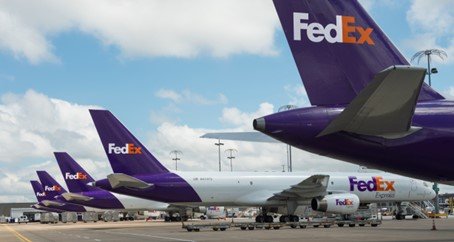
The U.S. integrator becomes the first plaintiff from the transport and logistics industry to sue the Trump administration over tariff refunds, demanding return of all tariffs paid. The move followsthe Supreme Court’s ruling that almost all of the tariffs imposed by Trump are illegal. Lawyers expect a tsunami of lawsuits against the Trump administration to be filed in the coming days with the aim of returning the money to their proprietors.
FedEx said in a filing with the U.S. Court of International Trade that they have “suffered injury” from having to pay the tariffs and that the relief they’re seeking from the court would redress those injuries. FedEx sought an order from the trade court that would force Customs and Border Protection to refund all duties paid last year under the federal emergency powers law.
An emergency situation does not exist”
“This Court has jurisdiction and authority to order remedial relief and refunds of IEEPA duties paid by importers,” FedEx wrote in its complaint, adding, “Plaintiffs have paid IEEPA duties to the United States and thus have suffered injury caused by those orders.”
The International Emergency Economic Power Act (IEEPA) provides the U.S, President broad authority to regulate a variety of economic transactions, including the collection of customs duties, following a declaration of national emergency. However, this emergency situation does not exist in the present case, which is why the tariffs imposed by Trump are illegal, the Supreme Court ruled last Friday (20FEB26).
“Supporting our customers as they navigate regulatory changes remains our priority,” a FedEx spokesperson said in a statement. “FedEx has taken necessary action to protect the company’s rights as an importer of record to seek duty refunds from U.S. Customs and Border Protection following the U.S. Supreme Court’s rulings,” he is quoted by business and financial news network CNBC.
Trump lacks the funds to finance his tax cuts
Other companies have also launched efforts to recoup costs from the illegal tariffs, including large U.S. corporations like Wholesaler Costco and global beauty company Revlon, founded by Elizabeth Arden.
In a statement, the National Retail Federation said that the Supreme Court’s ruling provided certainty for U.S. businesses and manufacturers. “We urge the lower court to ensure a seamless process to refund the tariffs to U.S. importers,” it said. “The refunds will serve as an economic boost and allow companies to reinvest in their operations, their employees and their customers.”
According to official federal data, the Treasury had collected more than $133 billion from the import taxes the president has imposed under the emergency powers law as of DEC2025. Trump has vowed to collect tariffs through other means. He reached for a stopgap option immediately after his defeat Friday at the Supreme Court: Section 122 of the Trade Act of 1974 allows the president to impose tariffs of up to 15% for as long as 150 days. But any extension beyond that timeframe must be approved by Congress likely to object tax hikes as November’s midterm U.S. elections loom.
A tsunami of lawsuits is rolling toward the US.
In addition, the Trump administration also faces recourse claims from external trading partners and industry associations that have fallen victim to his erratic tariff policy. They still seem to be waiting to see how things develop. Trump is known for his vindictiveness, as evidenced by his foul-mouthed tirade against three federal judges he appointed who declared his tariffs illegal in a 6-3 vote.
In any case, Brussels has put the previously consented EU-U.S. trade pact on hold until further notice. This means that U.S. imports into the EU will continue to be subject to tariffs. Originally, these were to be abolished, which would have made U.S. products cheaper in the EU.
