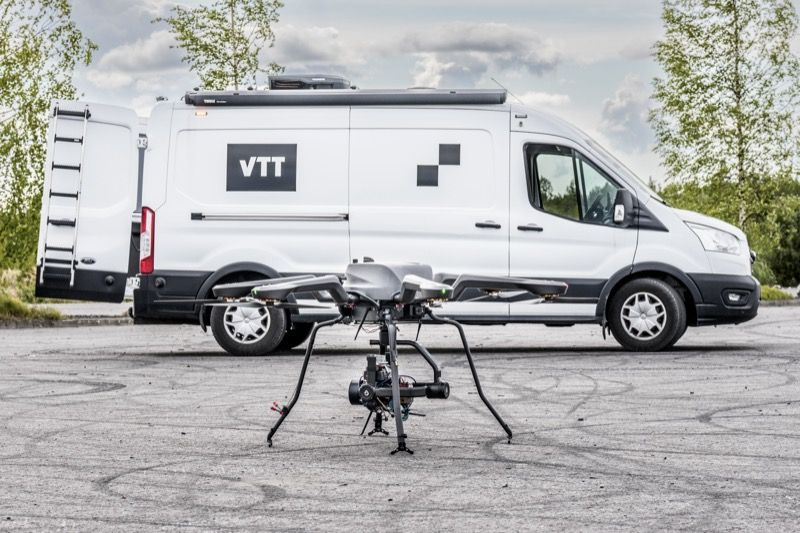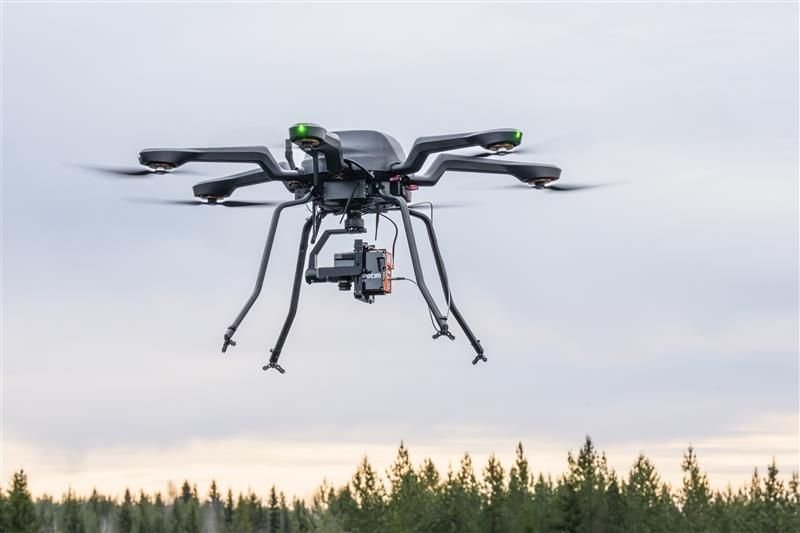
Finland’s national research organization has expanded its drone test center in the Arctic north of the country, adding a primary radar system and raising the ceiling of its designated airspace to 9,000ft (2,743m) as demand grows for facilities capable of evaluating uncrewed aircraft in real-world conditions.
The VTT Technical Research Centre’s site, located near the city of Oulu in northern Finland, provides access to more than 1,350 square miles (3,500km²) of designated Nordic test airspace, an area more than twice the size of Greater London.
The altitude increase, implemented this month, opens the facility to new applications including early-phase product development of sensor technologies suitable for low-orbit satellites, according to VTT. A new primary radar was also brought into service in March at the range, strengthening the site’s detection and identification capabilities.
The investments come amid a spate of uncrewed aircraft incidents across Finland. Four armed drones have crashed on Finnish soil since late March after straying off course during strikes on Russian coastal infrastructure.
Testing Corridor extension
Another recent addition to the test range is a corridor stretching 93 miles (150km) long and 12 miles (20km) wide. The corridor enables beyond-visual-line-of-sight flights over long distances across varied terrain and weather conditions, which is critical for assessing performance in operational scenarios outside urban areas.
“The need for drone test sites is growing in Europe,” said Timo Lind, principal scientist and chief drone pilot at VTT. “Most countries have a test site of some kind, but due to congested airspace, dense populations, and tight regulations, only a few countries can offer sufficiently large and versatile areas. That makes VTT’s site stand out.”
The facility operates year-round, with thousands of flights conducted annually. Winter conditions are a particular draw for testing campaigns, as sub-zero temperatures, high humidity and ice accumulation on airframe surfaces expose weaknesses in batteries, electronics and other systems that cannot be fully replicated in laboratory environments.
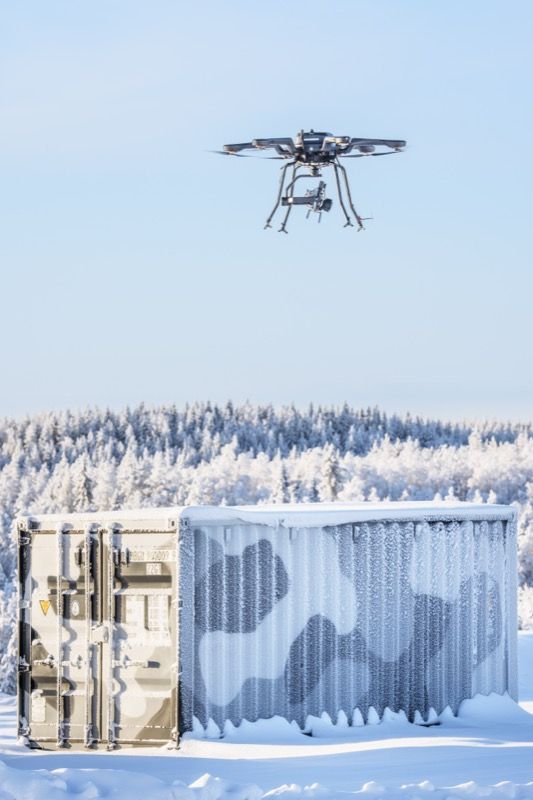
“Winter in particular offers conditions that cannot be fully simulated in a lab,” added Lind. “The cold, humidity, and ice that accumulate on the surfaces of devices reveal the weaknesses in systems, such as the performance of batteries and electronics.”
The site also supports swarm testing, with the capacity to fly dozens of uncrewed aircraft simultaneously. Multi-platform autonomous systems combining air, land and water-based vehicles can be evaluated as coordinated units, creating opportunities for coastal and maritime operations.
VTT said operations at the site are expanding to heavier aircraft, long-range platforms and high-altitude systems. “In the future, technologies will be tested in the area in even more demanding conditions to ensure the functionality of devices and systems in critical conditions,” said Jussi Kangasoja, senior scientist at VTT.