


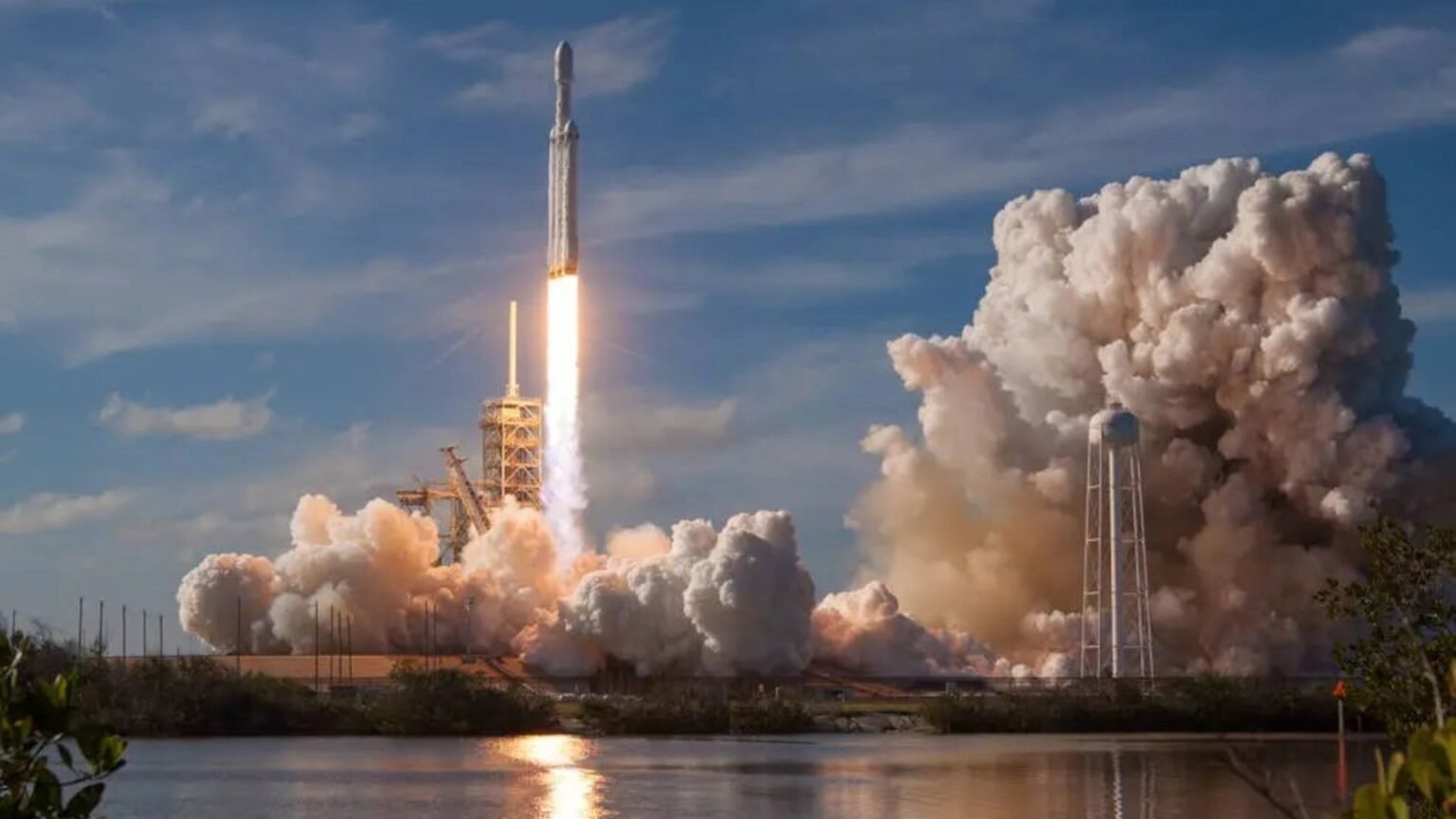
Commercial companies launching satellites, flying orbital test missions, or conducting other space-related activities will soon need to pay to leave Earth.
Per a notice the FAA published in the Federal Register this month, the agency is preparing to impose fees on every launch, reentry, and other operation authorized by its Office of Commercial Space Transportation (AST). The new fees could fund the integration of more orbital activities amid an explosion in commercial spaceflight, driven largely by SpaceX.
For operations conducted in 2026, the FAA plans to charge 25 cents per pound of payload, capped at $30,000. AST as of Tuesday has authorized 116 commercial space operations this fiscal year—more than it did in all of fiscal year 2023 (FY23).
Existing regulations require operators to share mission payloads in advance, allowing the FAA to calculate the charges. It will add terms and conditions for fee calculation and collection in newly issued permits and licenses, but all operators will be required to pay within 30 days of notification. The agency will charge for any operations since January 1.
Assuming SpaceX continues its cadence of Starlink missions, which typically launch batches of 25 satellites, the company would front about $8,000 per launch or close to $1 million per year. It would pay even more as the fees increase over time, reaching $1.50 per pound (capped at $200,000) by 2033. After that, they will be calculated based on the consumer price index.
The fee structure was first communicated in last year’s One Big Beautiful Bill Act. The legislation requires the funds to be deposited in a “Launch and Reentry Permitting Fund” within the Treasury Department, which would cover AST activities.
The funding could also go toward the integration of launch operations within air traffic control (ATC) displays, development of an automated system that reroutes commercial air traffic in the event of a mishap, and other technologies intended to integrate the explosion of new space activity.
Per the White House’s FY27 budget request for the FAA, “commercial space launch and reentry demands have surged by 52.7 percent” since FY23, while the AST workforce has remained static. The budget calls for a more than 40 percent year-over-year increase to the office’s funding.
Space Tax
Levying a fee for commercial space activity is a curious move for the FAA, which is being pushed to facilitate more operations to keep pace with emerging rivals in Europe and China.
For established players like SpaceX, the charges are inconsequential compared to the cost of a launch. Still, the tax could be a way for regulators to rein in activity in anticipation of a potential catastrophe that could set back the industry.
In a January Safety Alert for Operators (SAFO), the FAA advised pilots to be ready to “exercise extreme caution” in the event of “catastrophic failures resulting in debris fields,” such as in the wake of SpaceX Starship test flights in early 2025. The gargantuan rocket twice exploded and required the FAA to activate a debris response area (DRA), clearing airspace over the Pacific Ocean and disrupting air travel.
Putting the collected fees toward safety systems—such as a DRA that activates automatically rather than at an FAA official’s behest—could minimize the impact of future spaceflight mishaps.
Commercial space activity is on the rise for several reasons, including more powerful rockets, reusable hardware that has exponentially lowered costs, and advances in satellite technology that have made payloads cheaper to launch.
The FAA licensed 146 space operations in FY24 and more than 200 in FY25. It took more than three decades for the agency to authorize 500 operations—a figure it matched in just the four years between FY22 and FY25. Per a recent forecast, it expects to license anywhere from 2,000 to 4,000 more operations through 2035.
The FAA in recent months has approved increased cadences and new trajectories for SpaceX launches, which could add to the orbital activity. In March, it finalized Part 450, a launch and reentry regulation that consolidates four previous regulations and further streamlines the licensing process.
Some observers are concerned that regulators are not doing enough to protect pilots from spaceflight mishaps.
Steve Jangelis, aviation safety chair for the Air Line Pilots Association (ALPA), has criticized the FAA for taking too long to activate the DRA following Starship’s explosions. SpaceX reportedly waited about 15 minutes to alert the FAA to the mishap on Starship’s January 2025 test flight, causing the delay, The Wall Street Journal reported in December.
