


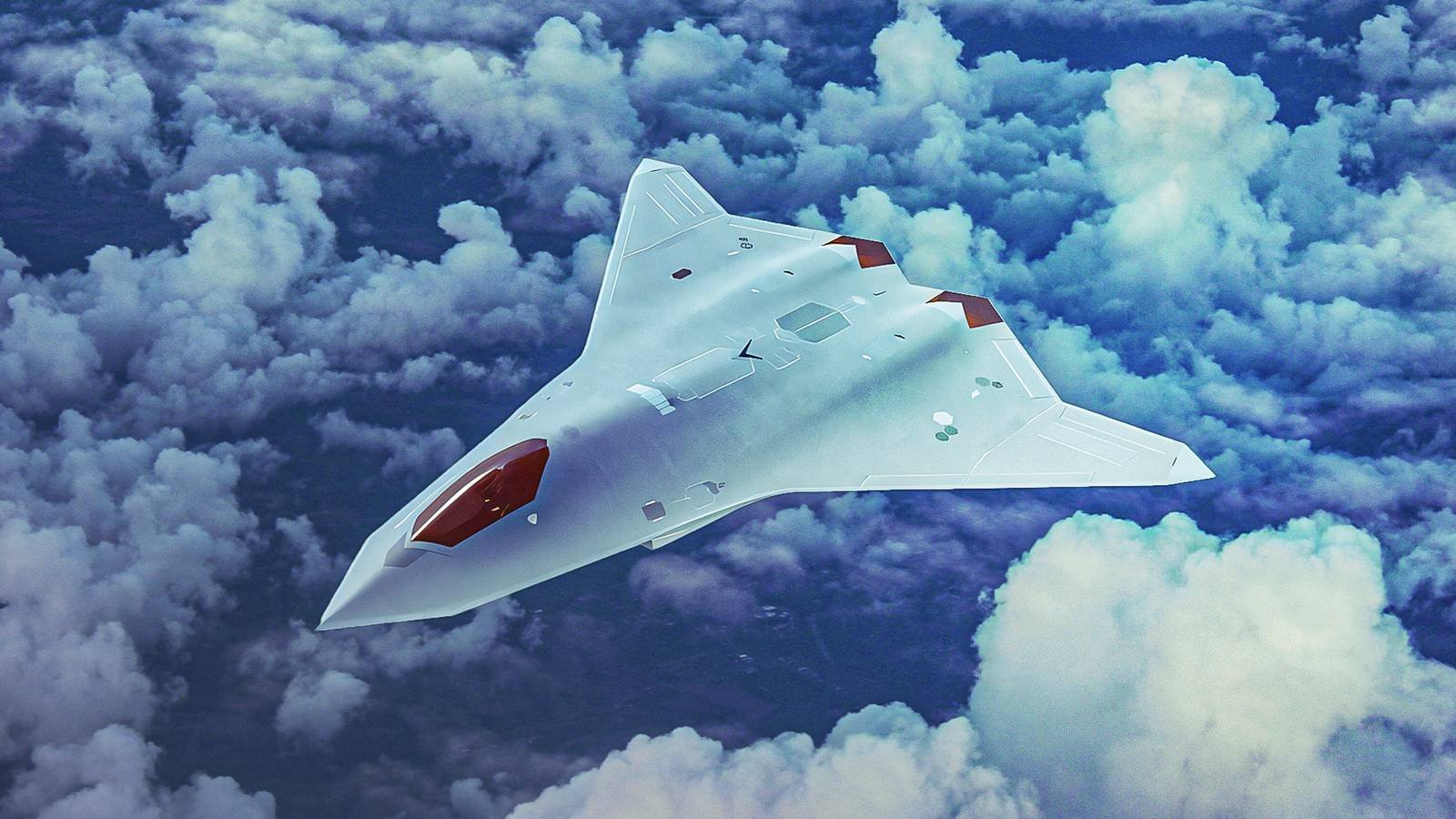
As the United States Air Force has superseded the Army to have the largest budget in the US Military, there are doubts that even this colossal funding can make its sixth-generation fighter jet dreams come true. In early 2025, the Department of Defense awarded the contract to Boeing to develop the Next Generation Air Dominance into what has been dubbed the F-47. It is now on track to spend roughly $29 billion by the end of 2029. This comes after the Lockheed Martin F-35 Joint Strike Fighter already surpassed the Manhattan Project and the Boeing B-29 Superfortress as the most expensive defense project in history.
It is currently estimated that the F-47 will cost roughly $300 million per airplane, according to 19FortyFive. That is, despite the fact that the Air Force aims to cut down on the cost of the preceding LM F-22 Raptor, which would be roughly double what the F-22 cost. There are also fears that costs will spiral as the Next Generation program is sliding to the right, with the timeline and costs expected to continue escalating. As the US military continues to ramp up spending, it is unclear where the red line is for the classified ‘Black Budget’ behind the F-47, if there is one at all.
Compounding Costs: A System Of Systems

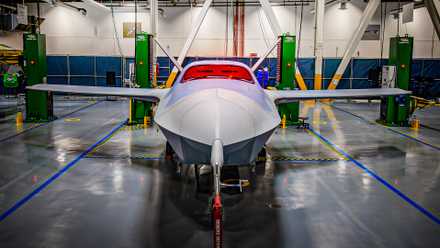
The F-47 is not built to operate as a traditional standalone dogfighter. Instead, it serves as a central flying command center. The Air Force has expressed the intent to acquire roughly 185 examples of the next-gen fighter, according to aerospaceamerica. This comes with a simultaneous production push to produce roughly 3,000 F-35s, though that number is split among the three service branches and 19 international partners. However, the USAF has said that it wants to build a fleet of 1,000 collaborative combat aircraft, or loyal wingman drones, alongside the NGAD.
The obvious cost risk comes from simultaneously running some of the largest defense projects in world history while also pioneering technology that is either unproven or so bleeding-edge that it requires extensive additional research to make it operational. The technology inside the F-47 alone is a massive undertaking for the US to develop and manufacture on a scale to sustain a mission-ready force. Add to that the F-35, which has already proven to be problematic and continues to suffer from technological shortcomings. That is a tall order, especially while inventing an entirely new class of advanced combat drones from scratch.
The Pentagon currently projects that the F-47 program will cost $100 billion, yet there are a number of factors casting doubt on this as a concrete figure. Before receiving the NGAD award, Boeing had suffered massive losses on its defense projects over the past several years due to major overruns in both timelines and development costs. Its replacement Air Force One program, the VC-25B, is famously years behind schedule and over budget, so much so that the company claims hundreds of millions of dollars in losses, and Donald Trump even sought a substitute used 747-8 out of impatience for his AF1.
Boeing has also struggled with the union at its St. Louis-based Air Dominance Defense Focus production hubs. The FA-18E/F Super Hornet and F-15EX Eagle 2 production lines have been hampered by strikes on and off for more than a year. The company even lost the bid to Sierra Nevada Corporation to develop the successor to its own E-4B Night Watch doomsday plane. The USAF chose SNC for a combination of factors, but Boeing’s struggles to deliver on its existing products were a contributing factor.
The US Air Force Wants 1,000 AI Drones To Fly Alongside Its F-35s
The grand plan for an uncrewed air force.
Economies Of Scale: What The F-35 Did Right

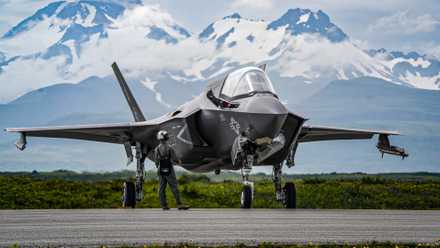
The F-35 Lightning II is a much more expensive program overall, despite the aircraft being of a lower technological level than its upcoming successor, because it is far larger in scale. The DOD has estimated that the total lifetime cost over nearly 100 years for all F-35 jets ever made will be around $2 trillion. There will be only 185 F-47s if the Air Force fills its current order; the 3,000-strong global fleet of F-35s dwarfs that number. However, the F-35 program continues to incur additional costs due to system shortcomings that require further investment.
Catch what other flight trackers miss
Emergency squawks, holds, NOTAMs — live signals, no signup.
Open tracker
Catch what other flight trackers miss
Emergency squawks, holds, NOTAMs — live signals, no signup.
Open tracker
The F-35 is far less exquisite than the F-47, with even the F-22 surpassing it in some areas of combat capability due to the design compromises made to produce it. At the same time, the jet has achieved far greater combat effectiveness than the Raptor did because it is a superior multirole jet with better data links and higher-tech sensors and systems. The F-47 is aiming to surpass the F-35 and the F-22 in every category, while also running a very small ’boutique’ production run that barely exceeds the number of Northrop Grumman B-21 Raider next-gen bombers being built.
Unlike the F-22 Raptor, which was designed for shorter-range intercept missions, the F-47 is purpose-built for the vast expanses of the Indo-Pacific theater. This is the key area in which it will complement the F-35 fleet on the battlefield of tomorrow. Yet it is expected that there is virtually zero possibility of an export variant ever being made. This will prevent the production run from ever achieving large scale and reduce the cost per airframe through a high quantity of orders. Why would this be made as a modular platform with ‘future-proof’ upgradability? It may still end up facing the ‘vanishing vendor syndrome’ that crippled its predecessor, the F-22 and the B-2 Spirit bomber.
Nearly $1 Billion & 6 Years: The New F-35 System Upgrade That Will Reshape The World’s Most Advanced Fighter
The Navy aims to get its jets back on track.
Uncle Sam’s Black Budget: Where The Taxpayers’ Dollars Go

The F-47 is the direct spiritual and operational successor to the Lockheed Martin F-22 Raptor. In 1998, Congress passed the Obey Amendment, which explicitly prohibited the export of the F-22 to foreign nations due to its sensitive stealth technologies. Even when vital allies like Japan, Australia, and Israel offered to pay massive premiums to buy the F-22, the US government refused to budge. The F-47 falls under the same strict operational security tier.
Because the program originated as a highly classified project under DARPA and the Air Force, a substantial amount of capital was spent in secret before the aircraft was officially named the F-47. The F-47 features a combat radius exceeding 1,000 nautical miles, which is nearly double that of the F-22 or F-35. In addition to having superior performance and range thanks to its new variable cycle engines, it will also generate massive amounts of electrical power to power supercomputers and even directed energy weapons, or combat lasers.
Notably, another major reason it is reasonable to expect the cost of the F-47 to increase is the fact that the Air Force is already pushing to order more B-21 bombers. So far, only a handful of these planes have been made, but the service is aiming to double its goal of 100 to a 200-strong fleet of sixth-generation stealth bombers. Because a single F-47 fighter is projected to cost roughly $300 million, the Air Force cannot afford to maximize both programs simultaneously without increased funding.
The Striking Differences Between Russia’s 2-Seat Su-57D & Every Western Stealth Fighter
Why is every US 5th-gen a single-seater?
The Danger Of The Cost Of Death Spiral

If the US Air Force cuts the F-47 production run to shift funding to the CCA B-21 Raider or other programs, the F-47 will face a financial phenomenon known as a ‘cost death spiral.’ The total cost of the F-47 program consists of a massive, fixed pool of research, development, testing, and evaluation funding. When the production run is cut, this fixed bill is divided among fewer planes. The aircraft looks twice as expensive on paper, even though the physical parts of the plane cost the same to manufacture.
Buying parts for only 80 or 100 jets means Boeing cannot secure bulk-commodity discounts on raw materials like aerospace-grade titanium or carbon composites. If the Air Force spreads $30 billion in fixed development costs across the originally planned 185 aircraft, each jet carries a $162 million R&D surcharge on top of its physical manufacturing cost. If the production run is cut to 100 jets to free up cash for the B-21, that same $30 billion fixed bill is now divided among fewer units. The R&D surcharge instantly spikes to $300 million per jet.
Aircraft manufacturing relies heavily on the industrial learning curve, where workers and supply chains become faster, more efficient, and less prone to errors with every successive jet built. If funding is capped or pulled away early, the Air Force truncates production right as Boeing hits its most efficient manufacturing rhythm. The Pentagon pays the steep premium for the initial, error-heavy setup phase but never gets to harvest the cheap, streamlined aircraft at the end of the line.
Stealth aircraft like the F-47 depend heavily on specialized rare earth elements and critical minerals to enable their advanced Stealth++ skin, high-powered active radars, and adaptive engine architecture. Because these elements are deeply embedded in the aerospace supply chain, cutting future aircraft orders will severely destabilize the niche subcontractor base responsible for processing them. While Boeing holds the primary $20 billion development contract, the physical production of these components relies on a fragile web of sub-tier suppliers.
