


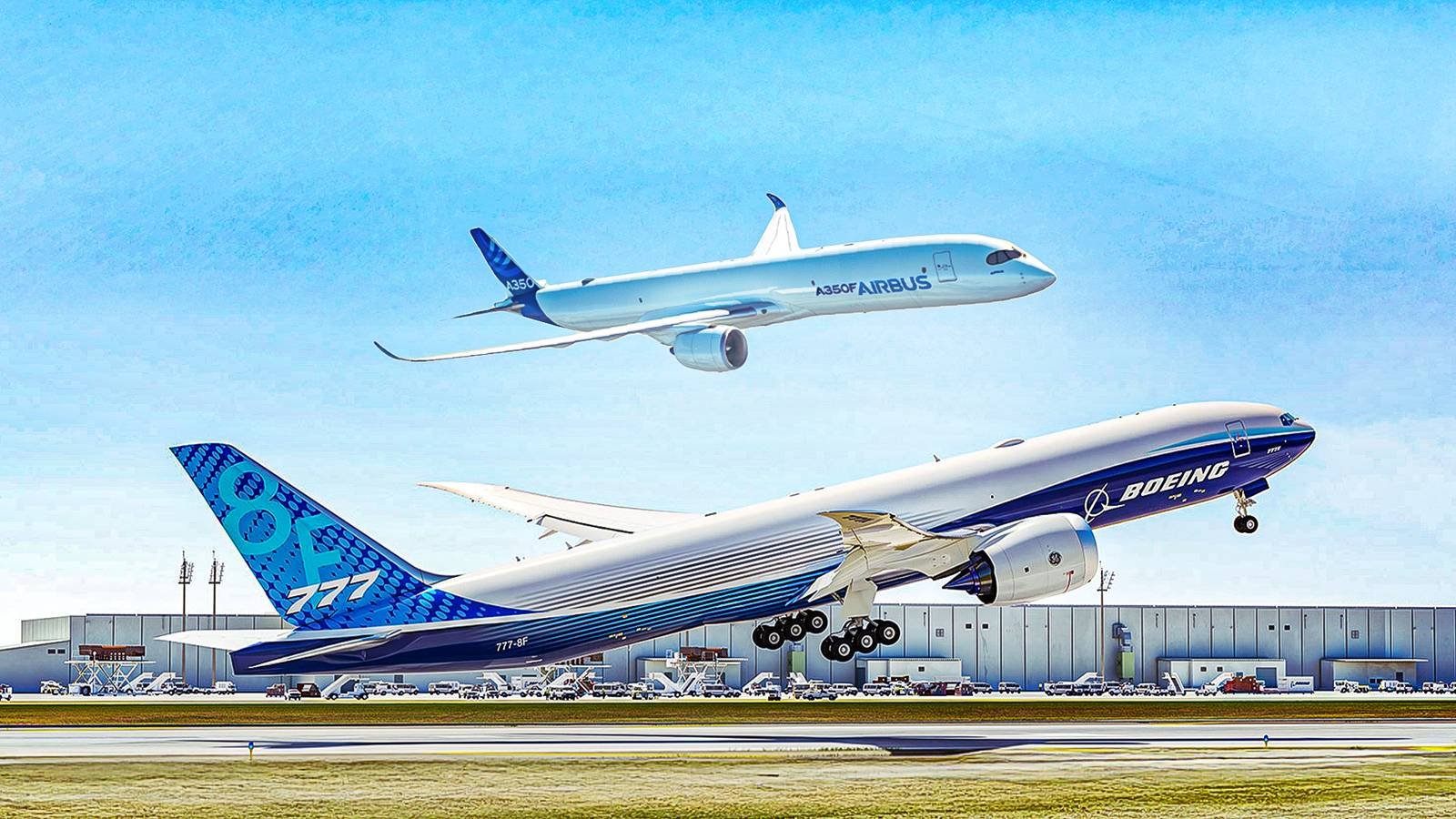
The Airbus A350F and the Boeing 777-8F are the future of the long-haul air cargo industry. However, in this case, the choices made by the future operators are not just based on the aircraft’s technical and operational ability, but also on that of the engines. This is because either aircraft is powered by an exclusive engine type.
Therefore, airlines have to consider the engine performance of these aircraft when forming their long-term cargo fleet plan, along with metrics such as the engine’s Time-On-Wing and operational durability. Additional factors to be considered include details of maintenance and care packages provided by engine manufacturers.
Only One Engine Option Is Available For Each Jet
The air cargo sector is one that is growing, and the next generation freighter jets to enter the market are the 777-8F and the A350F. With both these aircraft having only one powerplant option available to them, the future operators of either aircraft type are placing their long-term bets on the engine types as well. While the 777-8F is set to be powered by the General Electric GE9X engines, the European competition’s sole engine option is the Rolls-Royce Trent XWB-97.
At its face value, a key factor is that the Trent XWB-97 is an engine already operating within the market, as the engine powers the Airbus A350-1000 passenger jet. The aircraft type is very popular and has a considerable number of operators around the world, while Airbus continues to fulfill the order backlog for the aircraft. However, the engine type has faced scrutiny, especially when operating in dry and hot regions, as reported by The Stat Trade Times, which also states that the engine could potentially experience “faster wear and tear” when operating within these environments.
On the other hand, even though the GE9X for the 777-8F is yet to operate commercially, the engine type has been significantly tested (due to the ongoing certification delay of the 777-9). Furthermore, the power capabilities of this engine allow the accompanying airframe to carry more payload than the A350F, paired with the fact that the -8F, being a replacement for the popular Boeing 777-F, can be attractive to operators. Particularly when considering factors such as integrating the type into the fleet.
Technical Specifications

Diving further into the technical and operational capabilities of the two engines will provide a better understanding of what these power plants can deliver to their operator. This will also provide a comparison between the two engine types, allowing for a better understanding of their respective aircraft as well.
While the XWB-97 promises to deliver operational efficiency (as proven with the A350-1000), the GE9X powering the 777X family has already proven that it is the most powerful powerplant used within the space of commercial aviation. The following table details some technical data for the two engines.
Specification | Rolls-Royce Trent XWB-97 | General Electric GE9X |
|---|---|---|
Thrust | 97,000 lbf | 110,000 lbf |
Bypass Ratio | 9.3:1 | 10:1 |
Fan Diameter | 118 inches (3 meters) | 134 inches (3.4 meters) |
Number Of Blades | 16 | 16 |
Aircraft | In service: Airbus A350-1000 Upcoming: Airbus A350F | Upcoming: Boeing 777-9 Boeing 777-8 Boeing 777-8F |
As indicated by the above figures, the GE9X is not only the more powerful engine of the two, but it is also larger than the XWB-97. However, the XWB-97 has proven itself to be a reliable engine for operators around the world, with Rolls-Royce even marketing it as having a 99.9% dispatch reliability, contributing to customers experiencing more time-on-wing. As such, the decision boils down to betting on an already proven powerplant or a newer engine that allows for better payload capacity.
Engine Care Options Are Available

Considering that the ability for an aircraft to operate and its efficiency metrics almost entirely rely on the powerplant used, the engines are essentially the most valuable part of an aircraft. As such, it is also important for operators to opt for the most suitable maintenance and care package for the engines they utilize. Both GE and Rolls-Royce offer their own maintenance/care programs for their products.
GE’s TrueChoice program offers its customers a number of services, which allow operators to choose a suitable service that is suitable for their needs, and enables them to achieve a level of customization when it comes to engine maintenance. The TrueChoice Flight Hour program, for example, offers operators predictability when it comes to the operational costs of the engine.
Furthermore, it allows the operator to shift risk to the manufacturer. After all, GE commits to providing services such as access to maintenance parts (new, used, refurbished), spare engine availability guarantee, coverage of scheduled and unscheduled engine removals, and more.
Rolls-Royce’s TotalCare program offers similar services, wherein Rolls-Royce takes the responsibility of maximizing the time-on-wing of the customers’ engines, while providing operators with predictable operational costs. The firm manages the engine’s maintenance as well, rather than the customer, which means Rolls-Royce covers the engine’s off-wing overhaul and maintenance works, using predictive maintenance planning.
As part of this, the manufacturer also takes on the responsibility of ensuring appropriate parts and sufficient spares are available, dealing with any potential complexities related to the supply chain. With regard to maintenance cover, both manufacturers provide sufficient support for their customers, depending on the package they have opted to utilize.
The Supply Chain Is Yet To Recover

A key issue faced within the aviation industry, worldwide, is the fact that the industry’s supply chain is not able to sustain the growth of the industry. While the COVID-19 Pandemic played a part in impacting the supply chain, another key factor is that the passenger demand in most markets recovered at a faster rate than anticipated. This has had an impact across the industry.
From aircraft manufacturers being unable to produce airframes at forecasted rates, to insufficient engine availability, and even insufficient availability of products and components, the current state of the supply chain has attracted complaints from several customers. However, it is not just the pandemic, but a series of geopolitical events in recent years across the world that have also affected the supply chain, subsequently impacting the industry’s ability to recover.
With aircraft types that only have one engine option available, or for operators of a single engine type, this has been an issue. The impacted supply chain has often resulted in operators not having access to sufficient spare parts for aircraft or maintenance schedules being affected. However, in such situations, airlines that have opted for maintenance packages offered by engine manufacturers will have an easier time navigating supply chain issues.
More About The Two Next-Generation Freighters

Both the A350F and the 777-8F are, in a way, derivatives of existing aircraft or platforms. The Airbus freighter is part of the extremely popular A350 family, which consists of the Airbus A350-900 and the A350-1000 passenger jets. Meanwhile, the 777-8F is part of the Boeing 777X family, which also includes the Boeing 777-9 and the 777-8 aircraft variants.
Although none of the 777X variants are certified for commercial operations, the entire family is the evolved variant of the extremely popular Boeing 777 family. This includes widebody aircraft such as the Boeing 777-300ER and the Boeing 777-F. The table below details how the technical data of the two next-generation freight aircraft compare against each other.
Specifications | Airbus A350F | Boeing 777-8F |
|---|---|---|
Payload | 244,700 lbs (111,000 kg) | 260,145 lbs (118,000 kg) |
MTOW | 703,000 lbs (318,875 kg) | 805,000 lbs (365,140 kg) |
Range | 4,700 nautical miles (8,700 km) | 4,410 nautical miles (8,170 km) |
Both aircraft types have received a considerable number of aircraft orders from customers around the world. However, Airbus’s order book at the end of May shows the A350F having received orders for 107 examples of the type, while reports from Air Cargo News indicate the 777-8F is recorded to have received orders for 76 aircraft. Ultimately, the engine, along with its capabilities, will play an equally important role in the airline’s decision-making, as that of the aircraft itself, and what it can deliver to the operator.
Anticipated Entry Into Service

Both of these next-generation freight aircraft are expected to enter service in the coming years, with the A350F having a head start over Boeing’s jet. This comes as no surprise, considering the freighter variant of the A350 was announced first, along with the fact that Boeing is currently prioritizing the certification of the larger 777-9 jet.
Since last year, Airbus has stated that its freight jet is on track to enter commercial service during the second half of 2027. The first airframe has been assembled, with Airbus building a second example, and the two aircraft will undergo various certification and testing processes across 2026 and 2027.
As for the 777-8F, the aircraft is making considerable progress in its assembly. In March, Boeing reported that the mid-fuselage section and the wings of the airframe had been assembled, and in April, the first fully assembled airframe was spotted at Boeing’s Everett facility. However, when it comes to the expected entry into service for the aircraft type, reports indicate either 2028 or 2029.
