


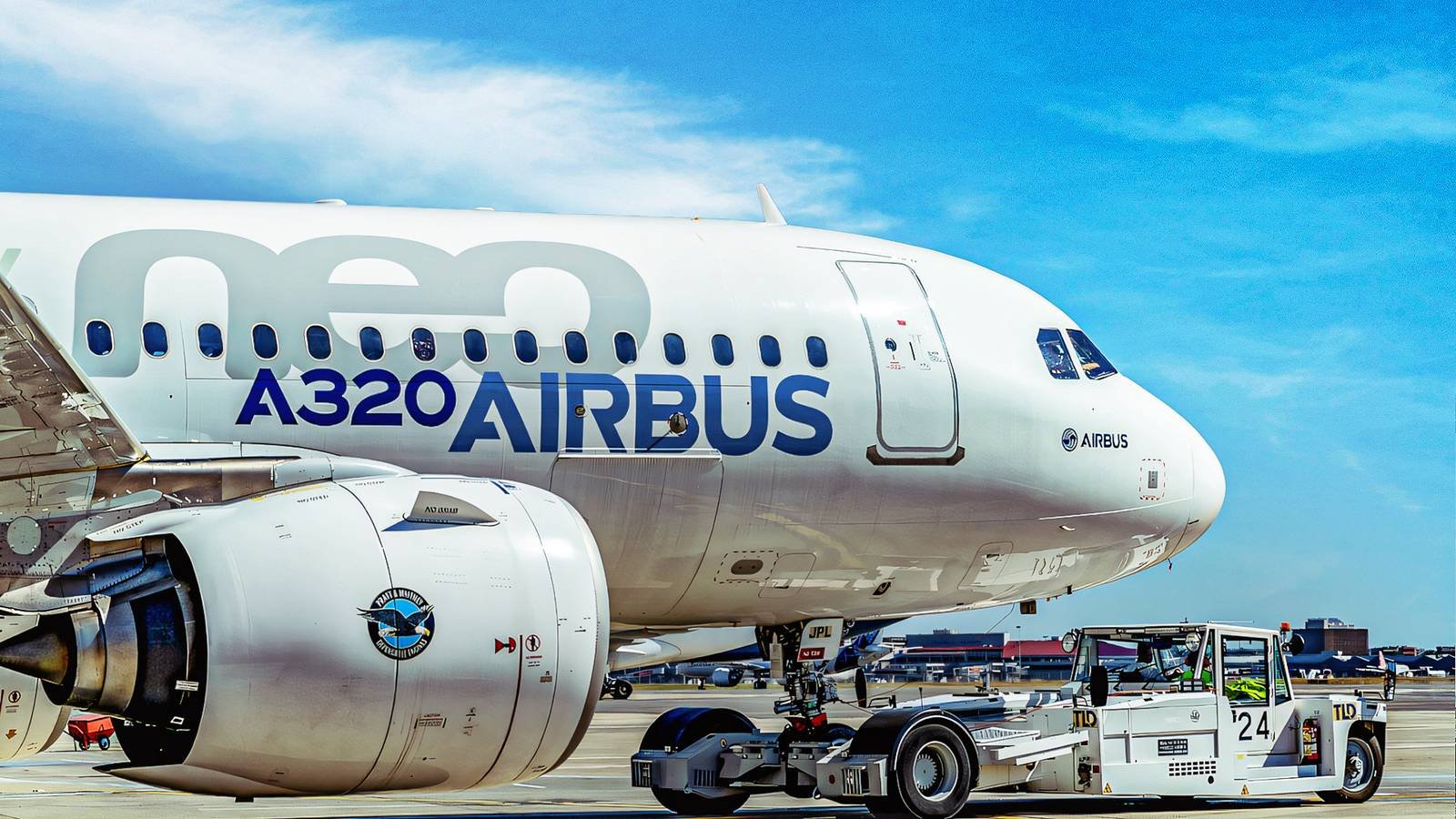
For over half a century, the Boeing 737 family reigned supreme as the unchallenged backbone of domestic air travel, setting delivery milestones that many believed would never be matched. However, a combination of relentless industrial execution, strategic aircraft design choices, and severe manufacturing bottlenecks has permanently rewritten the record books. This is exactly how Airbus outpaced its American rival to have the most-delivered jetliner family in aviation history.
It is no secret that Airbus’ narrowbody market dominance has been building for nearly four decades. When Airbus introduced the original A320 in the late 1980s, it entered a market completely dominated by Boeing’s established short-haul architecture. The use of advanced fly-by-wire technology and a wider cabin cross-section allowed the European manufacturer to slowly chip away at the incumbent monopoly. As this dominance continues to grow, the long-term consequences of competition have culminated in a dramatic reversal of fortunes, highlighting how manufacturing consistency and modern regulatory realities can fundamentally alter the global aerospace hierarchy.
The Historic Delivery Overtake
In October 2025, Saudi Arabian low-cost carrier flynas accepted delivery of a brand-new A320neo family aircraft. This specific airframe represented the 12,260th delivery for the A320 program, officially pushing the Airbus single-aisle family ahead of the cumulative delivery total of the Boeing 737, a truly incredible achievement considering the long-standing presence of the  Boeing program.
What makes this achievement remarkably profound is the vast timeline disparity between the two competing programs. Airbus managed to cross this record-breaking production threshold in just 38 years of commercial manufacturing, rapidly catching a 737 program that had enjoyed a massive head start since its first delivery in 1967. The 737 did not lose its 50-year crown because a better option was available; it lost it to a superior production system. The European manufacturer built a highly scalable industrial footprint that allowed it to compress decades of demand into a highly accelerated delivery timeline.
The catch-up in delivery numbers was preceded by an equally critical victory in everyday global flight utilization. Flight tracking data compiled by Flightradar24 during September 2025 revealed that the A320 family performed 1,414,516 active flights, while the 737 family completed 1,102,536 movements over the same monthly window. Airbus had actually already successfully seized control of the world’s short-haul sky real estate well before the manufacturing counts officially crossed the finish line. The delivery milestone simply validated a market reality that passengers and tracking networks had been witnessing for years.
The Production Cadence Gap

The development differences between the two manufacturing giants are most visible when looking at daily factory output metrics. Airbus successfully engineered a highly decentralized yet deeply integrated global assembly network that allowed for an unprecedented scaling of its narrowbody lines. In contrast, its American counterpart struggled to stabilize its centralized assembly lines, creating a widening operational deficit. As a result, Boeing directly cleared the path for the European consortium to capture historical dominance.
During September 2025, Airbus achieved an impressive production rate of 68 A320neo family aircraft. Meanwhile, Boeing’s single-aisle output languished at approximately 36 737 MAX airframes for the same timeframe, a suppressed volume driven by strict quality audits and regulatory oversight. Such a massive variance in monthly manufacturing velocity directly impacted the total annual output, allowing Airbus to deliver 793 commercial aircraft to global customers throughout 2025 compared to Boeing’s 595 deliveries.
Even though the Renton facility historically outpaced European manufacturing lines, the current layout favors the automated processes established across assembly sites in France, Germany, China, and the United States. Maintaining this accelerated manufacturing pace allows Airbus to consistently chip away at loyal domestic customer bases that traditionally relied on American single-aisle jets, and this has fundamentally altered the competitive landscape for the foreseeable future.

Boeing 737 MAX Vs. Airbus A320neo: Which Has More Orders?
Airbus leads in narrowbody commitments.
Boeing’s Certification Bottlenecks

Raw production capacity explains part of the shift, but also, regulatory hurdles have severely restricted Boeing’s ability to mount an effective commercial counteroffensive. The manufacturer has faced intense scrutiny from aviation authorities, resulting in strict operational boundaries that directly stifle factory acceleration. These compliance burdens have created structural roadblocks that prevent the company from clearing its massive order logs.
The operational strain deepened significantly as regulatory agencies adopted a zero-tolerance approach to manufacturing quality audits. This oversight froze the introduction of critical new sub-variants, with the highly anticipated 737-7 and high-capacity 737-10 models repeatedly delayed and pushed entirely into 2026. Under the leadership of CEO Kelly Ortberg, the company has publicly committed to an exhaustive lessons learned framework designed to systematically overhaul engineering standards. However, this rigorous self-correction process needs considerable time, leaving the manufacturer unable to deliver key models to major airline customers who desperately need single-aisle capacity.
Boeing 737 MAX Variant | Current Certification Status | Projected Market Entry Window | Core Strategic Focus Area |
737-7 Narrowbody | Delayed under review | Pushed into 2026 | Lessons learned safety framework |
737-10 High-Capacity | Delayed under review | Pushed into 2026 | Addressing high-density single-aisle demand |
These persistent design and administrative jams have meant that premier global carriers have to re-evaluate their long-term fleet strategies. When major airlines face multi-year delays for contracted aircraft, they are frequently pushed to lease older frames or take the financially painful step of converting orders to competing architectures. Notably, the prolonged absence of the larger MAX 10 variant has left a massive market opening in the high-density short-haul segment, leading some carriers to opt for Airbus’ A321XLR.
The Backlog Divergence

The combination of manufacturing speed and regulatory stability has made the differences in the commercial order logs held by each aerospace firm much more noticeable. The statistical divide provides a clear look at how the narrowbody landscape will look for the next decade. Particularly as airlines rush to secure highly coveted delivery slots, the gap between the two backlogs has widened to an unprecedented scale.
Looking closely at verified industry metrics from late 2025, the firm backlog for the A320neo family reached a dominant 7,164 pending orders. In comparison, the total order book for the Boeing 737 family stood at 4,826 unfilled frames. What may seem like somewhat abstract numbers in reality translates directly to years of guaranteed industrial security and predictable cash flow for the European manufacturer. With assembly lines booked out well past the turn of the decade, Airbus has secured a commanding structural advantage that keeps it strong even in the face of short-term economic downturns.
Airbus’ strength has also flipped the traditional purchasing dynamic for low-cost carriers and legacy networks alike. Typically, airlines could leverage the intense rivalry between the two builders to extract deep financial discounts during fleet campaigns. With Airbus holding a near-monopoly on near-term delivery slots, buyers possess significantly less negotiation leverage, often accepting later delivery dates just to secure the modern narrowbody technology. Delta Air Lines is a perfect example of this, waiting until 2029 to begin receiving an order for 34 additional A321neo aircraft.
The Long-Range XLR Leap

It is without a doubt that a short-haul aircraft family managing to conquer long-haul international corridors is an exceptional feat, especially as before, this was a market served only by much larger jets. The main reason for this market evolution lies in the development of specialized, high-capacity narrowbody variants that shattered traditional stage-length limitations.
The introduction of the A321neo and the arrival of the A321XLR variant completely redefined narrowbody utility for global airlines. The A321XLR delivers an unprecedented operational range of 4,700 nautical miles (8,704 km). The extended reach allows carriers to deploy an agile single-aisle aircraft on thin transatlantic and city-pair routes that previously could not support the high trip costs of larger widebody models.
Operating a single-aisle jet on a 4,700-nautical-mile (8,704 km) route cuts trip costs significantly compared to flying a widebody. It provides flexibility, which protects cash reserves during off-peak travel seasons while offering enough passenger capacity to maximize profit margins when load factors surge. By turning a short-haul workhorse into a long-range disruptor, the manufacturer has successfully inducted an entirely new revenue stream for its customers.
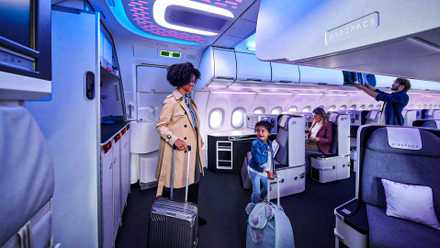
1 Aircraft, 3 Strategies: How The Airbus A321XLR Is Configured Differently Across 3 Continents
1 highly capable aircraft, 3 different strategies; the Airbus A321XLR is offering new capabilities for airlines globally, ushering in a new era.
A New Narrowbody Era

The new script of manufacturing dominance sets up a brand-new battlefield for future single-aisle development as both aerospace firms look toward next-generation architectures. Boeing cannot simply rely on incremental updates to the legacy 737 cross-section to reclaim its historic market position, and now, must completely stabilize its current operations and satisfy regulatory scrutiny before it can successfully pitch a clean-sheet narrowbody replacement to global airline boards.
The single-aisle supply chain will remain heavily centered on European industrial output for at least the next decade, as things stand. Fleet managers must adapt to extended lead times and tight delivery schedules, treating an A320neo family delivery slot as a highly prized corporate asset. It leads long-term planning teams to commit to fleet acquisitions years in advance to avoid being locked out of narrowbody market growth opportunities.
Boeing’s ultimate recovery hinges on resolving strict FAA certification backlogs under a transparent framework, a challenge that CEO Kelly Ortberg has publicly committed to addressing. However, the industrial lead built by Airbus will be incredibly difficult to overturn in the near term, given the massive backlog gap. The single-aisle market has evolved beyond simple point-to-point short hops into a flexible, long-range network infrastructure. The 12,260th delivery milestone was not just the end of a historic rivalry, but the formal beginning of an entirely new era in global aviation history, one where Airbus will surely widen the gap even more.
Catch what other trackers miss
Emergency squawks, holds, NOTAMs — live signals, no signup.
Open tracker
Catch what other trackers miss
Emergency squawks, holds, NOTAMs — live signals, no signup.
Open tracker
