


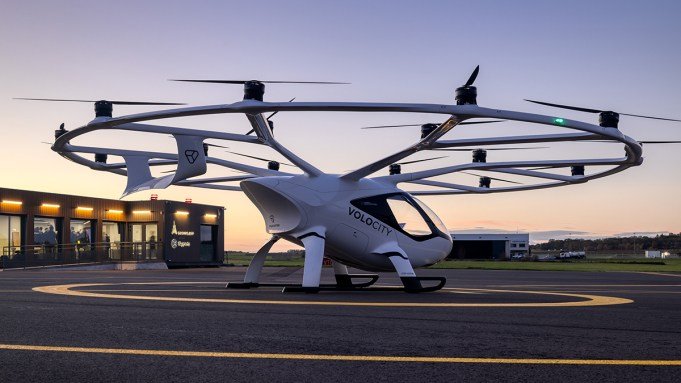
Advanced air mobility (A.A.M.) took a leap forward in July when Dubai opened the world’s first purpose-built eVTOL vertiport. Developed by Skyports Infrastructure with Dubai’s Roads and Transport Authority, the 33,400-square-foot facility includes a passenger terminal, flight operations, two takeoff-and-landing pads, and Joby’s Global Electric Aviation Charging System. Built to handle 170,000 passengers and 42,000 aircraft movements annually, it will welcome its first electric-air-taxi flights soon.
Dubai’s big bet on A.A.M.’s future will soon include three other new vertiports across the city. But most industry executives believe the quickest route to launching eVTOL service is to upgrade today’s helicopter infrastructure with charging systems. Blade Air Mobility founder and C.E.O. Rob Wiesenthal views a select number of heliports as ready-made starting points, particularly in places with enough transportation “friction” to justify the cost: dense urban centers such as Manhattan and Los Angeles or resort regions like the South of France, where congested roads and difficult terrain make short air hops especially valuable. The first passengers will likely be affluent travelers willing to pay a premium to save time.
Eventually, Wiesenthal envisions purpose-built vertiports, complete with private security, baggage handling, and lounges, as well as rooftop facilities at luxury developments. One early adopter is Park Elm Residences at Century Plaza in L.A., where an existing heliport will be converted into a Joby vertiport with a dedicated Blade lounge. “People are looking for not just a condo,” says Jordana Yechiel, director of residential design at Reuben Brothers. “They’re looking for a lifestyle.”
That infrastructure race has already begun. Florida has built two vertiports at its SunTrax testing campus and plans to develop a statewide network, while the F.A.A. and D.O.T. recently broke ground on an A.A.M. research facility in Oklahoma City to study how electric air taxis will integrate into the national airspace system. If the industry succeeds, the next contest will be less about who builds the aircraft than about where they land.
Top: The modern vertiport will likely start with existing helipads and modest lounges. Dubai’s recently launched terminal, meanwhile, is large, complex, and built to handle thousands of annual flights. It symbolizes the potential of electric-aircraft transport.

